



War inflicts damage on Iran's historic monuments and UNESCO World Heritage sites
Jul 01, 2026, 10:07 am


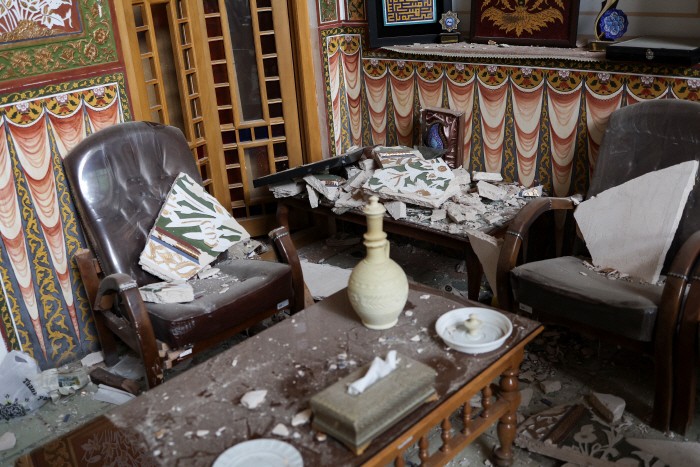 |
| The damaged interior of the Safavid-era Ashraf Hall in Isfahan, Iran, following Israeli airstrikes on March 23 / Reuters, Yonhap News |
Wartime strikes by the United States and Israel have inflicted severe damage on Iran’s world-renowned cultural heritage and historic landmarks. Observers raise concerns that strikes directly impacting UNESCO World Heritage sites represent an unprecedented crisis.
According to a report by Reuters on the 29th (local time), Israeli airstrikes targeting major Iranian cities—including the capital Tehran, Isfahan, and Shiraz—on March 9 left critical heritage sites like Naqsh-e Jahan Square and Chehel Sotoun Palace heavily damaged.
At Isfahan's Naqsh-e Jahan Square, shockwaves from the bombardment caused the collapse of ancient domes surrounding the plaza and high minarets flanking neighboring mosques. Meanwhile, Chehel Sotoun Palace sustained extensive structural damage to its exterior along with defaced interiors.
In Tehran, the Golestan Palace—a masterpiece of Persian architecture dating back to the 19th-century Qajar dynasty—saw its historic stained glass windows shattered and intricate wooden ornamental fixtures pulverized.
Both Naqsh-e Jahan Square and Golestan Palace are registered UNESCO World Heritage sites. Reuters noted that direct, wartime damage to monuments explicitly under international protection is highly unusual.
Other casualties of the air campaigns include the Jameh Mosque of Isfahan, a masterpiece of Islamic architecture spanning over a millennium; the Trans-Iranian Railway, an early 20th-century industrial heritage site; prehistoric caves; and a 1,800-year-old ancient fortress.
UNESCO has officially confirmed damage to seven locations so far and is currently utilizing satellite imagery to assess the full extent of the destruction.
A group of eight archaeologists and cultural heritage experts evaluated the situation as unprecedented, distinguishing it from past conflicts in Iraq, Syria, Libya, and Afghanistan, where internationally protected monuments rarely sustained such direct, heavy hits.
While cultural property has suffered during past wars, it was largely chalked up to collateral damage. In this conflict, however, internationally protected sites appear to have been factored into military target lists, signaling a shift in airstrike prioritization compared to previous wars.
Experts pointed out that world heritage sites must be shielded from hostilities under UNESCO conventions, stressing that the destruction constitutes a direct violation of international law and UNESCO treaties.
Park Jin-sook
Most Read
-
1
Trump shares map on social media labeling Strait o..

-
2
Kia Sportage outperforms Mazda CX-5 in German auto..

-
3
Houthis launch successive attacks on Saudi airport..

-
4
U.S. deploys carrier, 10,000 more troops to Middle..

-
5
Trump rejects Iran's offer to open Strait of Hormu..

-
6
N. Korea conducts first swarm attack drill with dr..

-
7
U.S.-China summit falls short on substance as Trum..

PEOPLE






HEADLINE NEWS
- Seoul dismisses Ukraine's claim of 'S. Korean support for Russia' as "inaccurate and inappropriate"
- S. Korea, Japan race to develop nuclear-powered submarines
- Henri Kagan, Kenso Soai win Nobel Prize in Chemistry for uncovering how mol..
- Vance says Alaska LNG cooperation will move forward with Seoul's current or..

-
Address : In-Young Bldg., 34, Uisadang-daero 1-gil, Yeongdeungpo-gu, Seoul
Copyright by ASIATODAY CO., LTD. All rights resereved