



Dongtan, Giheung, and Guri designated as speculative zones
Jun 30, 2026, 09:09 am


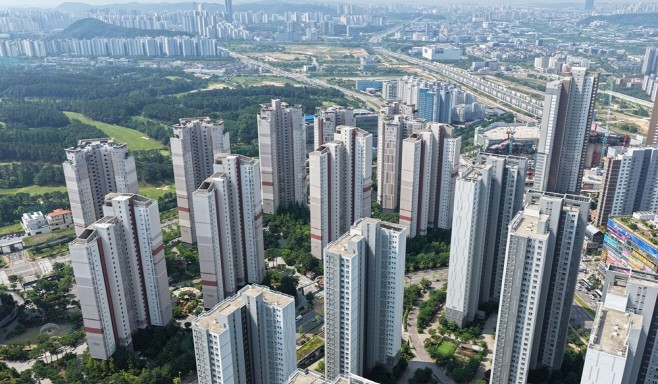 |
| A view of apartment complexes around Dongtan Station in Hwaseong, Gyeonggi Province. / Courtesy of Yonhap News |
The Dongtan district of Hwaseong, the Giheung district of Yongin, and the city of Guri in Gyeonggi Province will be newly designated as speculative overheating zones and regulated areas. As the upward trend in housing prices continued following investment in the semiconductor industry, expansion of transportation networks, and improvements in accessibility to Seoul, the government expanded regulated zones and stepped forward to stabilize the market.
The Ministry of Land, Infrastructure and Transport announced on the 30th that following the deliberation and resolution of the Housing Policy Deliberation Committee, it is designating the Dongtan district of Hwaseong, the Giheung district of Yongin, and the city of Guri as speculative overheating zones and regulated areas. The designation effectiveness will arise starting July 1st.
The explanation from the Ministry side is that as housing prices in these regions rose by a large margin recently, concerns over the inflow of speculative demand expanded.
In the case of the Dongtan district of Hwaseong, the upward trend in housing prices continued under the influence of development expectations following investment in the semiconductor industry and improvements in transportation infrastructure such as the opening of GTX-A. The monthly housing sales price fluctuation rate expanded from 0.78% in February to 1.10% in March, 1.13% in April, and 1.57% in May.
The Giheung district of Yongin also recorded growth rates of 1.08% in February, 0.74% in March, 0.85% in April, and 0.95% in May during the same period, as expectations for benefits from the semiconductor industry were reflected. The city of Guri displayed high growth rates of 1.77% in February, 1.18% in March, 1.16% in April, and 1.15% in May as station area demand adjacent to Seoul persisted.
Accordingly, the Ministry plans to block speculative buying and protect end-users with this designation of regulated zones, while responding to the housing market displaying overheating patterns.
Along with this, Gyeonggi Province plans to designate the Dongtan district of Hwaseong, the Giheung district of Yongin, and the city of Guri as land transaction permit zones as well. Following the deliberation of the city and provincial urban planning committees, it will be applied from July 5th to December 31st, 2027. Land transaction permit zones see their effectiveness arise starting July 5th—five days after the designation announcement on June 30th—in accordance with the 'Act on Report on Real Estate Transactions, Etc.'
Moving forward, the Ministry intends to strengthen monitoring on regions with rising housing prices even after the designation of regulated zones. It plans to respond sternly to market disruption activities.
Meanwhile, the government emphasized its intention to parallel supply expansion policies. While executing the September 7th Housing Supply Expansion Plan from last year and the supply plan of a 60,000-unit scale in the metropolitan downtown area from January 29th this year without a hitch, it also intends to continuously pursue the supply of over 66,000 units of public purchase rental housing in regulated zones announced this past May, and the expansion of non-apartment supply such as urban-type alternative housing and officetels.
An official from the Ministry stated, "We plan to operate a pan-government housing supply onsite bottleneck resolution support center to resolve bottlenecks in the housing construction process, and continuously supplement supply measures by reflecting onsite opinions."
Kim Da-bin
Most Read
-
1
Kia Sportage outperforms Mazda CX-5 in German auto..

-
2
Houthis launch successive attacks on Saudi airport..

-
3
Saudi Arabia, Iran hold first diplomatic talks to..

-
4
U.S. deploys carrier, 10,000 more troops to Middle..

-
5
Saudi airport in Riyadh struck again, leaving at l..

-
6
Putin's ally visits China on the 8th ahead of APEC..

-
7
Chinese military support and training center opens..

PEOPLE





HEADLINE NEWS

-
Address : In-Young Bldg., 34, Uisadang-daero 1-gil, Yeongdeungpo-gu, Seoul
Copyright by ASIATODAY CO., LTD. All rights resereved