



China’s youth employment crisis drives university graduates to elderly care sector
Jun 29, 2026, 10:36 am


 |
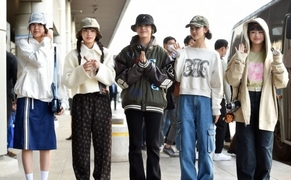
| A youth nursing home located on the outskirts of Shunyi, Beijing. It is said to have been established based on on-site experience by a young entrepreneur who used to live in a nursing home. / Courtesy of The Beijing News |
China's youth, whose prospects for employment have become even bleaker due to the presence of an ever-increasing number of college graduates, are peering even into nursing homes as a final option to resolve their minimum dietary needs. As the youth employment crisis shows no signs of being resolved in a short period, projections also run high that this will soon settle down as a new normal.
According to reports on the 28th by media outlets including The Beijing News, the number of young people stepping out of university gates this year, immediately following graduation ceremonies centered around June, is estimated to reach a staggering 12.7 million. This is 480,000 more than last year, corresponding to an all-time high level. Given that it is difficult to state that the Chinese economy is in good shape, their employment must be deemed extremely difficult.
In reality, the unemployment rate of the youth demographic aged 16 to 24, excluding students enrolled in various levels of schools, recorded 15.6% as of this past May. Although it improved quite a bit by falling to its lowest level in 11 months, it remains high. Since university graduates have now joined this pool on top of it, the situation is bound to become difficult once again. This is even more inevitably the case because the decent positions, which appear as rarely as beans sprouting in a drought, are being taken by children of the privileged classes through the back door. They must be deeply grateful just for the existence of flexible work jobs such as couriers or food delivery.
Under these circumstances, it would be strange if most young people's pockets were not light. It is also becoming a reality that they must practice tearful frugality to the extent that the term "stingy tech" is trending. The fact that the footsteps of young people heading toward nursing homes—which have been partially opened to outsiders other than the elderly since several years ago—are becoming even more frequent recently can be viewed in the exact same context. This is becoming the best alternative to resolve lodging and boarding with a minimum amount of money.
When examining the average move-in costs of nursing homes in major cities such as Beijing and Shanghai, one can easily understand that this is indeed the case. If one pays around 5,000 yuan (approximately 1.13 million won), it is not very difficult to be provided with services such as lodging, boarding, and cleaning. Considering the skyrocketing monthly rents and formidable food expenses, living in a nursing home must be considered far more economical.
From the perspective of nursing homes as well, there are many aspects where the move-in of young people is desirable. Above all, young people can breathe vitality into nursing homes while acting as conversation partners for the elderly. Soothing loneliness falls under the basics. Furthermore, if young people diversify the programs of nursing homes through talent donations, it can truly be described as killing two birds with one stone. It appears to be for this reason that Yuan Yulan, a member of the Millennium-MZ generation in Beijing who says she has experienced nursing home life until recently, expressed a positive stance, noting, "A nursing home is a very good space for mutual aid. I learned a lot. I am still interacting with several elderly individuals even now."
Recently, hitching a ride on this atmosphere, "youth nursing homes" are even coming into existence altogether. It is known that approximately 2,000 such facilities have been established and are operating across some 20 provinces and municipalities nationwide, including Beijing. The business is also receiving evaluations that its prospects are considerably bright. It seems perfectly fine to describe this as a positive butterfly effect brought about by the employment crisis of Chinese youth, which is transforming into a chronic issue.
Hong Soon-do
Most Read
-
1
Trump shares map on social media labeling Strait o..

-
2
Kia Sportage outperforms Mazda CX-5 in German auto..

-
3
Houthis launch successive attacks on Saudi airport..

-
4
U.S. deploys carrier, 10,000 more troops to Middle..

-
5
Trump rejects Iran's offer to open Strait of Hormu..

-
6
N. Korea conducts first swarm attack drill with dr..

-
7
U.S.-China summit falls short on substance as Trum..

PEOPLE





HEADLINE NEWS
- Seoul dismisses Ukraine's claim of 'S. Korean support for Russia' as "inaccurate and inappropriate"
- S. Korea, Japan race to develop nuclear-powered submarines
- Henri Kagan, Kenso Soai win Nobel Prize in Chemistry for uncovering how mol..
- Vance says Alaska LNG cooperation will move forward with Seoul's current or..

-
Address : In-Young Bldg., 34, Uisadang-daero 1-gil, Yeongdeungpo-gu, Seoul
Copyright by ASIATODAY CO., LTD. All rights resereved