



Three in ten part-time workers in Korea experience workplace abuse
Jun 29, 2026, 10:16 am


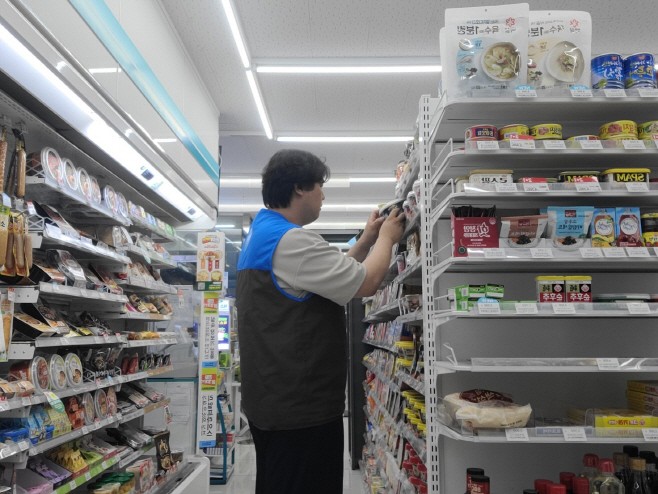 |
| Kim, a 27-year-old university student who works a night shift at a convenience store. The image is for illustrative purposes only and does not relate directly to the content of the article. / Courtesy of Reporter Kim Tae-hoon |
It has been revealed that customer abuse directed toward part-time workers remains rampant. A survey showed that three out of ten office workers have directly experienced customer abuse while working as part-time laborers, and nearly seven out of ten have witnessed such incidents.
According to the survey results released by the civic group Workplace Gapjil 119 on the 28th, 30.3% of respondents answered that they have directly experienced customer abuse against part-time workers. Responses stating they had witnessed customer abuse reached 67.8%.
This survey was commissioned by Workplace Gapjil 119 to Global Research, a public opinion research agency, and was conducted from the 1st to the 9th of this month targeting 1,000 office workers aged 19 and older across the nation.
The most common form of abuse was talking down. Among respondents who experienced abuse, 61.4% answered that they were spoken to informally. This was followed by "verbal violence such as insults" (44.2%), and "the act of throwing cards, cash, or products" (31.4%). The witnessed forms of abuse also appeared in the order of talking down (36.8%), verbal violence such as insults (26.9%), and throwing items or money (18.9%).
The damage was heavily concentrated particularly on the youth demographic and women. Experiences with customer abuse were higher among women (35.3%) than men (26.3%), and by age, it was recorded at its highest among those in their 20s (46.8%). Looking at employment types, the ratio of experiencing abuse was highest in the order of hourly part-time workers (45.0%) and daily laborers (39.6%).
The aspects of abuse also showed differences depending on gender. Women relatively more frequently endured "sexual jokes, unnecessary physical contact, or demands for contact information" (20.5%), whereas men had more experiences with "throwing items or money" (34.7%).
There was much abuse not only from customers but also from store owners, such as employers or managers. The issue that respondents picked as the most severe was "wage-related abuse, including paying below the minimum wage, non-payment of various allowances, and non-payment of wages after being sent home early" (51.7%). This was followed by "forcing unpaid labor" (39.8%), and "imposing fines or cutting wages using mistakes as an excuse" (30.3%).
Workplace Gapjil 119 also published a report titled "20 Questions and 20 Answers on Part-time Labor" on this day, which guides the rights of part-time workers based on on-site counseling cases. This is a follow-up response prepared after an incident early this year sparked public outrage, where a franchise cafe owner extorted money from a part-time worker while threatening to sue them.
Yang Hyun-jun, an attorney at Workplace Gapjil 119, emphasized, "Part-time job abuse is not a deviation of a few business owners, but a structural problem," adding, "We must eliminate the blind spots of the Labor Standards Act so that workplaces with fewer than five employees and freelance workers can also be practically protected."
Kim Tae-hoon
Most Read
-
1
Celltrion nears additional contract with major U.S..

-
2
Putin proposes trilateral U.S.-China-Russia summit..

-
3
U.S. weighs dropping MOAB, world's most powerful n..

-
4
"Aren't those foreigners on welfare?": M..

-
5
Attention centers on APEC for possible Trump-Xi-Pu..

-
6
Saudi Arabia, Iran hold first diplomatic talks to..

-
7
China tightens grip on boosting domestic demand an..

PEOPLE






-
Address : In-Young Bldg., 34, Uisadang-daero 1-gil, Yeongdeungpo-gu, Seoul
Copyright by ASIATODAY CO., LTD. All rights resereved