



South Korea to import 200 million more eggs to ease burden on households
Jun 29, 2026, 09:47 am


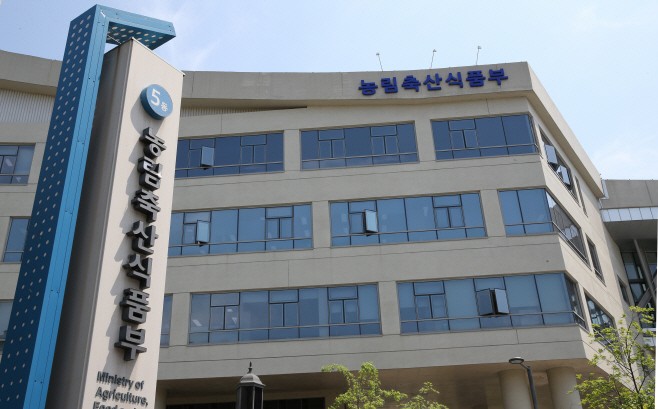 |
The Ministry of Agriculture, Food and Rural Affairs explained regarding the additional import of 200 million eggs that it is an "extraordinary measure aimed at easing the burden on ordinary households."
In an explanatory document released on the 28th, the Ministry of Agriculture diagnosed that "the current supply of eggs is insufficient," and subsequently stated that "the additional import of 200 million fresh eggs is an extraordinary measure decided upon after deep deliberation to relieve the burden on the livelihoods of ordinary citizens and their grocery carts."
The Ministry of Agriculture projected that egg prices will turn toward a stabilizing trend following this additional importation.
The Ministry of Agriculture anticipated, "As the additional import of 200 million fresh eggs combines with a seasonal decline in demand due to school vacations and summer holidays, prices will progressively stabilize after late July."
The ministry continued, "The importation of fresh eggs leads to a price hike suppression effect through competition with domestic eggs, as well as an expansion effect on the supply of relatively affordable eggs," adding, "Judging from historical precedents, we determine that it will have the effect of easing consumer burdens by suppressing price hikes."
Meanwhile, the Ministry of Agriculture actively refuted pointers from certain quarters claiming that the relaxation of rearing density for laying hens served as the root cause of the spike in egg prices.
The Ministry of Agriculture explained, "The policy to improve laying hen rearing density was introduced for animal welfare and egg hygiene stability in 2018 following the 'pesticide egg crisis' in 2017, and its implementation had been announced approximately 10 years ago."
The ministry went on to say, "Many farms sympathized with the necessity of the government policy and transitioned to animal welfare livestock farms or improved cages, and as of May this year, conventional breeding farms rearing within the old surface area standards number 655, which accounts for a mere 39% level of entire farms."
The Ministry of Agriculture emphasized, "We are providing tailored countermeasures and support—such as financial assistance for facility improvements and regulatory enhancements—so that laying hen rearing numbers can be maintained when rearing density is improved," adding, "Furthermore, in tandem with the Ministry of Environment, we are formulating and pushing forward egg supply expansion policies, including permitting the expansion and remodeling of farms within livestock rearing restriction zones and presenting guidelines on maximum limits for rearing restriction distances."
Jo Sang-eun
Most Read
-
1
Celltrion’s Omlyclo gains ground in major European..

-
2
Trump demands rates fall below 1% as Fed hikes for..

-
3
Trump makes $1 trillion bet ahead of midterm elect..

-
4
Iran resumes ballistic missile production, assembl..

-
5
Samsung Electronics, Mistral AI to jointly develop..

-
6
Trump warns countries not helping U.S. must pay re..

-
7
Apple launches first foldable, 1 million won prici..

PEOPLE






HEADLINE NEWS
- Trump to roll out ‘unprecedented welcome’ for Xi with B-2 bombers, F-22 fighters
- S. Korea, U.S., and Japan form united front on Taiwan and economic coercion..
- Trump administration moves to impose sweeping sanctions on International Cr..
- Xi to make state visit to U.S. Sept. 23-25, dispelling rumors over his heal..

-
Address : In-Young Bldg., 34, Uisadang-daero 1-gil, Yeongdeungpo-gu, Seoul
Copyright by ASIATODAY CO., LTD. All rights resereved