



UK tightens steel trade barriers, slashing tariff-free quotas and doubling duties
Jun 26, 2026, 09:11 am


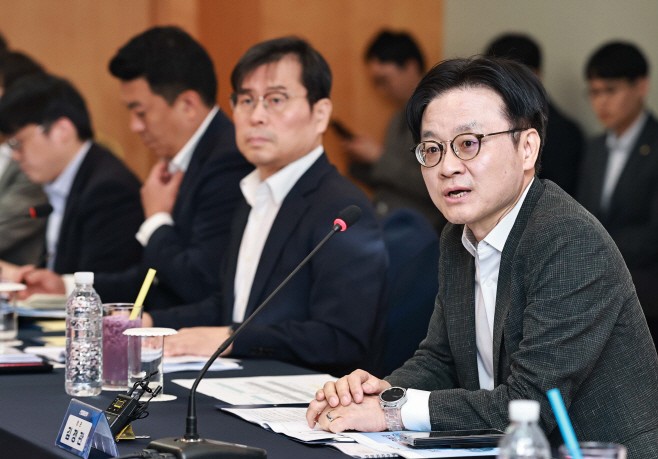 |
| Minister of Trade, Industry and Energy Kim Jung-kwan speaks at the Daebul, Busan, and Gunsan Shipbuilding MINI Alliance Conference held at Hotel Hyundai by Lahan Mokpo's Sapphire Hall on the 22nd. / Courtesy of Yonhap News |
The United Kingdom will drastically tighten its steel import regulations starting next month. With the volume of imports allowed to enter tariff-free being cut nearly in half and a 50% tariff—double the previous rate—imposed on volumes exceeding the quota, the export burden on the South Korean steel industry is projected to increase.
The Ministry of Trade, Industry and Energy announced on the 25th that the UK government has unveiled the final draft of its new steel import management system, which replaces the existing steel safeguard measures, and will implement it starting July 1.
The move is aimed at protecting the domestic steel industry in response to global steel oversupply and the proliferation of protectionism in major economies. The UK will amend its "2026 Customs Regulations" to apply a new Tariff-Rate Quota (TRQ) system to 20 steel products.
Under the new system, tariff-free imports will be permitted for up to a total of 3.22 million tons, but a high tariff of 50% will be levied on any volume exceeding this limit. Under the previous safeguard framework, tariff-free imports were allowed for up to a total of 6.35 million tons across 16 steel products, with a 25% tariff applied to the excess.
Ultimately, while the number of targeted products has expanded from 16 to 20, the tariff-free import volume has been slashed by about half, and the out-of-quota tariff rate has doubled, effectively intensifying steel import barriers.
However, the UK has separately allocated a country-specific quota of 173,000 tons across nine products for South Korea. Under the previous safeguard framework, a country-specific quota of 93,000 tons across four products had been allocated based on the eighth year of the global safeguards (July 2025–June 2026).
The Ministry of Industry has consistently raised concerns with the UK that the allocation methods and volumes for country-specific quotas were being determined without sufficient consultation with major importing countries. In particular, the ministry conveyed its stance that South Korea's past export performance and industrial contributions should be adequately reflected, given that Korean steel has contributed to stabilizing the UK manufacturing supply chain.
In fact, South Korea's steel exports to the UK from 2022 to 2024 amounted to 321,000 tons, representing about 1.2% of its total steel export volume (27.12 million tons). Although the share is modest, the domestic industry is closely monitoring changes in the future export environment because high-value-added steel products linked to domestic manufacturing sectors such as automotive, shipbuilding, and machinery account for a significant portion of these exports.
The Ministry of Industry plans to closely examine the impact of this measure on the domestic steel industry while utilizing all available consultation channels, including compensation negotiations under Article 28 of the WTO GATT.
Han Dae-ui
Most Read
-
1
Celltrion nears additional contract with major U.S..

-
2
Putin proposes trilateral U.S.-China-Russia summit..

-
3
U.S. weighs dropping MOAB, world's most powerful n..

-
4
"Aren't those foreigners on welfare?": M..

-
5
Attention centers on APEC for possible Trump-Xi-Pu..

-
6
Saudi Arabia, Iran hold first diplomatic talks to..

-
7
China tightens grip on boosting domestic demand an..

PEOPLE







-
Address : In-Young Bldg., 34, Uisadang-daero 1-gil, Yeongdeungpo-gu, Seoul
Copyright by ASIATODAY CO., LTD. All rights resereved