



Drug abuse in Malaysia soars this year
Jun 25, 2026, 10:26 am


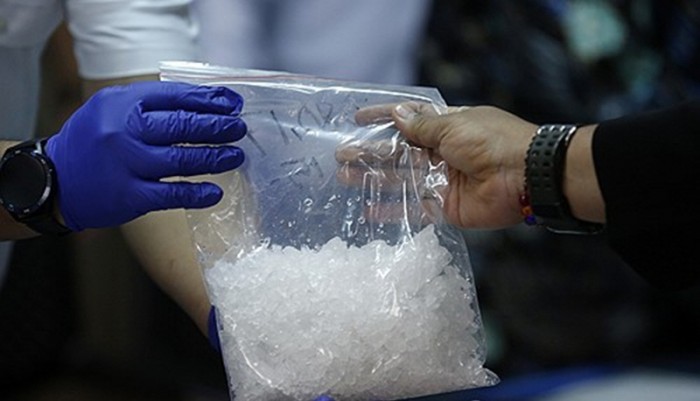 |
| Agents present crystalline methamphetamine seized from an international drug trafficking ring during a press conference held at the headquarters of the National Narcotics Board of Indonesia on September 17, 2024. This image is not directly related to the article. / Courtesy of EPA, Yonhap |
Drug abuse in Malaysia is reportedly surging at an alarming rate. With accessibility to narcotics rising through social media and recent reports revealing illicit drug components even inside e-cigarette liquids, voices are growing louder demanding enhanced measures to curb the spread.
According to Malaysia's state-run Bernama news agency, Home Minister Datuk Seri Saifuddin Nasution Ismail stated during a parliamentary lower house session on the 23rd that approximately 192,000 total cases of drug abuse have been compiled from January of this year to the present. This equates to roughly 560 cases per 100,000 people, with individuals aged 15 to 39 accounting for nearly 75% of the total figures.
The volume recorded in the first half of this year alone has already eclipsed last year's entire record. According to the Home Ministry, locally reported cases of Amphetamine-Type Stimulants (ATS) abuse rose from 145,526 in 2023 to 192,857 in 2024, before dipping slightly to 141,817 in 2025.
The Home Ministry identified active drug distribution networks concentrated across Malaysia's east coast region, including Kelantan and Terengganu. In these areas, which are geographically close to international borders, the use of synthetic drugs—such as new Amphetamine-Type Stimulants (ATS)—is far more pronounced than traditional narcotics like cannabis or heroin.
More recently, authorities have been on high alert following cases where fentanyl, a synthetic opioid, was detected in illegal e-cigarette liquids. Fentanyl is known to be roughly 50 times more addictive than morphine and can lead to fatal overdoses, though its current scale of spread is reportedly minor compared to ATS.
Recognizing the gravity of the situation, the Malaysian government views the spreading drug crisis as a critical social emergency and plans to commit full resources toward establishing countermeasures. The National Anti-Drugs Agency (AADK) announced that it will actively run anti-drug education and rehabilitation programs across local communities and schools.
"The drug issue is a social crisis that extends far beyond mere criminality," Minister Saifuddin emphasized. "In close coordination with the police, customs, and the AADK, we will drive a comprehensive response encompassing prevention, rehabilitation, and strict enforcement."
Hong Seong-ah
Most Read
-
1
Trump shares map on social media labeling Strait o..

-
2
Kia Sportage outperforms Mazda CX-5 in German auto..

-
3
Houthis launch successive attacks on Saudi airport..

-
4
U.S. deploys carrier, 10,000 more troops to Middle..

-
5
Trump rejects Iran's offer to open Strait of Hormu..

-
6
N. Korea conducts first swarm attack drill with dr..

-
7
U.S.-China summit falls short on substance as Trum..

PEOPLE






HEADLINE NEWS
- Seoul dismisses Ukraine's claim of 'S. Korean support for Russia' as "inaccurate and inappropriate"
- S. Korea, Japan race to develop nuclear-powered submarines
- Henri Kagan, Kenso Soai win Nobel Prize in Chemistry for uncovering how mol..
- Vance says Alaska LNG cooperation will move forward with Seoul's current or..

-
Address : In-Young Bldg., 34, Uisadang-daero 1-gil, Yeongdeungpo-gu, Seoul
Copyright by ASIATODAY CO., LTD. All rights resereved