



Chinese big tech firms file lawsuit against U.S. DoD
Jun 25, 2026, 10:21 am


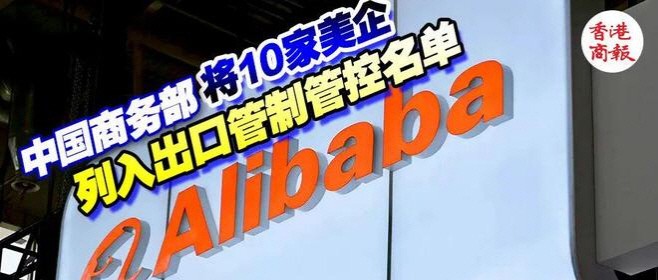 |
| A Chinese-language media outlet reporting that Chinese big tech firm Alibaba filed a lawsuit against the U.S. Department of Defense. / Courtesy of Hong Kong Commercial Daily |
Alibaba, one of China’s leading big tech companies, has filed a lawsuit in response to the U.S. Department of Defense designating it as a "Chinese military company." Following a similar lawsuit by biotech firm WuXi AppTec, this move reflects how the intensifying U.S.-China technological hegemony race is spilling into the courtroom. According to Beijing sources familiar with the Chinese big tech industry on the 24th, Alibaba filed a lawsuit on the 23rd (local time) requesting its removal from the U.S. Department of Defense's list of "companies supporting the Chinese military (People's Liberation Army)." The complaint was submitted to the U.S. District Court for the Northern District of California in San Jose.
In its complaint, Alibaba stated that the Department of Defense's determination is entirely without basis in both fact and law, emphasizing that Alibaba is managed by an independent board of directors, none of whom have any affiliation with the military. It further highlighted that Alibaba's products and services are designed for retail, logistics, and enterprise information technology, rather than weapons, defense, or intelligence activities.
Additionally, Alibaba argued that labeling the company as a Chinese military company frames it as an instrument of the Chinese military and a threat to U.S. national security. The company asserted that this harms its reputation and casts a shadow over all its existing business relationships within the United States. In response, a spokesperson for the U.S. Department of Defense declined to comment, citing a policy against discussing ongoing litigation, according to the sources.
According to the sources, the U.S. Department of Defense previously included Alibaba, along with Chinese big tech firm Baidu, electric vehicle manufacturers BYD and Nio, and biotech company WuXi AppTec, on its "Section 1260H List"—a blacklist of companies supporting the Chinese military—on the 8th of this month. At that time, the 1260H list reportedly expanded to encompass 188 entities.
The sources noted that being named on this list does not immediately trigger sanctions or export controls. However, it significantly increases the likelihood of exclusion from future contracts or procurement projects driven by the Department of Defense.
Prior to Alibaba's action, WuXi AppTec filed a similar lawsuit on the 11th in the U.S. District Court for the District of Columbia. Its complaint similarly argued that the Department of Defense's decision was erroneous and failed to meet factual or legal standards mandated by relevant statutes and legal precedents.
While Chinese companies have quickly turned to litigation against the U.S. Department of Defense's measures, they are expected to face an uphill battle, given that DJI, the world's largest drone manufacturer, lost a similar lawsuit last year. This precedent suggests that Alibaba and WuXi AppTec might ultimately find their efforts in vain. If the DJI ruling proved that American courts tend to favor their own national interests, that assessment appears hard to deny.
Hong Soon-do
Most Read
-
1
Trump shares map on social media labeling Strait o..

-
2
Kia Sportage outperforms Mazda CX-5 in German auto..

-
3
Houthis launch successive attacks on Saudi airport..

-
4
U.S. deploys carrier, 10,000 more troops to Middle..

-
5
Trump rejects Iran's offer to open Strait of Hormu..

-
6
N. Korea conducts first swarm attack drill with dr..

-
7
U.S.-China summit falls short on substance as Trum..

PEOPLE






HEADLINE NEWS
- Seoul dismisses Ukraine's claim of 'S. Korean support for Russia' as "inaccurate and inappropriate"
- S. Korea, Japan race to develop nuclear-powered submarines
- Henri Kagan, Kenso Soai win Nobel Prize in Chemistry for uncovering how mol..
- Vance says Alaska LNG cooperation will move forward with Seoul's current or..

-
Address : In-Young Bldg., 34, Uisadang-daero 1-gil, Yeongdeungpo-gu, Seoul
Copyright by ASIATODAY CO., LTD. All rights resereved