



Temu boosts small brands as Local Seller Program gains traction
Jun 25, 2026, 09:45 am


 |
The Local Seller Program operated by global e-commerce platform Temu has firmly established itself as a fresh growth channel for domestic merchants, successfully driving both sales expansion and heightened brand awareness simultaneously.
Small and medium-sized brands across a diverse array of sectors—ranging from electronics and household appliances to food products and pet supplies—are rapidly capturing new customer demographics and boosting their sales performance.
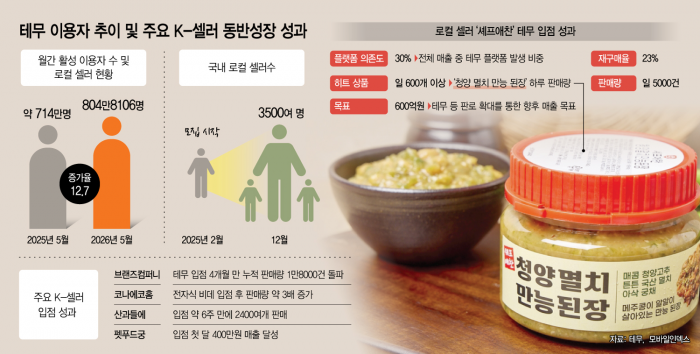
According to Temu on the 24th, the company fully launched its Local Seller Program for South Korean merchants in February last year. Sellers can apply to join through the dedicated Temu Seller Center platform and directly market their products to domestic consumers. As of the end of last year, the number of registered domestic sellers reached approximately 3,500, offering a wide variety of product categories including manufactured goods, household items, and processed foods.
Participating merchants are already seeing tangible outcomes. Brands Company, which operates the electronics brand "SKY," logged hundreds of orders immediately after joining the platform last February, with cumulative sales surpassing 18,000 units within just four months. The company explained that alongside expanding sales, the ability to monitor real-time consumer feedback helped sharpen their product competitiveness.
Kona Eco Home, a household and bathroom appliance manufacturer, also broadened its touchpoints with younger consumers through Temu. Weekly sales of its electronic bidets spiked from an initial 300 units to a monthly average of 1,000 units, demonstrating robust growth momentum.
The food sector has yielded solid results as well. Snack brand Sananddeulae recorded over 2,400 sales within just six weeks of joining the platform. The company is currently refining its sales strategy by tracking quick consumer responses to both its established best-sellers and newly introduced products. Notably, with about 3% of its revenue generated from foreign residents living in South Korea, the brand is leveraging this data as a key indicator to gauge future global market expansion possibilities.
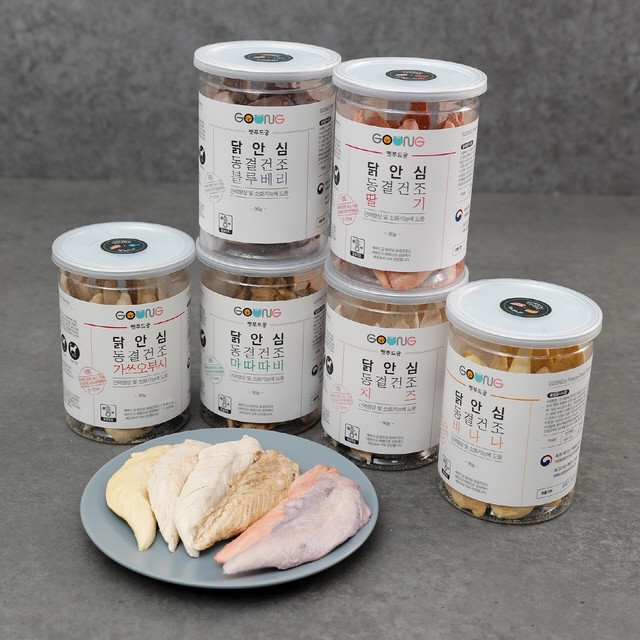 |
| A product by Petfood Goong, a pet food brand available on Temu. / Courtesy of Temu |
Petfood Goong, a pet food brand, has also unlocked new growth opportunities. Despite being a small-scale operation run by just two employees, the company felt the immediate impact of joining Temu, logging approximately 4 million won in sales during its very first month on the platform. The company evaluated that Temu enabled them to capture new customers, a feat that had proven difficult on legacy e-commerce platforms.
The expanding user base of Temu is further fueling the growth of these merchants. According to Mobile Index, a data analysis solution by IGAWorks, Temu's monthly active users (MAU) reached 8,048,106 this past May, marking a 12.7% increase compared to the same period last year. Industry analysts note that as economic stagnation and consumption polarization deepen, a consumer trend prioritizing cost-effectiveness is spreading, steadily widening Temu's user base.
This upward trajectory in user traffic translates directly into new sales channel opportunities for small and medium-sized merchants. For smaller brands that lack the capital to pour into large-scale marketing campaigns, the platform's key strengths lie in its ability to boost brand awareness and drive sales based entirely on product exposure within the app and organic consumer reviews.
This growth momentum via Temu is further illustrated by the case of Chef e Chan, a company specializing in side dishes and convenient meal kits. After entering Temu last September, the brand saw sales of its flagship product, "Cheongyang Anchovy All-Purpose Soybean Paste," rapidly accelerate, shattering the milestone of 600 units in daily sales within just four months of its launch. The company noted that this achievement successfully brought in new customers and elevated brand awareness, while allowing them to showcase a diverse product lineup to consumers with relatively minimal advertising and marketing expenditures.
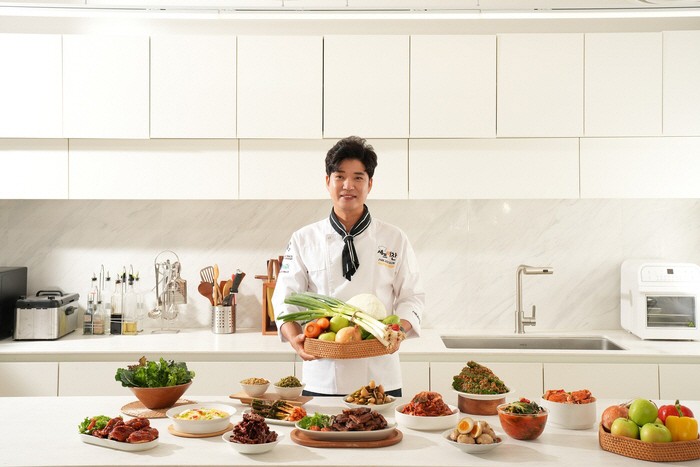 |
| Park Woo-yeon, chef and CEO of Chef e Chan, a merchant on Temu. / Courtesy of Temu |
The following is a question-and-answer session with Park Woo-yeon, CEO of Chef e Chan.
What inspired you to start a side dish and convenient meal kit business?
"I worked as a chef for 25 years in places like hotels and resort kitchens. The various dishes and side dishes I prepared always received positive feedback, which sparked an idea: I wanted to share and sell these creations to households, expanding beyond the guests visiting resorts and hotels. Since I was highly confident in large-scale cooking, I started a small company in 2017 selling six types of ready-made side dishes. Driven by the philosophy of 'delivering a chef's touch directly to the home,' we prepare our side dishes on the day the order is placed and are currently expanding our product lineup."
What is the company's current revenue and scale?
"We handle roughly 5,000 orders a day. Last year, we generated over 40 billion won in revenue, marking about a 50-fold growth compared to our first year of operation. We run four factories, and multiple chefs oversee quality control at each facility."
What motivated you to join Temu?
"I recognized the potential for sales expansion. I also saw it as an opportunity to connect with a broader consumer base and elevate our brand awareness. We had been selling side dishes through our own official website and various domestic e-commerce platforms. While our business was scaling up, sales for products other than our established best-sellers were slow to grow. Furthermore, on most platforms, product exposure tends to increase based on advertising and marketing expenditures. For a small or medium-sized enterprise like ours with tight capital resources, pouring massive budgets into marketing is difficult, which creates a barrier to promoting a wide variety of products to consumers."
"I learned that domestic merchants could sell to South Korean consumers with zero registration fees through Temu's Local Seller Program starting from 2025, so we joined the platform last September. Rather than relying on marketing and advertising costs, the platform's structure naturally exposes popular products alongside items with positive reviews, which naturally drove our sales upward."
What is the most significant change since joining Temu?
"Alongside our legacy best-sellers, sales have accelerated for items I spent a lot of time developing, such as the Cheongyang Anchovy All-Purpose Soybean Paste, which now sells over 600 units a day. Other products that previously held strong reviews are seeing a tandem boost in sales. Currently, Temu accounts for roughly 30% of our total revenue and has become a core channel with a repurchase rate reaching 23%. Consumer trust in our brand has solidified, leading to steady repeat purchases."
What are the defining characteristics of the Temu platform?
"Customers leave a high volume of detailed, thoughtful feedback and reviews. I believe this is because they are highly satisfied with receiving quality products at reasonable prices. We carefully monitor these reviews and actively try to reflect customer feedback in our future product development."
What are your future business plans?
"We plan to focus on promoting our brand while strictly maintaining the quality of our fresh and delicious side dishes. Our goal is to expand our overall revenue to the 60 billion won mark through channels like Temu."
Jeong Moon-kyung
Most Read
-
1
Kia Sportage outperforms Mazda CX-5 in German auto..

-
2
Houthis launch successive attacks on Saudi airport..

-
3
Saudi Arabia, Iran hold first diplomatic talks to..

-
4
U.S. deploys carrier, 10,000 more troops to Middle..

-
5
Saudi airport in Riyadh struck again, leaving at l..

-
6
Putin's ally visits China on the 8th ahead of APEC..

-
7
Chinese military support and training center opens..

PEOPLE






HEADLINE NEWS

-
Address : In-Young Bldg., 34, Uisadang-daero 1-gil, Yeongdeungpo-gu, Seoul
Copyright by ASIATODAY CO., LTD. All rights resereved