



China is stuck in overcapacity, leaving most items to depreciate
Jun 24, 2026, 02:32 pm


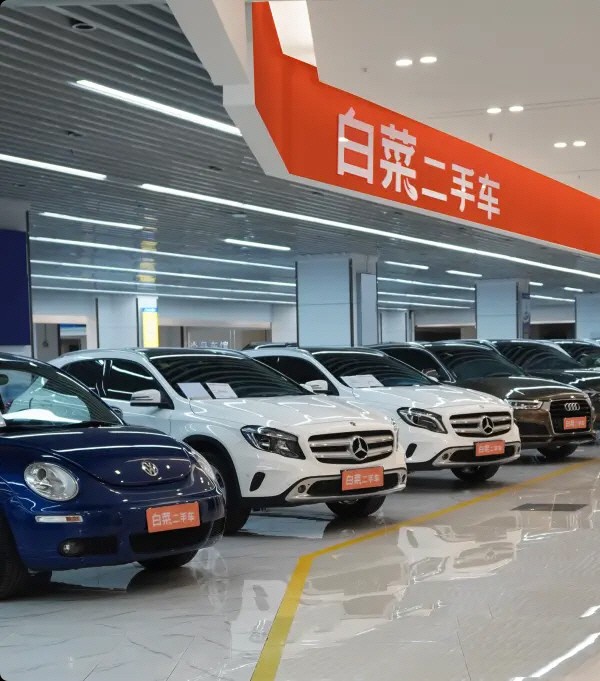 |
| An used car dealership in Zhongguancun, Haidian District, Beijing. The cynical moniker "cabbage cars" vividly captures the brutal reality of the overcapacity crisis currently choking Chinese industry. / Courtesy of The Beijing News |
China is grappling with a chronic structural curse as rampant overcapacity threatens to relegate a vast array of "Made in China" products to the status of cheap cabbages. If left unchecked, this paralyzing supply-demand mismatch will inevitably drag the world's second-largest economy into a severe systemic crisis, dealing a permanent blow to its annual GDP growth.
Recent coverage from media outlets like The Beijing News confirms that China has firmly entered an era of unchecked overcapacity. The gravity of the situation is laid bare by a confidential directive issued by central economic authorities early this year, ordering local governments nationwide to launch a full-scale crackdown on production gluts as the state's most pressing priority.
The shockwaves from Beijing's overproduction are already rattling the global economic order. Early last month, the U.S. Trade Representative (USTR) and the European Commission scrambled to address the threat, convening a Section 301 investigation hearing and an emergency response summit, respectively. The fallout is even more devastating in vulnerable Southeast Asian economies, where a tidal wave of underpriced Chinese goods has spent years hollowing out local manufacturing sectors, pushing them to the brink of collapse.
Predictably, China is not immune to its own domestic excesses. This systemic oversupply is the primary engine driving its chronic deflation—a persistent drop in prices amid a broader economic slowdown that is far more toxic than inflation. Yet, the real danger extends beyond deflationary pressures. The most catastrophic byproduct is the immense, unabsorbable surplus of unsold goods left behind after exports, which is triggering a brutal race to the bottom in prices.
The electric vehicle and broader new energy vehicle (NEV) sectors are the poster children for this crisis. With overcapacity cemented as the industry’s new normal, automakers regularly dump vehicles on the market at prices well below manufacturing costs. Even with regulatory bodies watching with a hawk's eye, desperate factories are engaging in rampant, defiant inventory dumping across the nation.
Industry insiders whisper that some vehicles are funneled straight into the used-car market the moment they roll off assembly lines. "Domestic automobile production capacity is hovering near 200% of actual demand," noted Chen Lan, a used-car dealer in Beijing. "We are in a state of severe oversupply that predatory export dumping cannot even begin to mask. A wave of bankruptcies is imminent, and traditional internal combustion engine automakers are in the exact same boat."
The rot has spread far beyond automotive manufacturing. Apparel, smartphones, and home appliances are trapped in an identical spiral. Analysts warn that within three to five years, virtually all of these products risk being cleared out at humiliating, rock-bottom prices. In the textile and garment sectors, panic is already tangible as rumors of high-profile corporate bankruptcies circulate widely.
Even the digital realm is eroding. The rapid integration of generative AI has led to an explosion of digital content and online academy lectures, rendering proprietary educational material virtually worthless overnight. A wave of insolvencies among digital content providers and private tutoring networks appears all but guaranteed.
This cynical "cabbage-price" moniker first entered the Chinese economic lexicon a few years ago, when the real estate bubble—which historically anchored roughly 25% of the country's GDP—finally burst. As housing prices crashed across the country, properties in severely oversaturated regions began selling for the price of mere table scraps. Today, countless housing developments remain trapped under that humiliating label. With supply fundamentally detached from demand, the seeds of China's current overcapacity dilemma were planted long ago in its concrete foundations.
Hong Soon-do
Most Read
-
1
Trump shares map on social media labeling Strait o..

-
2
Kia Sportage outperforms Mazda CX-5 in German auto..

-
3
Houthis launch successive attacks on Saudi airport..

-
4
U.S. deploys carrier, 10,000 more troops to Middle..

-
5
Trump rejects Iran's offer to open Strait of Hormu..

-
6
N. Korea conducts first swarm attack drill with dr..

-
7
U.S.-China summit falls short on substance as Trum..

PEOPLE






HEADLINE NEWS
- Seoul dismisses Ukraine's claim of 'S. Korean support for Russia' as "inaccurate and inappropriate"
- S. Korea, Japan race to develop nuclear-powered submarines
- Henri Kagan, Kenso Soai win Nobel Prize in Chemistry for uncovering how mol..
- Vance says Alaska LNG cooperation will move forward with Seoul's current or..

-
Address : In-Young Bldg., 34, Uisadang-daero 1-gil, Yeongdeungpo-gu, Seoul
Copyright by ASIATODAY CO., LTD. All rights resereved