



Japan boosts AI cyber defense through global model evaluation partnership
Jun 21, 2026, 10:29 am


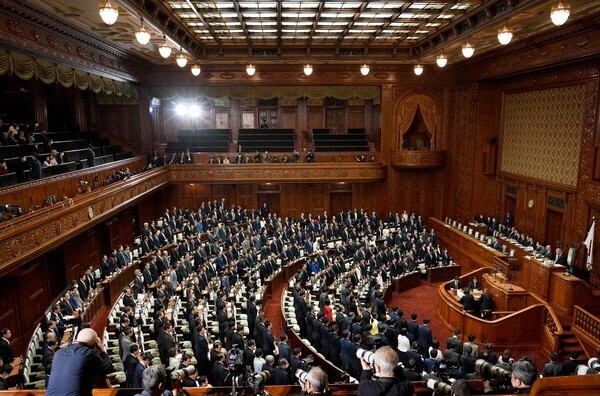 |
| The Japanese government is strengthening cooperation with foreign governments to prepare against cyberattacks that exploit artificial intelligence (AI). As AI capabilities rapidly advance, the government views cyber security threats as growing, and thus intends to overhaul its evaluation system for the latest AI models at the state level. / Yonhap News |
According to the Yomiuri Shimbun on the 19th, the Japanese government is strengthening cooperation with foreign governments to prepare against cyberattacks that exploit artificial intelligence (AI). As AI capabilities rapidly advance, the government views cyber security threats as growing, and thus intends to overhaul its evaluation system for the latest AI models at the state level. The report noted that the first revised draft of the 'AI Basic Plan,' the Japanese government's AI policy guideline, newly includes measures to strengthen responses to AI-driven cyberattacks and expand alliances with foreign governments. The Japanese government aims to finalize this through a cabinet decision in July.
The AI Basic Plan was first established in December last year to simultaneously promote AI technological innovation and risk management. However, as the performance of generative AI and autonomous AI has advanced faster than expected, revision work began after just over half a year. The amendment pointed out that "as AI performance becomes highly sophisticated, the risk of cyberattacks exploiting AI is rising." A major factor behind this is the latest model released in April this year by Anthropic in the U.S., which delivered a significant shock regarding its ability to detect system vulnerabilities.
At the center of the countermeasures stands the 'AI Safety Institute,' a government agency established in 2024. This institution is tasked with evaluating AI performance related to cyber security, and it will strengthen connections with developers and foreign government agencies to secure access to the latest domestic and international models. Based on the AI evaluation results, the Japanese government plans to urge IT product manufacturers to hasten security responses, such as software patching. This stems from the judgment that if AI is abused as a cyberattack tool, conventional security frameworks alone may lead to delayed responses. On the utilization side, attention was focused on 'autonomous AI,' which sets goals and executes tasks without detailed human instructions. The amendment emphasized that autonomous AI is rapidly spreading across various countries, and its early commercialization is "directly linked to national power."
However, it also addressed the side effects of expanding AI utilization. The revised draft newly included a requirement to prepare educational environments so that thinking and judgment capabilities do not deteriorate due to dependence on AI. This latest amendment by the Japanese government clearly outlines a direction to nurture AI as a core component of industrial competitiveness while managing security risks at the state level. In particular, as it has decided to initiate the performance evaluation of the latest AI models in alignment with foreign governments, international cooperation in the field of AI security is expected to begin in earnest.
Choi Young-jae
Most Read
-
1
Trump shares map on social media labeling Strait o..

-
2
Kia Sportage outperforms Mazda CX-5 in German auto..

-
3
Houthis launch successive attacks on Saudi airport..

-
4
U.S. deploys carrier, 10,000 more troops to Middle..

-
5
Trump rejects Iran's offer to open Strait of Hormu..

-
6
N. Korea conducts first swarm attack drill with dr..

-
7
U.S.-China summit falls short on substance as Trum..

PEOPLE






HEADLINE NEWS
- Seoul dismisses Ukraine's claim of 'S. Korean support for Russia' as "inaccurate and inappropriate"
- S. Korea, Japan race to develop nuclear-powered submarines
- Henri Kagan, Kenso Soai win Nobel Prize in Chemistry for uncovering how mol..
- Vance says Alaska LNG cooperation will move forward with Seoul's current or..

-
Address : In-Young Bldg., 34, Uisadang-daero 1-gil, Yeongdeungpo-gu, Seoul
Copyright by ASIATODAY CO., LTD. All rights resereved