



US strategic oil reserve drops to lowest after emergency releases to curb prices
Jun 16, 2026, 10:15 am


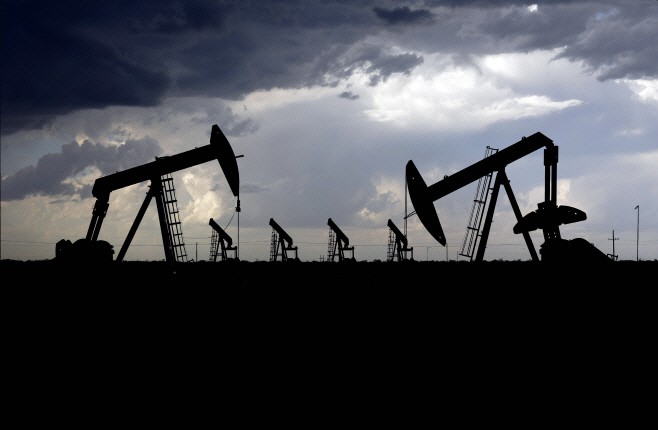 |
| A refinery in Big Spring, Texas, is in operation. / Photo courtesy of AP, Yonhap News Agency |
The U.S. Strategic Petroleum Reserve (SPR), the nation's emergency oil stockpile, has plummeted to its lowest level in 43 years. The decline comes after massive crude releases authorized by the government to counter supply disruptions triggered by the war with Iran.
According to U.S. Department of Energy data cited by the Wall Street Journal on June 15 (local time), the SPR inventory fell to 340.3 million barrels, marking its lowest point since 1983.
The SPR is a government-controlled emergency reserve of crude oil maintained to mitigate the impact of severe supply disruptions, such as wars or natural disasters.
The sharp drop in reserves follows a recent decision by the Trump administration to release 172 million barrels from the facility in an effort to cool down domestic fuel prices, which had surged in recent months.
The current stockpile has now dipped below the previous record low of 346.8 million barrels, which was recorded during the administration of former President Joe Biden.
Meanwhile, commercial inventories at the Cushing, Oklahoma storage hub—the physical delivery and pricing point for U.S. West Texas Intermediate (WTI) crude futures—eased to 21 million barrels. This volume is hovering dangerously close to the facility's minimum operational floor of approximately 20 million barrels.
While the recent end-of-war agreement between the U.S. and Iran has alleviated the immediate pressure for further emergency oil releases, market experts warn that replenishing the depleted reserves will not happen overnight. Restarting idled production facilities and normalizing disrupted maritime shipping networks are expected to take considerable time.
At the current rate of drawdown, the official volume authorized for release from the SPR into the commercial market is projected to run out by early September.
With physical inventories approaching critical thresholds, energy executives caution that oil prices could face another upward spike to prevent severe supply shortages unless substantial new crude flows enter the market.
"If inventories hit their absolute operational floors, we could see oil prices surging to the range of 150 to 160 dollars per barrel," Neil Chapman, Senior Vice President at ExxonMobil, warned.
Park Jin-sook
Most Read
-
1
Trump shares map on social media labeling Strait o..

-
2
Kia Sportage outperforms Mazda CX-5 in German auto..

-
3
Houthis launch successive attacks on Saudi airport..

-
4
U.S. deploys carrier, 10,000 more troops to Middle..

-
5
Trump rejects Iran's offer to open Strait of Hormu..

-
6
N. Korea conducts first swarm attack drill with dr..

-
7
U.S.-China summit falls short on substance as Trum..

PEOPLE






HEADLINE NEWS
- Seoul dismisses Ukraine's claim of 'S. Korean support for Russia' as "inaccurate and inappropriate"
- S. Korea, Japan race to develop nuclear-powered submarines
- Henri Kagan, Kenso Soai win Nobel Prize in Chemistry for uncovering how mol..
- Vance says Alaska LNG cooperation will move forward with Seoul's current or..

-
Address : In-Young Bldg., 34, Uisadang-daero 1-gil, Yeongdeungpo-gu, Seoul
Copyright by ASIATODAY CO., LTD. All rights resereved