



Takaichi pushes Hormuz crisis solutions at G7
Jun 11, 2026, 11:41 am


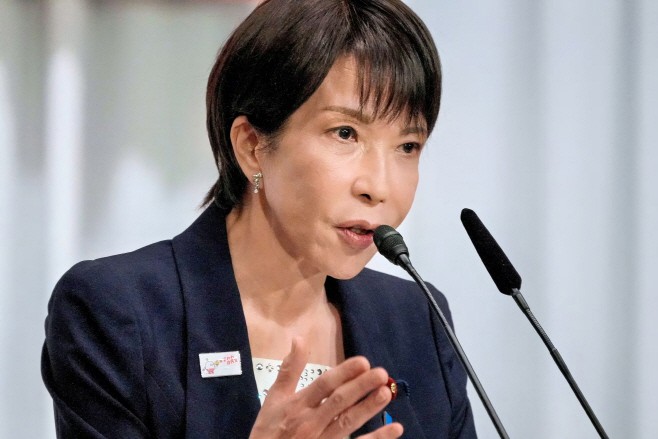 |
| Sanae Takaichi, Japan's Prime Minister / Yonhap News Agency. |
Japanese Prime Minister Sanae Takaiichi plans to present three principles on energy security at the upcoming Group of Seven (G7) summit in France, opening on June 15. With instability in the Middle East and the potential blockade of the Strait of Hormuz emerging as major risks for the international community, Japan aims to elevate issues such as strengthening oil reserves in Asian nations and stabilizing energy supply chains to the G7 agenda.
According to the Yomiuri Shimbun on June 11, citing multiple government sources, Takaiichi intends to propose the three principles at the summit and is working to have them reflected in the summit’s outcome document. She is expected to announce this policy at a ministerial meeting on Middle East affairs the same day.
The three principles are: securing free and transparent trade, supporting enhanced oil reserves in coordination with the International Energy Agency (IEA), and strengthening ties between oil‑producing and consuming countries. The Japanese government emphasizes free and safe navigation through the Strait of Hormuz, opposition to unjust export restrictions, and securing alternative supply routes to stabilize oil markets and strengthen supply chains.
Takaiichi seeks to position Japan as “the representative of Asian countries most affected by a de facto blockade of the Strait of Hormuz” and to lead energy security discussions at the G7. The strait is a vital shipping route for Middle Eastern crude oil and liquefied natural gas (LNG), and tensions in the region directly impact Asia’s energy supply and pricing stability.
Japan’s proposal also reflects its intention to expand “Power Asia,” its framework for supporting energy procurement, to the international community. Japan has already been assisting Southeast Asian nations in building oil reserve systems. At the G7, it plans to call for strengthening oil reserve capacity in Asian importing countries, referencing the IEA’s requirement for member states to hold reserves equivalent to 90 days of imports.
The implications extend to South Korea as well. As a major energy importer reliant on overseas oil and gas, Korea’s refining, petrochemical, and manufacturing sectors are directly tied to the stability of Middle Eastern shipping routes. Rising tensions in the Strait of Hormuz pose shared security risks for both Japan and Korea.
Both countries are resource‑poor, manufacturing‑based economies with high energy consumption. Addressing Middle East instability, protecting sea lanes, expanding reserve systems, and securing alternative procurement routes are challenges best tackled jointly through international organizations, the G7, and major consumer‑nation frameworks.
If Takaiichi succeeds in having the three principles included in the G7 outcome document, Japan could secure leadership in Middle East crisis response and Asian energy security discussions. For Korea, Japan’s initiative may evolve into a new agenda for regional energy security cooperation.
Choi Young‑jae
Most Read
-
1
Trump shares map on social media labeling Strait o..

-
2
Kia Sportage outperforms Mazda CX-5 in German auto..

-
3
Houthis launch successive attacks on Saudi airport..

-
4
U.S. deploys carrier, 10,000 more troops to Middle..

-
5
Trump rejects Iran's offer to open Strait of Hormu..

-
6
N. Korea conducts first swarm attack drill with dr..

-
7
U.S.-China summit falls short on substance as Trum..

PEOPLE





HEADLINE NEWS
- Seoul dismisses Ukraine's claim of 'S. Korean support for Russia' as "inaccurate and inappropriate"
- S. Korea, Japan race to develop nuclear-powered submarines
- Henri Kagan, Kenso Soai win Nobel Prize in Chemistry for uncovering how mol..
- Vance says Alaska LNG cooperation will move forward with Seoul's current or..

-
Address : In-Young Bldg., 34, Uisadang-daero 1-gil, Yeongdeungpo-gu, Seoul
Copyright by ASIATODAY CO., LTD. All rights resereved