



EU unveils 21st Russia sanctions, bans ex-soldiers’ entry into EU
Jun 10, 2026, 10:46 am


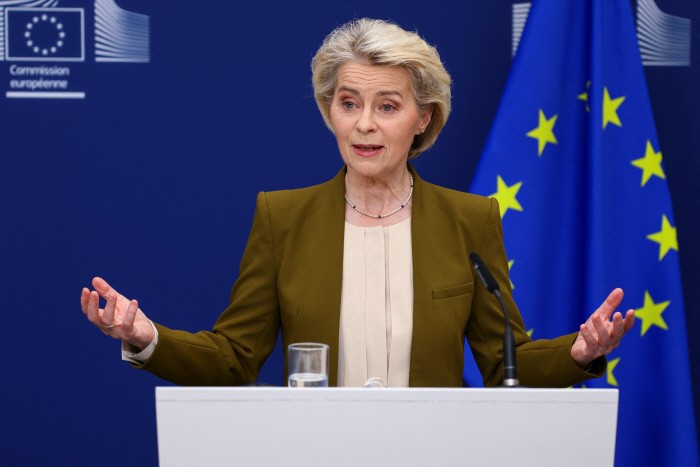 |
| Ursula von der Leyen, President of the European Commission, speaks during a press briefing on the European Union's 21st sanctions package against Russia in Brussels, Belgium, on June 9 (local time). / Reuters-Yonhap News |
The European Union (EU) has proposed a new round of sanctions against Russia, including a ban on entry into EU territory for individuals who have served in the Russian military during the war in Ukraine, while also targeting banks, cryptocurrency firms, and oil revenues.
Ursula von der Leyen, President of the European Commission, announced at a briefing on June 9 (local time) that the EU is proposing, for the first time, to prohibit entry into the bloc for anyone who has served in the Russian armed forces since the invasion of Ukraine. She said the measure is intended to prevent those involved in the invasion from entering EU territory.
The proposal is part of the EU's 21st sanctions package against Russia since Moscow launched its full-scale invasion of Ukraine in February 2022. According to The Guardian, the package still requires unanimous approval from all 27 EU member states before it can take effect, and specific provisions may be amended during negotiations.
Von der Leyen stressed that the EU intends to maintain pressure on Russia across multiple fronts in order to weaken the economic foundations supporting its war effort.
To curb Russia's windfall gains from rising oil prices, the European Commission has proposed extending the $44-per-barrel price cap on Russian oil until January 2027. It also plans to add 30 vessels from Russia's so-called "shadow fleet"—used to circumvent Western sanctions—to the sanctions list.
The EU is also seeking to block alternative financial channels used by Russia following its isolation from Western capital markets. Around 20 entities, including banks, cryptocurrency companies, and oil traders in third countries accused of helping Russia evade sanctions, are expected to be added to the blacklist.
Trade restrictions would also be expanded. For the first time, the EU is considering a ban on imports of Russian fish products, including cod. Imports of Russian metal ores and automobile parts worth approximately €60 million ($70 million) would also be restricted. On the export side, metals and alloys used in the aerospace and defense sectors—including drone and missile-launch systems—would be prohibited from being shipped to Russia.
The proposed entry ban on former Russian military personnel reflects security concerns raised by several member states, including Margus Tsahkna. Citing the threat of Russian hybrid operations, Tsahkna has argued that tighter controls on former Russian servicemen are essential for safeguarding security across Europe.
Alongside the sanctions proposal, the EU announced that it will formally advance membership negotiations with Ukraine and Moldova. The bloc plans to begin the first phase of accession talks next week, focusing on rule-of-law and democratic governance standards.
Lee Jung-eun
Most Read
-
1
Celltrion’s Omlyclo gains ground in major European..

-
2
Trump demands rates fall below 1% as Fed hikes for..

-
3
Trump makes $1 trillion bet ahead of midterm elect..

-
4
Iran resumes ballistic missile production, assembl..

-
5
Samsung Electronics, Mistral AI to jointly develop..

-
6
Trump warns countries not helping U.S. must pay re..

-
7
Apple launches first foldable, 1 million won prici..

PEOPLE






HEADLINE NEWS
- Trump to roll out ‘unprecedented welcome’ for Xi with B-2 bombers, F-22 fighters
- S. Korea, U.S., and Japan form united front on Taiwan and economic coercion..
- Trump administration moves to impose sweeping sanctions on International Cr..
- Xi to make state visit to U.S. Sept. 23-25, dispelling rumors over his heal..

-
Address : In-Young Bldg., 34, Uisadang-daero 1-gil, Yeongdeungpo-gu, Seoul
Copyright by ASIATODAY CO., LTD. All rights resereved