



Iran's supreme leader reaffirms commitment to support Hezbollah
Jul 28, 2026, 10:25 am


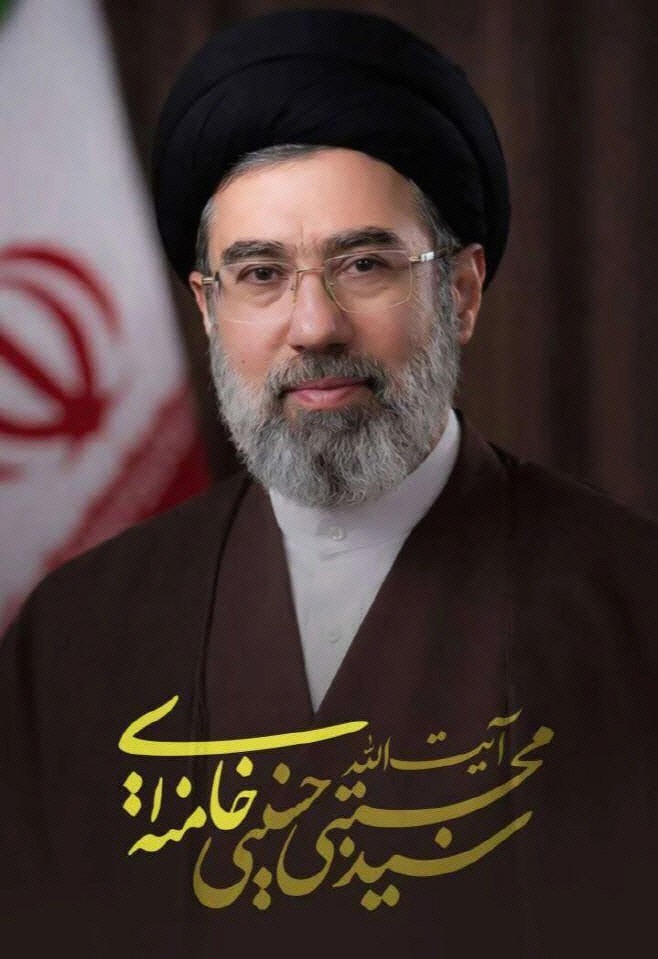 |
| Mojtaba Khamenei, elected as Iran's supreme leader. / Xinhua News and Yonhap News |
With a 13-day exchange of attacks between the United States and Iran coming to a halt, bringing a temporary breathing spell across the Middle East, Iranian Supreme Leader Mojtaba Khamenei announced that maintaining support for Lebanon's pro-Iranian militant group Hezbollah remains a strategic policy, signaling the possibility that the regional situation could escalate back into tension in the future.
According to Fox News and Iran's state-run IRNA agency on July 26 (local time), Mojtaba stressed through a letter sent to Hezbollah leader Naim Qassem, commanders, and fighters, as well as a post on the social media platform X (formerly Twitter), that "the only way forward is jihad and resistance."
"In accordance with the policies established by the great, martyred leader of the Islamic Revolution, the Islamic Republic considers defending the oppressed yet powerful mujahideen a strategic duty," he stated.
Mojtaba commended Hezbollah for standing "like an unshakable rock" against attacks by Israel and its supporters, expressing gratitude to the Lebanese people who have supported Hezbollah, particularly residents in the southern region.
"Today, nations around the world are exhausted by the tyranny of the U.S. government and the criminal Zionists who destroy generations," he reiterated, maintaining that "the only way forward is jihad and resistance."
He also emphasized, "We will make the territorial integrity of Lebanon and the complete, unconditional termination of aggression by the Zionist regime core conditions for an agreement to end the aggressive war by the United States." This is interpreted as a reconfirmation at the supreme leader level that a ceasefire on the Lebanese front must be included in end-of-war negotiations between the U.S. and Iran.
Mojtaba's letter was in response to a prior letter sent by Hezbollah reconfirming its loyalty to the new supreme leader.
Mojtaba was elected as the new supreme leader in March after his father, former Supreme Leader Ali Khamenei, was killed in an airstrike by the U.S. and Israel in February, but he had maintained a reclusive profile, failing to appear even at the funeral.
For this reason, his decision to publicly state his position this time is analyzed as an effort to establish his authority internally and externally as supreme leader, officially reconfirm relations with Hezbollah, and send a firm message toward the U.S. and Israel.
Park Jin-sook
Most Read
-
1
Celltrion’s Omlyclo gains ground in major European..

-
2
Trump demands rates fall below 1% as Fed hikes for..

-
3
Trump makes $1 trillion bet ahead of midterm elect..

-
4
Iran resumes ballistic missile production, assembl..

-
5
Samsung Electronics, Mistral AI to jointly develop..

-
6
Trump warns countries not helping U.S. must pay re..

-
7
Apple launches first foldable, 1 million won prici..

PEOPLE






HEADLINE NEWS
- Trump to roll out ‘unprecedented welcome’ for Xi with B-2 bombers, F-22 fighters
- S. Korea, U.S., and Japan form united front on Taiwan and economic coercion..
- Trump administration moves to impose sweeping sanctions on International Cr..
- Xi to make state visit to U.S. Sept. 23-25, dispelling rumors over his heal..

-
Address : In-Young Bldg., 34, Uisadang-daero 1-gil, Yeongdeungpo-gu, Seoul
Copyright by ASIATODAY CO., LTD. All rights resereved