



OPEC+ to raise oil production for fourth time; supply impact limited
Jun 08, 2026, 01:23 pm


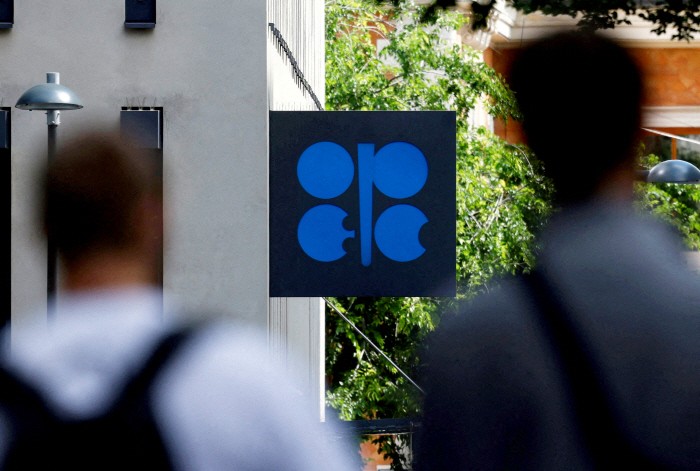 |
| The OPEC logo is seen on the exterior of the Organization of the Petroleum Exporting Countries (OPEC) headquarters in Vienna, Austria, on May 28, 2024. / Photo via Reuters, Yonhap News |
Key member nations of OPEC+, the expanded coalition of the Organization of the Petroleum Exporting Countries, have agreed to raise their oil production ceilings (quotas) for the fourth consecutive month. However, the dominant analysis suggests that with the Strait of Hormuz—the core oil transport route in the Middle East—blocked due to the war between the United States and Iran, this measure will face limitations in actually resolving the supply shortage in the global petroleum market.
According to a report by Reuters, seven core member nations within OPEC+ (Saudi Arabia, Russia, Iraq, Kuwait, Kazakhstan, Algeria, and Oman) agreed during a meeting on the 7th (local time) to additionally raise their daily average production targets by 188,000 barrels starting this July. This is part of a phased process to reverse the voluntary production cuts of 1.65 million barrels agreed upon in 2023.
It appears unlikely that this latest decision to boost production will lead to an actual increase in the volume of crude oil supplied to the market. Since the outbreak of the war in Iran on February 28, navigation through the Strait of Hormuz has been virtually paralyzed, blocking the export routes of major Gulf producers such as Saudi Arabia, Iraq, and Kuwait. According to official statistics, OPEC+’s actual production plunged by approximately 9.6 million barrels, dropping from a daily average of 42.77 million barrels in February before the war to 33.19 million barrels this past April.
Jorge Leon, senior analyst at energy consulting firm Rystad, pointed out, "With the Strait of Hormuz closed, an increase in OPEC+'s production targets is virtually meaningless."
If OPEC+ maintains its current trajectory of boosting production through August and September, the remaining volume of the production cuts initiated in 2023 (approximately 567,000 barrels) is projected to be fully restored to the market by the end of this September. Market experts warned regarding this, saying, "The moment the strait reopens, the market could instantly shift from a supply shortage to a fear of oversupply."
International oil prices fell to the $93-per-barrel range on the 5th as relief spread that the possibility of an all-out war between the US and Iran had eased slightly. Before the war, oil prices had hovered around the $72 mark.
Lee Jung-eun
Most Read
-
1
Trump shares map on social media labeling Strait o..

-
2
Kia Sportage outperforms Mazda CX-5 in German auto..

-
3
Houthis launch successive attacks on Saudi airport..

-
4
U.S. deploys carrier, 10,000 more troops to Middle..

-
5
Trump rejects Iran's offer to open Strait of Hormu..

-
6
N. Korea conducts first swarm attack drill with dr..

-
7
U.S.-China summit falls short on substance as Trum..

PEOPLE






HEADLINE NEWS
- Seoul dismisses Ukraine's claim of 'S. Korean support for Russia' as "inaccurate and inappropriate"
- S. Korea, Japan race to develop nuclear-powered submarines
- Henri Kagan, Kenso Soai win Nobel Prize in Chemistry for uncovering how mol..
- Vance says Alaska LNG cooperation will move forward with Seoul's current or..

-
Address : In-Young Bldg., 34, Uisadang-daero 1-gil, Yeongdeungpo-gu, Seoul
Copyright by ASIATODAY CO., LTD. All rights resereved