



US, India in final talks on trade deal
Jun 02, 2026, 10:45 am


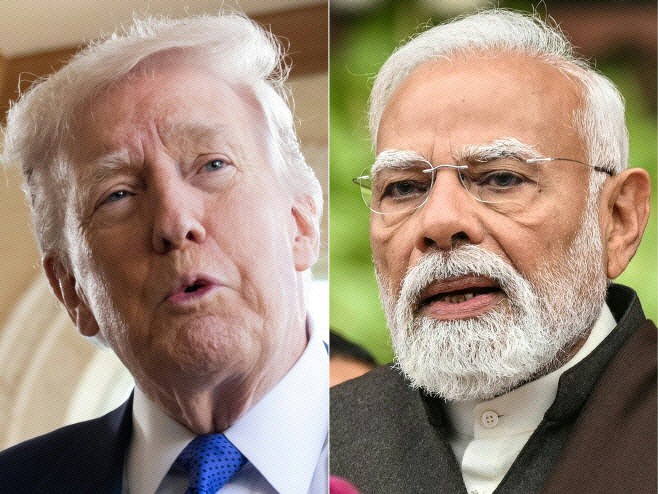 |
| U.S. President Donald Trump (left) and Indian Prime Minister Narendra Modi (right). / Photo via AFP, Yonhap News |
India is expected to bring Washington's ongoing Section 301 investigation under the Trade Act and the resulting tariff issues to the negotiating table to finalize a trade deal with the United States.
According to Reuters on the 1st (local time), an Indian government source stated that both countries are highly likely to discuss the matter to finalize the agreement. A U.S. delegation, led by Brendan Lynch, Assistant U.S. Trade Representative for South and Central Asia, will hold negotiations with Indian trade officials in New Delhi for three days starting from the 2nd.
The two countries reached a broad agreement on the framework of the trade deal last February. However, the negotiations lost momentum as the comprehensive tariff measures pushed forward by President Trump faced roadblocks from the U.S. Supreme Court.
A new variable filled the gap left by the stalled negotiations. Following the Supreme Court's decision, the Trump administration launched investigations into unfair trade practices based on Section 301 of the Trade Act targeting several trading partners, including India, and imposed a flat 10 percent tariff, shifting the focus of the negotiations toward this investigation. A trade source reported that India plans to demand a reduction in tariffs stemming from the investigation during these talks.
"India should discuss the tariff rates and the impact of the Section 301 investigation, and aim for a competitive tariff rate compared to its direct competitors," the source said. He added that the agreement could be finalized "if we secure fair and balanced terms."
A distinct characteristic of these negotiations is that India is aiming to widen the gap with its Asian competitors, going beyond a simple tariff reduction. The source noted that India is seeking more favorable tariff treatment than other manufacturing hubs in Asia to strengthen its position in global supply chains. Specifically, the explanation is that India expects preferential tariff rates over developing countries in South and Southeast Asia, such as Bangladesh, Pakistan, and Sri Lanka.
The next watershed moment to gauge the progress of the negotiations is whether the U.S. Trade Representative will visit. The source hinted that the negotiations are making headway, stating that USTR Jamieson Greer could visit India once the broad outlines of the agreement are finalized.
Jung Lee-na
Most Read
-
1
Trump shares map on social media labeling Strait o..

-
2
Kia Sportage outperforms Mazda CX-5 in German auto..

-
3
Houthis launch successive attacks on Saudi airport..

-
4
U.S. deploys carrier, 10,000 more troops to Middle..

-
5
Trump rejects Iran's offer to open Strait of Hormu..

-
6
N. Korea conducts first swarm attack drill with dr..

-
7
U.S.-China summit falls short on substance as Trum..

PEOPLE






HEADLINE NEWS
- Seoul dismisses Ukraine's claim of 'S. Korean support for Russia' as "inaccurate and inappropriate"
- S. Korea, Japan race to develop nuclear-powered submarines
- Henri Kagan, Kenso Soai win Nobel Prize in Chemistry for uncovering how mol..
- Vance says Alaska LNG cooperation will move forward with Seoul's current or..

-
Address : In-Young Bldg., 34, Uisadang-daero 1-gil, Yeongdeungpo-gu, Seoul
Copyright by ASIATODAY CO., LTD. All rights resereved