



US curbs AI chip detours by Chinese offshore units
Jun 01, 2026, 04:47 pm


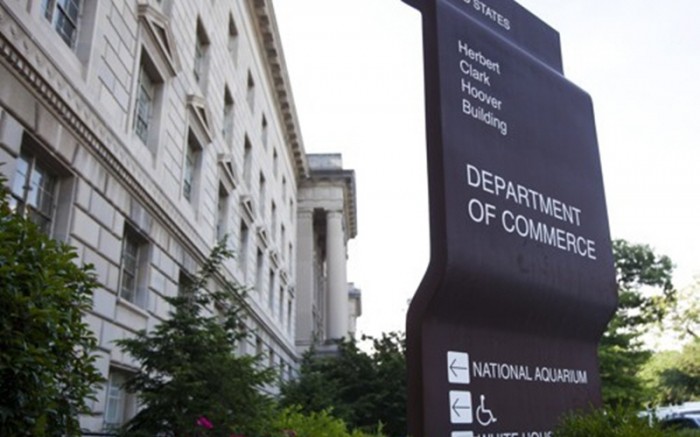 |
| The exterior of the U.S. Department of Commerce building in Washington, D.C. / Photo via EPA, Yonhap News |
The United States, which has been blocking exports of its latest cutting-edge artificial intelligence (AI) chips to China, took action on May 31 (local time) to plug a potential loophole that could allow its domestic firms, such as Nvidia, to sell semiconductors to the overseas subsidiaries of Chinese companies.
The Bureau of Industry and Security (BIS) under the U.S. Department of Commerce announced in a guideline posted on its website that it will apply and enforce export licensing requirements for advanced semiconductor transactions involving overseas affiliates of companies headquartered in China, Reuters reported.
It is highly unusual for the Department of Commerce, which typically rolls out export-related measures on weekdays, to issue such guidance over the weekend. The move appears to be an urgent response driven by growing scrutiny over the regulatory loophole.
"BIS issued guidance clarifying export license requirements that have been in place since 2023," a BIS spokesperson stated, adding that "BIS will continue to enforce export controls rigorously to safeguard critical American technology."
Nvidia maintains the stance that the new guidance does not bring any new changes to its operations. An Nvidia official explained, "The Department of Commerce had already clearly imposed licensing requirements on the company through an official letter, meaning we have been unable to export the chips in question during this period."
The Department of Commerce had previously announced in May of last year that it would not enforce the AI diffusion regulations introduced during the final days of the preceding Joe Biden administration.
While those regulations contained licensing requirements designed to regulate global access to AI semiconductors, the current administration's decision not to enforce them left the door open for AI chips to potentially flow into China via third countries.
U.S. industry insiders estimated that while the exact volume of the latest advanced AI chips traded through this loophole remains unconfirmed, it could potentially reach into the hundreds of thousands.
"The overseas subsidiaries of Chinese companies have been exploiting a loophole in the system to purchase Nvidia Blackwell chips without a license," pointed out Chris McGuire, a technology and national security expert and former U.S. State Department official, on social media on May 31.
"This is a massive problem," McGuire stated, adding that "it appears Chinese companies have been purchasing these chips at a significant scale."
U.S. President Donald Trump had partially permitted the export of Nvidia AI chips to China in December of last year; however, that authorization targeted the H200 model—which lags a generation behind—rather than the latest Blackwell architecture.
Kim Hyun-min
Most Read
-
1
Trump shares map on social media labeling Strait o..

-
2
Kia Sportage outperforms Mazda CX-5 in German auto..

-
3
Houthis launch successive attacks on Saudi airport..

-
4
U.S. deploys carrier, 10,000 more troops to Middle..

-
5
Trump rejects Iran's offer to open Strait of Hormu..

-
6
N. Korea conducts first swarm attack drill with dr..

-
7
U.S.-China summit falls short on substance as Trum..

PEOPLE






HEADLINE NEWS
- Seoul dismisses Ukraine's claim of 'S. Korean support for Russia' as "inaccurate and inappropriate"
- S. Korea, Japan race to develop nuclear-powered submarines
- Henri Kagan, Kenso Soai win Nobel Prize in Chemistry for uncovering how mol..
- Vance says Alaska LNG cooperation will move forward with Seoul's current or..

-
Address : In-Young Bldg., 34, Uisadang-daero 1-gil, Yeongdeungpo-gu, Seoul
Copyright by ASIATODAY CO., LTD. All rights resereved