



Pax Sinica looms after 200 years as national power of China explodes
May 18, 2026, 05:47 pm


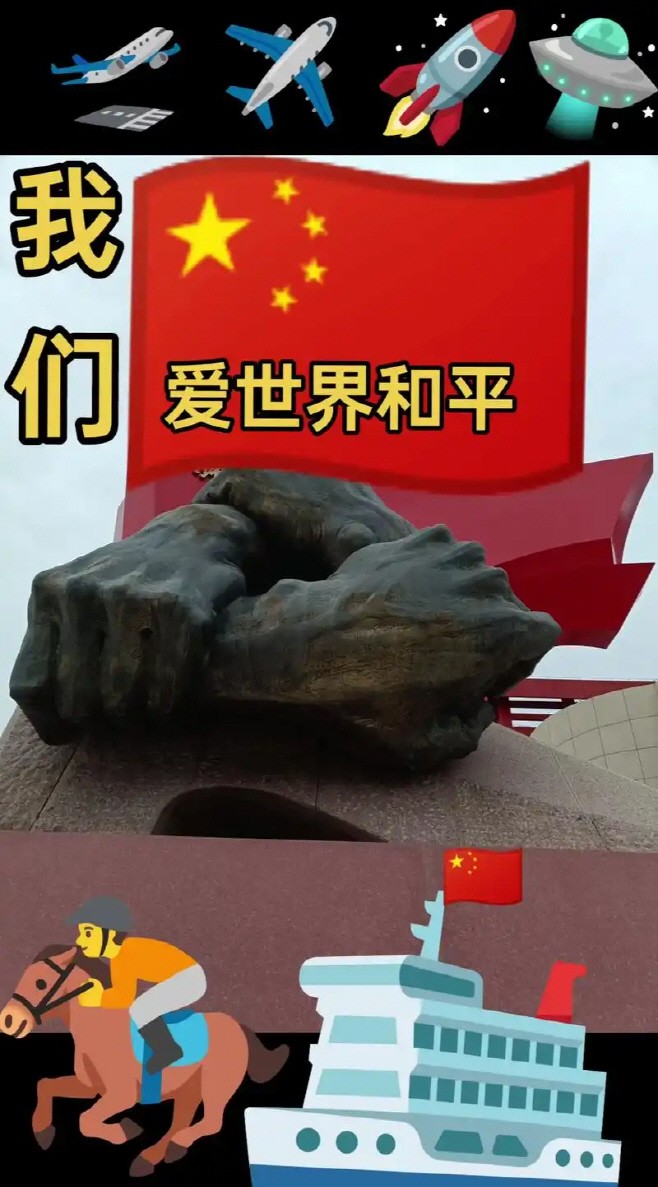 |
| A political cartoon from a prominent Chinese media outlet recently forecasting the imminent arrival of the "Pax Sinica" era. Such a scenario is highly plausible if China’s national power continues to surge at its current explosive pace. / Global Times |
China is showing distinct signs of an explosion in national power after successfully hosting the U.S.-China summit from May 14 to 15, inviting President Donald Trump of the United States—the world’s undisputed superpower—to Beijing. The country is even being credited with reviving the era of "Pax Sinica" to replace the current "Pax Americana," a feat unseen in over 200 years. Given that General Secretary and State President Xi Jinping almost unilaterally drove the bilateral summit—the first held in China in over eight and a half years—such an assertion appears well-founded.
According to Beijing diplomatic sources well-versed in Chinese affairs on May 18, it is no exaggeration to say that China was the center of the world and a global superpower akin to today’s United States until just before the Opium War with Britain in 1840. Buoyed by the legacy of its peak period, commonly referred to as the High Qing era (the prosperous reigns of Emperors Kangxi, Yongzheng, and Qianlong), China's GDP at the time accounted for nearly half of the global total, making its dominance a matter of course.
Granted, its national power plummeted following invasions by Western powers, earning it the moniker "Sick Man of East Asia" for nearly a century. However, China began rapidly recovering its strength with the implementation of reform and opening-up policies in the late 1970s, leading to its current status. Furthermore, starting this year, the country has been expanding its global influence at breakneck speed. One need look no further than the fact that leaders of major European Union member states—traditionally the strongest and oldest allies of the U.S.—have been competitively visiting Beijing since the beginning of the year, seeking to secure face time with President Xi. It is also a reality that even more EU leaders are scheduled to visit China within the year.
The U.S.-China summit, held amid this backdrop, served as a decisive turning point. Recalling reports from some foreign media outlets that President Trump was not only put on the defensive throughout the two-day talks but was also busy flattering President Xi, further explanation becomes redundant. Analysts note that not only American citizens but also the Chinese public were quite bewildered by this unexpected and astonishing turn of events, a reaction that is certainly not without reason.
The momentum does not stop here. With Russian President Vladimir Putin set to embark on a two-day visit to China starting May 19 immediately after Trump's departure, it is safe to say that China has fully restored its status as the superpower that received tribute from around the world two centuries ago. Ma Xiangwu, a cultural critic and professor at Renmin University, encapsulated this reality by asserting that China is bound to become the sole superpower (G1) replacing the U.S., stating, "China is no longer the paper tiger or the Sick Man of East Asia of the past. There is no reason why our economy cannot surpass the United States in both quantity and quality starting from 2035."
China is currently vying for global supremacy with the United States across almost all industrial sectors, including AI and semiconductors. In terms of military prowess, it is highly likely to stand shoulder-to-shoulder with the U.S. within a decade at most. The national goal set at the end of the last century to overtake the U.S. by 2049 at the latest was clearly backed by concrete conviction. The arrival of the Pax Sinica era is now becoming an undeniable reality.
Most Read
-
1
Celltrion’s Omlyclo gains ground in major European..

-
2
Trump demands rates fall below 1% as Fed hikes for..

-
3
Trump makes $1 trillion bet ahead of midterm elect..

-
4
Iran resumes ballistic missile production, assembl..

-
5
Samsung Electronics, Mistral AI to jointly develop..

-
6
Trump warns countries not helping U.S. must pay re..

-
7
Apple launches first foldable, 1 million won prici..

PEOPLE





HEADLINE NEWS
- Trump to roll out ‘unprecedented welcome’ for Xi with B-2 bombers, F-22 fighters
- S. Korea, U.S., and Japan form united front on Taiwan and economic coercion..
- Trump administration moves to impose sweeping sanctions on International Cr..
- Xi to make state visit to U.S. Sept. 23-25, dispelling rumors over his heal..

-
Address : In-Young Bldg., 34, Uisadang-daero 1-gil, Yeongdeungpo-gu, Seoul
Copyright by ASIATODAY CO., LTD. All rights resereved