



PPP vows filibuster if special counsel forced
Jan 07, 2026, 08:06 am


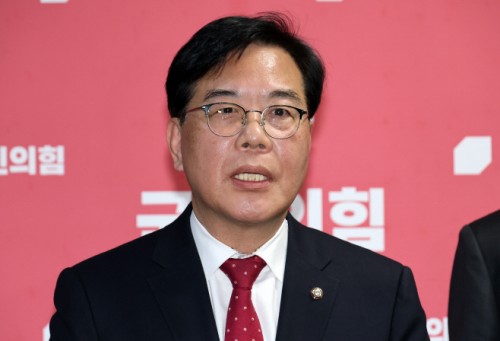 |
| Song Eon-seok, floor leader of the People Power Party, speaks to reporters outside his office at the National Assembly in Seoul on Jan. 6 after meeting National Assembly Speaker Woo Won-shik, expressing opposition to a planned plenary session on Jan. 8. / Yonhap |
Song Eon-seok, floor leader of the People Power Party, said Tuesday that his party would launch a filibuster if the ruling Democratic Party moves ahead with a National Assembly plenary session on Jan. 8 to pass what it calls a “second comprehensive special counsel bill.”
Speaking to reporters at the National Assembly, Song said the decision by Assembly Speaker Woo Won-shik to convene the session appeared to reflect the ruling party’s determination to push the bill through on that date.
Song stressed that the two parties had already agreed on Dec. 30 last year that no further plenary sessions would be held after that date. “We made it clear to the speaker that the People Power Party strongly opposes holding a plenary session on Jan. 8,” he said.
He criticized the proposed move as excessive, noting that three special counsel investigations are already under way and have consumed large amounts of public funds. Song also pointed to what he described as cases of excessive investigations involving pressure and coercion, which he said had led to tragic outcomes, including the death of an innocent public official.
“If a plenary session is unilaterally forced through on Jan. 8 solely to process a second comprehensive special counsel bill, it will inevitably face strong public resistance,” Song warned. He added that the existing three special counsel probes—covering the martial law case, the Kim Keon-hee case and the Marine investigation—should be concluded, with any remaining issues handled through supplementary police investigations.
Song further said the opposition is considering a filibuster as a last resort to block what he described as “eight harmful bills” being pushed by the Democratic Party. He labeled them as “five laws that undermine the judiciary” and “three laws that muzzle the public,” arguing that a filibuster would be the only remaining means to stop them.
Meanwhile, the National Assembly’s Legislation and Judiciary Committee is scheduled to hold a plenary meeting on Wednesday to begin deliberations on the two bills.
#Song Eon-seok #People Power Party #filibuster #special counsel bill
Copyright by Asiatoday
Most Read
-
1
Trump shares map on social media labeling Strait o..

-
2
Kia Sportage outperforms Mazda CX-5 in German auto..

-
3
Houthis launch successive attacks on Saudi airport..

-
4
U.S. deploys carrier, 10,000 more troops to Middle..

-
5
Trump rejects Iran's offer to open Strait of Hormu..

-
6
N. Korea conducts first swarm attack drill with dr..

-
7
U.S.-China summit falls short on substance as Trum..

PEOPLE






HEADLINE NEWS
- Seoul dismisses Ukraine's claim of 'S. Korean support for Russia' as "inaccurate and inappropriate"
- S. Korea, Japan race to develop nuclear-powered submarines
- Henri Kagan, Kenso Soai win Nobel Prize in Chemistry for uncovering how mol..
- Vance says Alaska LNG cooperation will move forward with Seoul's current or..

-
Address : In-Young Bldg., 34, Uisadang-daero 1-gil, Yeongdeungpo-gu, Seoul
Copyright by ASIATODAY CO., LTD. All rights resereved