



NIS drops complaints, politicization debate reignites
Dec 30, 2025, 08:17 am


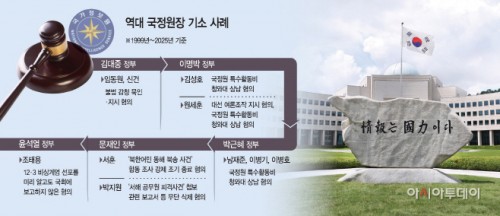 |
South Korea’s National Intelligence Service (NIS) has withdrawn its complaints against former directors Seo Hoon and Park Jie-won over the “West Sea civil servant shooting” case, reigniting controversy over whether the nation’s top intelligence body can truly separate itself from politics.
On Dec. 29, the NIS said the complaints—filed in 2022 during the previous administration—were based on internal investigations that later proved flawed. Following special audits and inspections conducted after the current government took office, the agency concluded that the accusations had been constructed contrary to facts or by forcing legal interpretations to establish criminal liability. The NIS said the withdrawal reflects an acknowledgment and apology for its own past mistakes.
Critics, however, argue that what counts as a “mistake” appears to change with each administration. Three years ago, under the prior government, the NIS accused the former chiefs of deleting intelligence reports and prematurely terminating a joint investigation—moves seen then as efforts to scrutinize alleged wrongdoing by the earlier administration. With a change in power, those judgments have now been reversed, fueling claims that intelligence decisions mirror the political direction of the day.
Analysts describe this pattern as the “politicization of intelligence,” warning that close alignment with political power has produced a persistent “director risk.” Since the agency adopted its current name in 1999, 10 of the 16 former NIS directors have been indicted, with six convicted. Even the most recent former chief faces trial over allegations tied to emergency measures. Observers say these cases underscore how directors, acting under political pressure, have repeatedly been exposed to legal jeopardy.
Experts interviewed urged reforms to secure political independence. One proposal would limit presidents and governments to issuing only general policy guidance, barring specific instructions on individual intelligence operations. Others point to a “prosecutorial model,” under which an agency remains within the executive branch but is shielded from direct command in specific cases, paired with stronger external oversight.
Calls are also growing to introduce fixed terms for the NIS director to ensure continuity and neutrality. With average tenures historically under two years, critics say directors lack incentives to pursue long-term intelligence strategies and are vulnerable to political turnover.
Finally, specialists argue that the director should be a career intelligence professional—an “intelligence man”—rather than a political appointee. They cite the example of George Tenet, who served across U.S. administrations as head of the Central Intelligence Agency, as evidence that expertise and continuity can strengthen an intelligence service’s credibility.
Whether the NIS can restore public trust, observers say, will depend on its ability to establish lasting safeguards that keep intelligence work independent of shifting political winds.
#National Intelligence Service #West Sea shooting case #Seo Hoon #Park Jie-won #complaint withdrawal
Copyright by Asiatoday
Most Read
-
1
Celltrion nears additional contract with major U.S..

-
2
Putin proposes trilateral U.S.-China-Russia summit..

-
3
U.S. weighs dropping MOAB, world's most powerful n..

-
4
"Aren't those foreigners on welfare?": M..

-
5
Attention centers on APEC for possible Trump-Xi-Pu..

-
6
Saudi Arabia, Iran hold first diplomatic talks to..

-
7
U.S., Israel plan to resume strikes on Iran after..

PEOPLE







-
Address : In-Young Bldg., 34, Uisadang-daero 1-gil, Yeongdeungpo-gu, Seoul
Copyright by ASIATODAY CO., LTD. All rights resereved