



Bangladesh denies passport to ousted PM Hasina, demanding extradition instead
Nov 10, 2026, 10:09 am


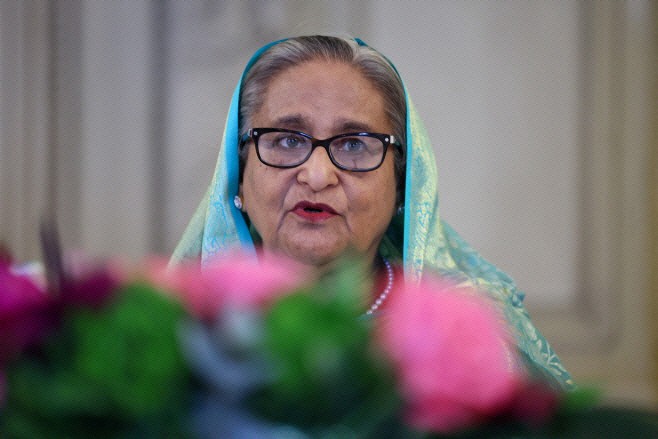 |
| Former Bangladeshi Prime Minister Sheikh Hasina. /Reuters-Yonhap |
Former Bangladeshi Prime Minister Sheikh Hasina, who has taken refuge in India, has requested a new passport to return home, but the Bangladeshi government has rejected her request.
Hasina says she plans to return in December and appear before a court voluntarily, while the government considers her a fugitive criminal and is demanding that India extradite her.
Both sides want Hasina to return to Bangladesh, but they disagree over how that should happen.
According to Reuters on Tuesday, Hasina's lawyers sent a letter to the Bangladeshi diplomatic mission in New Delhi the previous day, requesting a new passport and national identity card.
It was her first such request since she was ousted by student-led anti-government protests in 2024 and fled to India.
Hasina had previously announced plans to return to Bangladesh next month and voluntarily surrender to a court.
The Bangladeshi government rejected the request, saying it would not issue passports to terrorists.
"She is a fugitive criminal. We have a valid extradition treaty with India, and we want her handed over to us," State Minister for Foreign Affairs Humayun Kabir told reporters.
In other words, the government wants India to extradite Hasina rather than allow her to return independently using a newly issued passport.
In November last year, Bangladesh's war crimes tribunal sentenced Hasina to death in absentia for ordering a deadly crackdown on student-led protests. She denies the charges.
In their letter, Hasina's lawyers at London-based Matrix Chambers referred to reports that the interim government and other authorities had revoked her existing passport and national identity card.
They requested that new documents be issued promptly, citing her Bangladeshi citizenship and obligations under international human rights law.
Hasina's return could also have significant implications for domestic politics.
Having served as prime minister for a combined 20 years over multiple terms, she continues to enjoy support among some sections of the population.
However, her Awami League party, once the country's largest political party, has been banned from political activities since her removal from power. Many party officials have also been imprisoned or fled abroad.
Reuters reported that her return could deepen political divisions as the Bangladeshi government seeks to restore stability after more than two years of turmoil.
Her departure from India, however, could have a different impact on relations between the two countries.
Bilateral ties deteriorated sharply after India granted Hasina refuge following her ouster.
Reuters suggested that her departure from India could help improve relations between New Delhi and Dhaka.
In April, India's Ministry of External Affairs said it was reviewing Bangladesh's extradition request and wanted to work constructively with the new Bangladeshi government to strengthen bilateral relations.
Jeong Ri-na
Most Read
-
1
AMD's Lisa Su floated as potential Nvidia successo..

-
2
China President Xi's Keynote Speech at the APEC C..

-
3
Iran resumes attacks after two months, targeting U..

-
4
Alice Huang, affair partner of Jensen Huang, repor..

-
5
Inside Kylin Villa, the symbol of China's reform h..

-
6
Xi secures fourth term as China reshuffles next-ge..

-
7
Trump, Xi, Putin call for security cooperation at..

PEOPLE







-
Address : In-Young Bldg., 34, Uisadang-daero 1-gil, Yeongdeungpo-gu, Seoul
Copyright by ASIATODAY CO., LTD. All rights resereved