



Samsung and Google set to launch AI smart glasses on Nov. 12
Nov 09, 2026, 01:17 pm


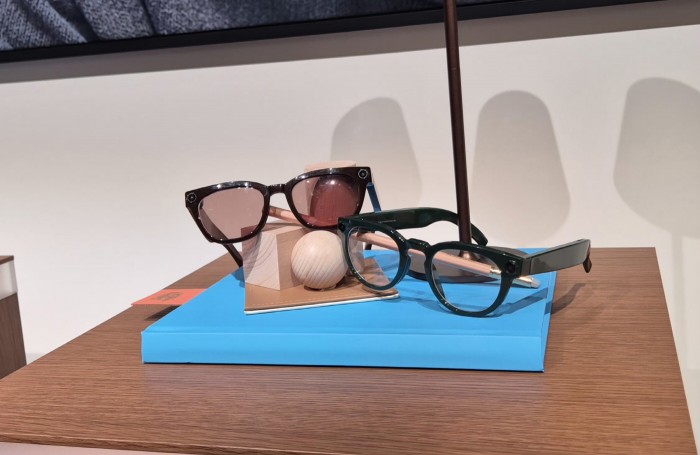 |
| Intelligent eyewear developed in collaboration with Warby Parker, unveiled by Samsung Electronics at its Galaxy Unpacked 2026 event in London in July. /Photo by Lee Ji-sun |
Artificial intelligence (AI) glasses developed through a partnership between Samsung Electronics and Google are nearing their U.S. market debut, with American eyewear brand Warby Parker and South Korea's Gentle Monster announcing plans to begin accepting preorders on Nov. 12.
As products combining advanced hardware, AI technology and established eyewear brands' designs enter the market, competition is expected to intensify in the AI glasses industry, where Meta has established an early lead.
According to industry sources on Sunday, Gentle Monster announced on its official website that preorders for its Intelligent Eyewear would begin on Nov. 12.
The announcement provides a concrete sales timeline for the AI glasses that Samsung and Google have been developing, with the details emerging through their eyewear partners.
Warby Parker also announced during its third-quarter earnings presentation on Nov. 5 that it would begin accepting preorders for its first AI glasses collection, called Intelligent Eyewear, on Nov. 12.
The new products combine Samsung's hardware design expertise, Google's AI technology and the designs of established eyewear brands.
Built on the Android XR platform, the glasses use Google's Gemini AI model to provide information based on users' voice commands and their surroundings.
Samsung and Google first unveiled designs developed in collaboration with Gentle Monster and Warby Parker at Google I/O 2026 in May.
At Galaxy Unpacked in London in July, the companies introduced new designs and key features, outlining a strategy to extend the smartphone-centered Galaxy ecosystem into eyewear.
Key features include real-time translation, navigation and information about nearby objects and surroundings.
Users can ask Gemini questions through voice commands without taking out their smartphones, or use the glasses' camera to obtain information about what is in front of them.
Because glasses are worn as part of everyday life, their weight, comfort and frame designs will also be important factors in the competition.
Pricing will be another key factor in determining the products' initial market success.
Official retail prices have yet to be announced, but industry estimates suggest a range of approximately 500,000 to 700,000 won.
Actual purchase prices may vary depending on each brand's frame and lens options.
Meta, a competing manufacturer, has already adopted a tiered pricing strategy based on product brands and features.
In the United States, the audio-focused Ray-Ban Meta Audio starts at $349, while the camera-equipped Ray-Ban Meta (Gen 3) starts at $449. The sports-oriented Oakley Meta Vanguard starts at $499.
Meta has been expanding its product lineup to serve different uses, including everyday wear and sports.
Samsung and Google's partners may similarly offer different price ranges depending on the frame designs and lens options provided by Warby Parker and Gentle Monster.
Another advantage is that the companies can leverage established eyewear brands' customer bases and distribution networks to reach more consumers, rather than competing solely on AI capabilities.
The market is growing rapidly.
According to market research firm Omdia, global AI glasses shipments reached 4.2 million units in the first half of this year, up 127% from the same period last year.
Meta shipped approximately 3.4 million units, accounting for 81.3% of the global market by shipment volume.
Samsung and Google's jointly developed products are expected to challenge Meta's dominance by emphasizing features such as convenient AI services connected to smartphones.
Lee Ji-sun
Most Read
-
1
AMD's Lisa Su floated as potential Nvidia successo..

-
2
China President Xi's Keynote Speech at the APEC C..

-
3
Iran resumes attacks after two months, targeting U..

-
4
Alice Huang, affair partner of Jensen Huang, repor..

-
5
Inside Kylin Villa, the symbol of China's reform h..

-
6
Xi secures fourth term as China reshuffles next-ge..

-
7
Trump, Xi, Putin call for security cooperation at..

PEOPLE







-
Address : In-Young Bldg., 34, Uisadang-daero 1-gil, Yeongdeungpo-gu, Seoul
Copyright by ASIATODAY CO., LTD. All rights resereved