



Japan plans foreign agent registration law
Oct 27, 2026, 01:19 pm


 |
| The Japanese Prime Minister's Office. According to the Yomiuri Shimbun on Oct. 27, the Japanese government is considering submitting a tentatively named "Foreign Interference Prevention Bill" to the ordinary session of the Diet in 2027. At the second meeting of an expert panel on strengthening intelligence capabilities, held at the Prime Minister's Office in Tokyo the previous day, the government presented key issues to be addressed in drafting the legislation. / Choi Young-jae, Tokyo correspondent |
The Japanese government is drafting legislation to regulate activities carried out under the direction of foreign governments to influence policymaking and public opinion. The main targets are political consulting firms, research institutions and advertising companies that may engage in such activities. The government is considering requiring advance registration and introducing penalties for malicious acts such as deception and intimidation. Although the discussions are primarily driven by concerns over election interference by China and Russia, activities involving the South Korean government in Japan could also be affected, depending on how the system is designed.
According to the Yomiuri Shimbun on Oct. 27, the Japanese government is considering submitting a tentatively named "Foreign Interference Prevention Bill" to the ordinary session of the Diet in 2027. At the second meeting of an expert panel on strengthening intelligence capabilities, held at the Prime Minister's Office in Tokyo the previous day, the government presented key issues to be addressed in drafting the legislation.
At the heart of the proposed legislation is a registration system designed to disclose the activities of "foreign agents." Individuals or organizations would be required to register in advance if they contact Japanese public officials or disseminate information intended to influence elections under agreements with or instructions from foreign governments or other entities. Activities involving the provision of money or other financial benefits were also discussed as potential targets of regulation.
The Japanese government cited political consultants, think tanks, advertising agencies and lobbying firms as examples of foreign government agents. The aim is to identify which countries these agents represent, whom they approach and what activities they undertake, thereby preventing them from influencing Japanese policymaking and public opinion without voters knowing who is behind their activities.
Registration requirements and penalties are reportedly being considered separately. The proposed approach would make activities conducted on behalf of foreign governments transparent while imposing penalties only on malicious acts involving deception or intimidation. The specific activities subject to punishment, the severity of penalties and measures to ensure the effectiveness of the registration system will be discussed further.
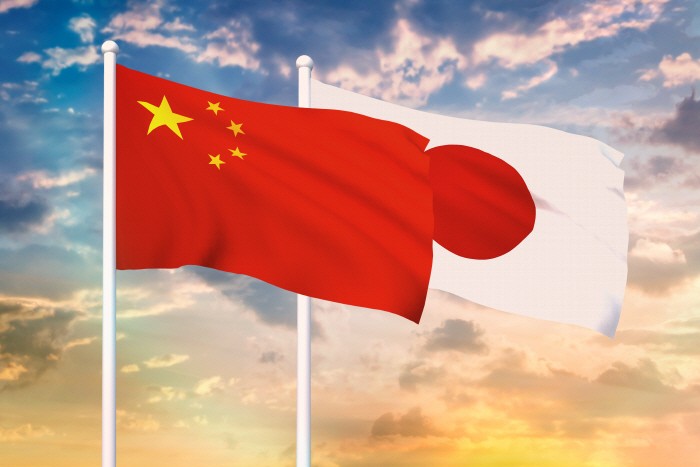 |
| China and Russia are being discussed as major countries of concern in connection with the tentatively named "Foreign Interference Prevention Bill." According to Kyodo News, a summary of the first expert panel meeting released by the Japanese government on Oct. 22 reportedly included remarks that foreign interference in elections was becoming increasingly serious, particularly with activities involving China and Russia intensifying. / Getty Images Bank |
The Japanese government explained that although legislation exists to address traditional espionage activities, such as the collection of classified information, there has been a lack of mechanisms to prevent interference in domestic affairs through foreign agents. The expert panel also discussed a case in which an individual acting under the direction of a foreign diplomatic mission in Japan spread political propaganda.
China, along with Russia, is being discussed as a major country of concern in connection with the proposed legislation. According to Kyodo News, a summary of the first expert panel meeting released by the Japanese government on Oct. 22 reportedly included remarks that foreign interference in elections was becoming increasingly serious, particularly with activities involving China and Russia intensifying. This suggests that the proposed regulatory framework may have been developed with China in mind. However, the legislative proposal currently under consideration is not designed to regulate specific countries exclusively.
The impact on neighboring countries is also expected to depend more on the nature of the activities involved than on nationality. If the system is enacted as currently designed, local companies and institutions commissioned by the South Korean government to influence policymaking or public opinion in Japan could be subject to registration requirements, alongside those acting on behalf of China. Japan is known for its particularly stringent administrative regulations and for slowing down business processes by requiring unnecessary paperwork. The legislation, intended to prevent interference in domestic affairs by hostile countries such as China and Russia, could also deal a direct blow to activities involving South Korea-Japan relations, including legitimate academic and cultural exchanges.
South Korea therefore needs to closely monitor the distinction between government-commissioned projects and private-sector exchanges. When the South Korean government commissions Japanese companies to promote policies or contact public officials, it must also carefully examine the legislation to avoid violations.
Another key question is how clearly the Japanese government defines the activities subject to registration and the applicable exemptions. If the distinction between government-funded research and activities and the independent activities of the organizations concerned is unclear, even legitimate international exchanges could be discouraged. Accordingly, concerns were raised at the first meeting about the need to clearly define which acts would be subject to penalties and the possibility that citizens' freedoms could be restricted. This is because officials responsible for enforcing the legislation would have considerable scope for arbitrary interpretation.
The Japanese government has also presented a national intelligence strategy, aiming to formulate it by the end of this year. Its main elements include strengthening intelligence collection and analysis capabilities, recruiting and training specialized personnel, and utilizing advanced technologies such as artificial intelligence. The plan is to strengthen intelligence capabilities to identify foreign influence activities alongside establishing legislation to disclose such activities.
Choi Young-jae
Most Read
-
1
Celltrion nears additional contract with major U.S..

-
2
Putin proposes trilateral U.S.-China-Russia summit..

-
3
U.S. weighs dropping MOAB, world's most powerful n..

-
4
"Aren't those foreigners on welfare?": M..

-
5
Attention centers on APEC for possible Trump-Xi-Pu..

-
6
U.S., Israel plan to resume strikes on Iran after..

-
7
China tightens grip on boosting domestic demand an..

PEOPLE







-
Address : In-Young Bldg., 34, Uisadang-daero 1-gil, Yeongdeungpo-gu, Seoul
Copyright by ASIATODAY CO., LTD. All rights resereved