



Australian small businesses voice concerns over cheap imports and heavy regulation
Oct 27, 2026, 10:19 am


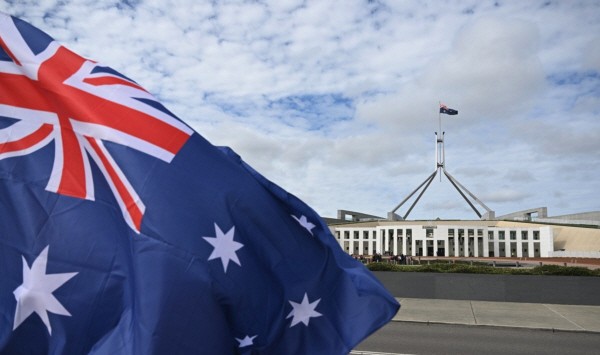 |
| The Australian flag flies in front of Parliament House in Canberra, Australia. / EPA, Yonhap |
Calls are growing among Australian small businesses for government measures, including regulatory relief, as they complain of the burden of excessive regulations and administrative costs on their operations.
Local media outlet The Courier-Mail reported on Oct. 26 that Australian small business owners are facing financial difficulties due to a combination of pressures, including high inflation, complex labor regulations and excessive administrative procedures.
During the 2025–2026 financial year (July 1, 2025, to June 30, 2026), a total of 14,152 businesses across Australia entered insolvency proceedings.
Business organizations, including the Council of Small Business Organisations Australia (COSBOA) and the Business Council of Australia (BCA), are calling for comprehensive measures, including reducing the corporate tax rate for small and medium-sized enterprises with annual revenue of less than A$20 million (approximately 18.666 billion won) from the current 25% to 20%, standardizing the 15 different criteria used to classify small and medium-sized businesses, and eliminating overlapping regulations.
Industry representatives argue that while free trade agreements (FTAs) have lowered barriers to market entry, excessive government administrative regulations are placing financial burdens on domestic businesses.
According to the Australian Institute of Company Directors (AICD), Australia's regulatory burden is approximately 33% higher than the average for the Organisation for Economic Co-operation and Development (OECD), while the economic cost of complying with federal government regulations amounts to approximately A$160 billion annually (about 149.328 trillion won, or roughly 6% of Australia's gross domestic product (GDP)).
A survey conducted last month by the Centre for Growth and Intelligence, a think tank under News Corp Australia, found that approximately 58% of Australians supported renegotiating or scaling back existing FTAs to impose higher tariffs on certain imported goods, including clothing and automobiles. Ten percent opposed the idea.
The findings are interpreted as indicating that public opinion on trade favors curbing the indiscriminate influx of low-cost imports and protecting domestic industries.
Local manufacturers and small retailers are also voicing opposition. Foreign manufacturers are rapidly gaining ground in the Australian market by leveraging their price competitiveness, supported by cheap labor and more lenient regulatory environments in their home countries.
Domestic businesses say they struggle to compete on equal terms in terms of price because they must comply with strict labor regulations and bear high administrative costs. Against this backdrop, concerns about the adverse effects of trade liberalization are spreading, with campaigns such as "Buy Australian" encouraging consumers to purchase Australian-made products.
Renee Nightingale, chief executive officer (CEO) of global online hair accessories retailer OG Ponytail, said, "Overseas competitors have no idea of the enormous regulatory and tax burdens Australian businesses have to bear," adding, "Even when I try to grow my business, the tax and regulatory constraints are so overwhelming that I am afraid of how much longer I can hold on."
An official from Australia's trade and industry sector argued, "If the market has been fully opened through FTAs, it is only right to first remove domestic regulatory and tax burdens so that Australian businesses can compete on fair terms," adding, "A fundamental overhaul of current trade and regulatory policies is needed, as they force domestic businesses into unlimited competition with cheap foreign products while keeping their hands tied."
Lee Dae-won
Most Read
-
1
Celltrion nears additional contract with major U.S..

-
2
Putin proposes trilateral U.S.-China-Russia summit..

-
3
U.S. weighs dropping MOAB, world's most powerful n..

-
4
"Aren't those foreigners on welfare?": M..

-
5
Attention centers on APEC for possible Trump-Xi-Pu..

-
6
U.S., Israel plan to resume strikes on Iran after..

-
7
China tightens grip on boosting domestic demand an..

PEOPLE







-
Address : In-Young Bldg., 34, Uisadang-daero 1-gil, Yeongdeungpo-gu, Seoul
Copyright by ASIATODAY CO., LTD. All rights resereved