



Hyundai, Kia hold their own in China's fiercely competitive auto market
Oct 26, 2026, 03:14 pm


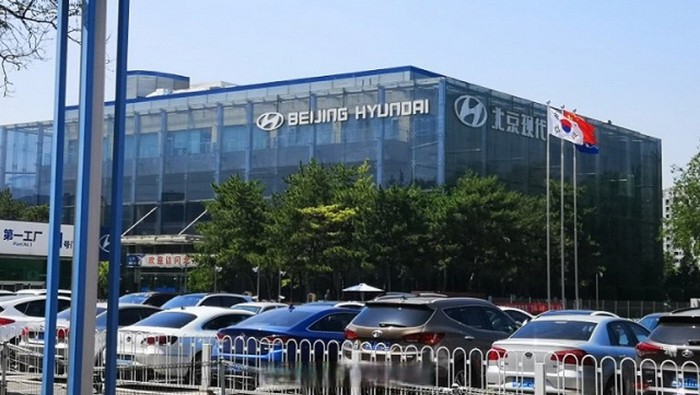 |
| A view of Beijing Hyundai Motor's plant in Shunyi District, Beijing. / By Hong Soon-do, Beijing Correspondent |
Hyundai Motor and Kia are managing to hold their own in China's notoriously cutthroat auto market, where competition is so fierce that it could easily be described as a brutal battle for survival. Despite the challenges, the two South Korean automakers appear to have retained at least some foundation for a potential recovery that could eventually help them regain their former glory.
According to recent reports by Chinese media outlets, including Yicai, and Beijing-based sources familiar with the automotive industry, Hyundai and Kia's combined sales in China were estimated at around 9,000 vehicles in September. Hyundai sold approximately 4,000 vehicles and Kia 5,000, representing painful declines of 47% and 31%, respectively.
The figures are particularly disappointing given that the two companies' combined monthly sales fell below 10,000 vehicles for the first time this year. The contrast is even more striking when compared with 2016, when their combined annual sales reached a staggering 1.8 million vehicles, putting the 2 million mark within reach. Indeed, the decline can hardly be described as merely disappointing. With the two automakers' combined market share now below 1%, their prospects are hardly encouraging either.
However, the picture looks considerably different when viewed against the rapid transformation of China's auto market, which has become a fiercely contested battleground as electric vehicles gain dominance. China also faces production overcapacity estimated at roughly 30% above demand, making Hyundai and Kia's unexpectedly severe struggles less surprising. The fact that bankruptcies among domestic electric vehicle manufacturers have become commonplace further illustrates the intensity of competition.
Moreover, compared with the difficulties facing major Japanese and European automakers operating in China, Hyundai and Kia can be said to be performing relatively well. According to media reports, Nissan's performance has been particularly dismal. Sales of its premium Infiniti brand were estimated at just 601 vehicles from January through July this year. There are clear reasons why Nissan, having recently closed its plant in Wuhan, Hubei Province, is reportedly considering a complete withdrawal from the Chinese market.
French automakers Peugeot and Citroën are hardly in a position to fare any better than Nissan. Both are struggling to sell an average of 1,500 vehicles per month. They could soon face a fate similar to that of Czech automaker Škoda, once a familiar household name among Chinese motorists but now reduced to near irrelevance in the market. Against this backdrop, Hyundai and Kia's combined September sales of 9,000 vehicles can reasonably be viewed as a relatively respectable performance.
Furthermore, their Chinese operations — Beijing Hyundai and Yueda Kia, based in Yancheng, Jiangsu Province — have recently been offsetting sluggish domestic sales through rapidly growing exports. Beijing Hyundai, for example, is estimated to have exported 120,000 vehicles in the first nine months of this year, up 70% from the same period last year. Its exports are expected to comfortably surpass 150,000 vehicles by year-end. This is also why Chinese media outlets predict that Beijing Hyundai will achieve its export target of 200,000 vehicles next year, three years ahead of its original schedule.
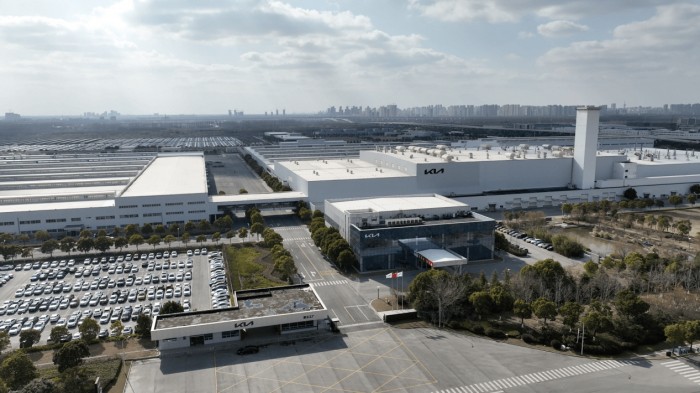 |
| A view of Yueda Kia's plant in China. Kia's local subsidiary is offsetting sluggish domestic sales with exports. / Yicai |
Yueda Kia is showing similar momentum. The company has consistently exported more than 10,000 vehicles a month and is expected to soon reach the milestone of 1 million vehicles in cumulative exports. Beijing-based economic commentator Gu Jinjun praised the resilience of both automakers, saying, "There's no need to worry about Beijing Hyundai or Yueda Kia. They are highly resilient companies that know how to survive even when circumstances are difficult." His assessment of the two companies' underlying strengths appears to be well-founded.
Hong Soon-do
Most Read
-
1
Celltrion nears additional contract with major U.S..

-
2
Putin proposes trilateral U.S.-China-Russia summit..

-
3
U.S. weighs dropping MOAB, world's most powerful n..

-
4
"Aren't those foreigners on welfare?": M..

-
5
Attention centers on APEC for possible Trump-Xi-Pu..

-
6
U.S., Israel plan to resume strikes on Iran after..

-
7
China tightens grip on boosting domestic demand an..

PEOPLE






-
Address : In-Young Bldg., 34, Uisadang-daero 1-gil, Yeongdeungpo-gu, Seoul
Copyright by ASIATODAY CO., LTD. All rights resereved