



Japanese child-rearing households' birth intent drops below 30% for first time
Oct 22, 2026, 10:08 am


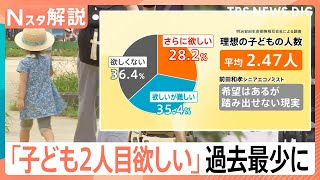 |
| The proportion of households with children in Japan desiring a second child dropped below 30%, hitting an all-time low. / Captured from Japan's TBS |
In Japan, the proportion of child-rearing households that want a second child fell below 30% for the first time, driven by rising prices and income insecurity.
On the 20th, major Japanese media outlets including the Mainichi Shimbun and the Sankei Shimbun reported as such, citing survey results released the previous day by Meiji Yasuda Life Insurance.
In a survey conducted by Meiji Yasuda Life Insurance among 1,100 households with one child aged 0 to 6, the proportion answering that they "want a second child" was limited to 28.2%. This marks a decline for six consecutive years after peaking at 56.9% in 2020, dropping below 30% for the first time.
According to the survey results, among those who responded that they do not want a second child or find it difficult to give birth, 54.5% cited "anxiety over income" as the reason. Additionally, the share answering that they would want a second child if economic conditions changed reached 66.4%. The conditions for economic improvement they cited were highest for increases in couple income (60.4%), followed by easing inflation (22.9%).
Regarding this, the Mainichi analyzed, "Rather than fertility intent itself disappearing, it starkly reveals the reality of delaying or giving up on birth plans because economic conditions fail to provide adequate support."
Japanese broadcaster TBS also cited the same survey results, introducing cases of concerns among parenting households in a news report featuring its own coverage.
Parents in their 30s interviewed by the broadcaster voiced concerns, saying, "Even with raising just one child right now, we feel anxious about whether we can afford it financially until adulthood," adding, "In a situation where getting help from grandparents is difficult, the physical strain of raising just our firstborn is already heavy."
One parent in their 30s remarked, "Having a second child would mean we have to cut living expenses and lower our quality of life, which feels burdensome."
According to the analysis introduced on the broadcast, the item accounting for the largest burden in households with children was food expenses. The proportion of food expenses in child-rearing costs was found to have risen from 25.8% in 2018 to 44.6% in 2026.
As prices for daily baby care supplies such as diapers and baby food also climb, household burdens are growing. Even if income rises, real disposable income inevitably shrinks unless it offsets inflation.
Regarding this, Kazutaka Maeda, senior economist at Meiji Yasuda Life, pointed out, "Rising prices and high housing costs in urban areas are stoking anxiety among child-rearing households," analyzing, "Compounded by not only current living cost burdens but also anxiety over whether the social security system will be sustainable in the future and whether children can maintain an economically stable life after growing up, this is leading to the choice of not having more children."
Jeong Eun-hye
Most Read
-
1
Celltrion nears additional contract with major U.S..

-
2
Putin proposes trilateral U.S.-China-Russia summit..

-
3
U.S. weighs dropping MOAB, world's most powerful n..

-
4
"Aren't those foreigners on welfare?": M..

-
5
Saudi Arabia, Iran hold first diplomatic talks to..

-
6
Attention centers on APEC for possible Trump-Xi-Pu..

-
7
Saudi airport in Riyadh struck again, leaving at l..

PEOPLE







-
Address : In-Young Bldg., 34, Uisadang-daero 1-gil, Yeongdeungpo-gu, Seoul
Copyright by ASIATODAY CO., LTD. All rights resereved