



With rampant overcapacity, China faces fundamental crisis
Oct 15, 2026, 02:09 pm


China is grappling with severe headaches both at home and abroad due to across-the-board industrial overcapacity. In short, it would not be an exaggeration to say that the country confronts an unprecedented crisis. Should Beijing fail to properly resolve this dilemma, realizing its ambition to surpass the United States and become the world's top superpower around 2035 will likely prove far from easy.
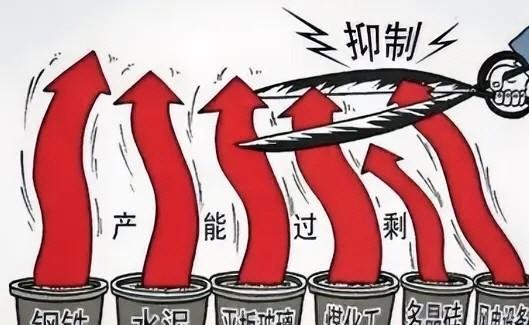 |
| Unchecked overcapacity is emerging across China's various industries, signaling that the Chinese economy faces a fundamental crisis. / The Beijing News |
According to Beijing sources well-versed in the Greater China economy on the 15th, it is safe to say that China's industrial overcapacity across sectors is truly serious, even judging solely by statistics. Across nearly most industries, it is estimated that output exceeds domestic and foreign demand by anywhere from a minimum of 20% to as much as 50% to 60%.
In particular, overcapacity in general construction steel, cement, and aluminum is estimated to have reached near-record levels due to the sharp slump in demand across the real estate and infrastructure construction sectors that began in 2021. Nor is that all. Emerging industries such as solar modules, power batteries, and new energy vehicles (NEVs) are no exception either. Driven by unimaginable growth rates, the situation has completely exceeded sustainable limits.
The new energy vehicle sector serves as a prime example. Synthesizing recent reports from media outlets including The Beijing News, China's planned automobile production for this year, including internal combustion engine vehicles, is estimated at 28.9 million units. However, total demand combining domestic consumption and exports is projected at a much lower 25.7 million units. It is accurate to project that an overcapacity rate of 12.5% will emerge.
Yet according to forecasts by Goldman Sachs, the situation could grow even more severe. With the firm analyzing that while total production capacity is expected to reach 50 million units annually in 2026, an oversupply of at least 10 million units is certain to occur, this clearly holds true. There is good reason why Chinese manufacturers are pushing aggressive export dumping into markets including the European Union (EU), South Korea, and Japan.
The problem may well lie in the fact that the emergence of artificial intelligence (AI) has added fuel to this overcapacity phenomenon. It is by no means unfounded that Beijing-based economic commentator Gu Jinjun marveled, stating, "In reality, as of the first half of 2026, various industries are estimated to have expanded their production capacity by an average of around 10% compared to before the advent of AI. Moving forward, production capacity is expected to expand explosively."
There is arguably only one way to deal with overcapacity: offloading products at low prices. Indeed, this phenomenon is rapidly unfolding both inside and outside China. With Chinese enterprises across most industrial sectors blatantly resorting to export dumping for several years now, further explanation seems unnecessary. Seen in this light, it is only natural that South Korea, the U.S., Japan, and the European Union (EU) have recently stepped forward to devise joint countermeasures against Chinese goods—blocked by U.S. trade barriers—rapidly flooding into European and emerging markets.
China's unchecked overcapacity is highly likely to persist for several years to come. In this environment, China faces the reality of a double whammy: sluggish domestic demand and trade barriers abroad. It confronts a checkmate dilemma that offers no easy exit. If things go wrong, there is no guarantee it can avoid outright catastrophe. The deepening agony of Chinese economic authorities facing this fundamental crisis seems inevitable.
Hong Soon-do
Most Read
-
1
Celltrion nears additional contract with major U.S..

-
2
Houthis launch successive attacks on Saudi airport..

-
3
Saudi Arabia, Iran hold first diplomatic talks to..

-
4
Saudi airport in Riyadh struck again, leaving at l..

-
5
U.S. deploys carrier, 10,000 more troops to Middle..

-
6
Five ASEAN countries welcome Myanmar coup leader

-
7
"Aren't those foreigners on welfare?": M..

PEOPLE







-
Address : In-Young Bldg., 34, Uisadang-daero 1-gil, Yeongdeungpo-gu, Seoul
Copyright by ASIATODAY CO., LTD. All rights resereved