



[Exclusive] Japan asks Trump to persuade Kim Jong-un as it pushes for Japan-N. Korea summit
Oct 08, 2026, 01:22 pm


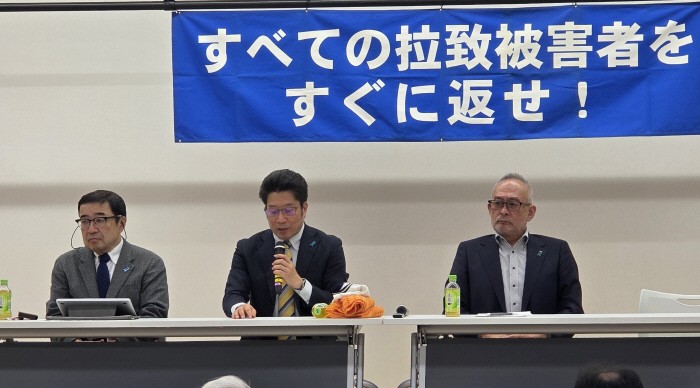 |
| At a reporting session on the U.S. delegation's activities regarding the Japanese abduction issue held in Bunkyo Ward, Tokyo on the 7th, the delegation reported that they successively met with officials from the U.S. government, the federal Congress, and think tanks to urge that the abduction issue be placed on the agenda should a summit between President Trump and Kim Jong-un take place. / Tokyo Correspondent Choi Young-jae |
Amid the possibility of a fourth meeting between U.S. President Donald Trump and North Korea's Kim Jong-un, the Japanese government is moving to arrange a summit between Prime Minister Sanae Takaichi and Kim. Following President Trump’s public statement that he intends to meet Kim within the year, the Japanese government and organizations representing Japanese abduction victims have begun lobbying the U.S. government and Congress to help broker a Japan–North Korea summit on the premise of a U.S.–North Korea summit.
Japan's strategy envisions President Trump raising the abduction issue directly when he meets Kim, which would then pave the way for a bilateral summit between Prime Minister Takaichi and Kim Jong-un. When asked in August whether he would meet Kim within the year, President Trump replied, "I will," and has recently reiterated his willingness to resume direct dialogue.
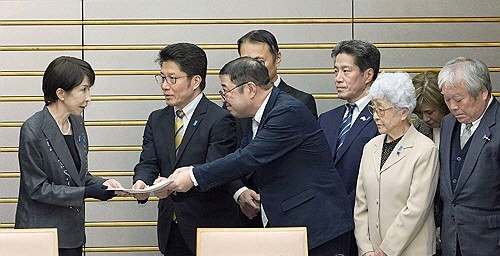 |
| Japanese Prime Minister Sanae Takaichi (left) receives campaign guidelines regarding the abduction issue from Takuya Yokota, head of the Association of Families of Victims Kidnapped by North Korea (second from left), and Tsutomu Nishioka, chairman of the Rescue Association (third from left), at the Prime Minister's Office in Tokyo on February 16. / Yonhap News |
At the reporting session on the U.S. delegation's activities regarding the Japanese abduction issue held in Bunkyo Ward, Tokyo on the 7th, this strategy was disclosed in considerable detail. Takuya Yokota, head of the Association of Families of Victims Kidnapped by North Korea (Families Association), and Tsutomu Nishioka, chairman of the Rescue Association, who visited the United States from September 21 to 25, revealed that they held back-to-back meetings with officials from the U.S. government, the federal Congress, and think tanks to urge that the abduction issue be placed on the agenda should a summit between President Trump and Kim Jong-un take place.
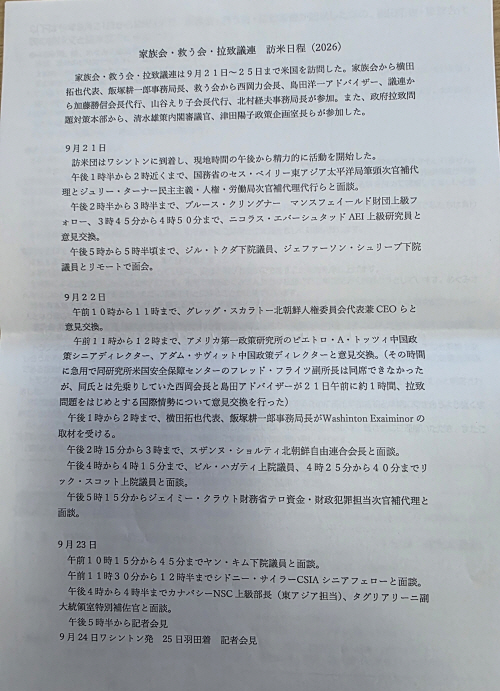 |
| The U.S. visit itinerary from September 21 to 25 disclosed by the Japanese abduction issue delegation. They reported holding a series of meetings with officials from the U.S. government, the federal Congress, and think tanks to urge that the abduction issue be placed on the agenda should a summit between President Trump and Kim Jong-un take place. / Tokyo Correspondent Choi Young-jae |
In practice, the visiting delegation met with high-ranking officials from the White House National Security Council (NSC), State Department officials, and members of Congress to convey this position, receiving reaffirmation from the U.S. side of its continued support for a prompt resolution to the abduction issue.
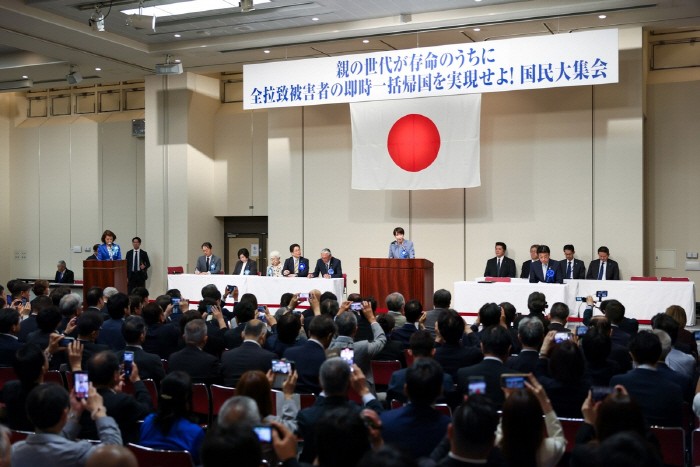 |
| Prime Minister Takaichi delivers a speech at the "National Rally" demanding the return of abduction victims on May 30. / Yonhap News |
Particularly drawing attention during the report on this day were details concerning behind-the-scenes dynamics at the Trump–Kim summits held in Singapore in 2018 and Hanoi in 2019. Tsutomu Nishioka, chairman of the Rescue Association, explained that President Trump raised the issue of Japanese abductees directly with Kim Jong-un at the time, and notably drew a reaction from Kim during the Hanoi summit indicating readiness to meet then-Japanese Prime Minister Shinzo Abe.
However, as U.S.–North Korea negotiations collapsed in Hanoi over denuclearization and sanctions relief, the momentum that could have led to a Japan–North Korea summit also came to a halt. The remarks also detailed circumstances indicating that Matthew Pottinger, who served as White House Deputy National Security Advisor during the first Trump administration, was involved in bringing up the Japanese abduction issue.
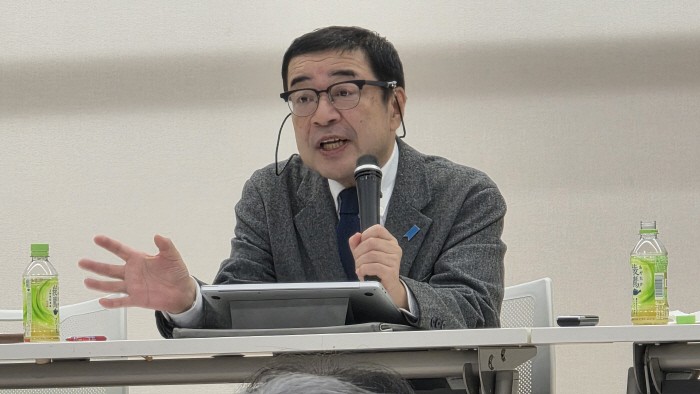 |
| Tsutomu Nishioka, chairman of the Rescue Association, explains the results of the U.S. visit at the delegation's reporting session on the 7th. / Tokyo Correspondent Choi Young-jae |
That President Trump indeed raised the abduction issue in his past summits with Kim Jong-un is corroborated by U.S. government records from that time. During a 2019 meeting between President Trump and the families of abduction victims, the families directly expressed their gratitude to him for raising the abduction matter when he met Chairman Kim.
The reason Japan is bringing up the precedents of past U.S.–North Korea summits once again lies in President Trump's recent moves. In August, President Trump stated that Kim Jong-un had responded to his outreach attempts, followed by his public expression of interest in holding a summit within the year. U.S. media outlets also reported that President Trump directed aides to explore arranging a face-to-face summit with Kim as early as this autumn. While North Korea continues to take a hardline stance on issues such as denuclearization—meaning a meeting is not yet finalized—President Trump's willingness to engage in dialogue remains clear.
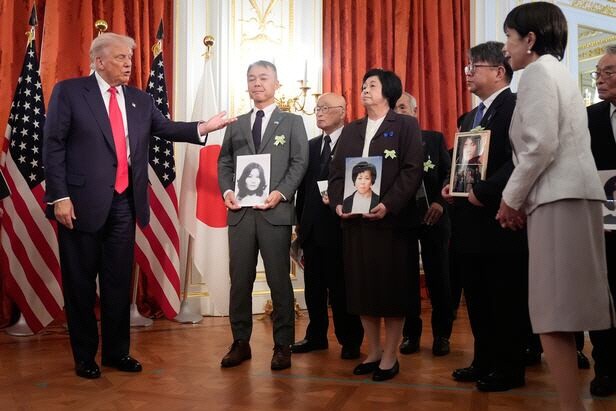 |
| U.S. President Donald Trump (left) and Japanese Prime Minister Sanae Takaichi (right) meet with family members and relatives of Japanese victims abducted by North Korea at the Akasaka Palace in Tokyo, Japan, on October 28, 2025. / AP, Yonhap |
Prime Minister Takaichi is also already maneuvering under the assumption of this possibility. It was confirmed on the 6th that during her summit with President Trump held in New York last month, Prime Minister Takaichi requested that, should a U.S.–North Korea summit materialize, he urge Kim Jong-un to agree to a Japan–North Korea summit with her. Meeting directly with families of abduction victims on the same day to receive an in-person briefing on the results of their U.S. visit, Prime Minister Takaichi stated that she reaffirmed President Trump's "strong support" for resolving the abduction issue.
Because of this, the diplomatic roadmap envisioned by Japan boils down to: "Trump–Kim summit → Trump raises the abduction issue → Takaichi–Kim summit." During the report on the U.S. visit that day, heavy emphasis was placed on the argument that should President Trump and Chairman Kim meet again, the U.S. side must play a role in enabling the Japanese prime minister to meet Chairman Kim in person. The visiting delegation explained that they prepared this stance in an English-language document and delivered it to the U.S. administration, Republican and Democratic lawmakers alike, and think tank experts.
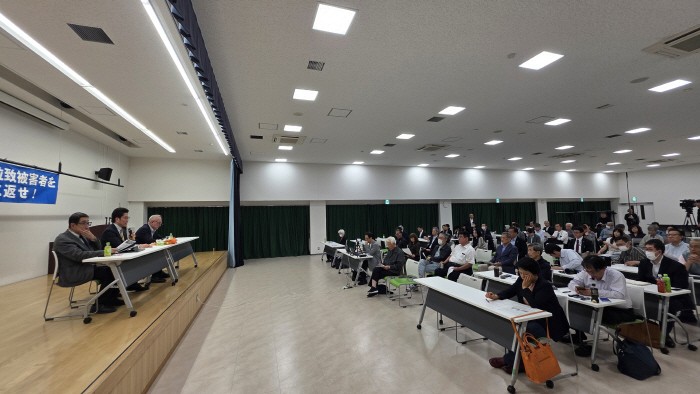 |
| At a reporting session on the U.S. delegation's activities regarding the Japanese abduction issue held in Bunkyo Ward, Tokyo on the 7th, the delegation explains the outcomes of their visit to the United States. / Tokyo Correspondent Choi Young-jae |
For South Korea, these developments go well beyond the Japanese abduction issue alone. While the South Korean government has also supported President Trump’s attempts to reopen dialogue with North Korea, it has maintained that any U.S.–North Korea negotiations must yield concrete progress on North Korea's nuclear issue and must not undermine South Korea's security posture.
Ultimately, should a Trump–Kim summit materialize, the divergent interests of South Korea prioritizing the North Korean nuclear threat, Japan seeking to leverage the abduction issue into a bilateral summit, and North Korea intent on demanding sanctions relief and recognition as a nuclear state will intersect all at once.
Choi Young-jae
Most Read
-
1
Trump shares map on social media labeling Strait o..

-
2
Kia Sportage outperforms Mazda CX-5 in German auto..

-
3
Houthis launch successive attacks on Saudi airport..

-
4
U.S. deploys carrier, 10,000 more troops to Middle..

-
5
Trump rejects Iran's offer to open Strait of Hormu..

-
6
N. Korea conducts first swarm attack drill with dr..

-
7
U.S.-China summit falls short on substance as Trum..

PEOPLE





HEADLINE NEWS
- Seoul dismisses Ukraine's claim of 'S. Korean support for Russia' as "inaccurate and inappropriate"
- S. Korea, Japan race to develop nuclear-powered submarines
- Henri Kagan, Kenso Soai win Nobel Prize in Chemistry for uncovering how mol..
- Vance says Alaska LNG cooperation will move forward with Seoul's current or..

-
Address : In-Young Bldg., 34, Uisadang-daero 1-gil, Yeongdeungpo-gu, Seoul
Copyright by ASIATODAY CO., LTD. All rights resereved