



Samsung Electronics hikes Galaxy S26 series prices by up to 270,000 won
Oct 01, 2026, 05:03 pm


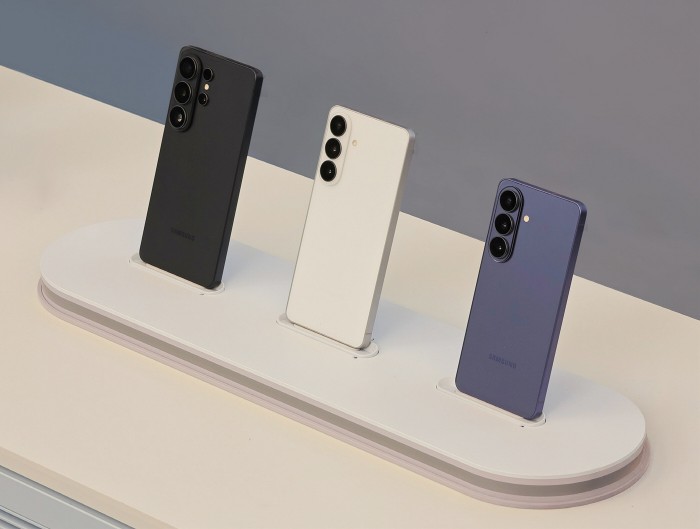 |
| Galaxy S26 series. / Samsung Electronics |
Samsung Electronics has raised domestic sales prices for its Galaxy S26 series released in the first half of this year. Amid mounting cost pressures driven by price hikes for key components such as memory, the tech giant took the step of adjusting prices for flagship smartphones that are already on sale. With Apple also raising prices not only for new models but also for existing iPhones, the trend of price increases is spreading across the smartphone market as a whole.
According to industry sources on the 1st, Samsung Electronics raised domestic prices for the Galaxy S26 series starting the same day. For the 256GB models, prices for the standard, Plus, and Ultra variants were each hiked by 149,600 won.
Accordingly, the price of the Galaxy S26 standard 256GB model rose from the previous 1,254,000 won to 1,403,600 won. The Plus variant of the same storage tier was adjusted from 1,452,000 won to 1,601,600 won, and the Ultra rose from 1,797,400 won to 1,947,000 won. The Ultra 1TB model saw an increase of 276,100 won.
Samsung Electronics also raised prices earlier this year for the Galaxy Z7 series, which launched in the second half of last year. Analysts note that unlike typical price adjustments timed with new product rollouts, the impact of surging component costs was so severe that the company had little choice but to lift prices on products already circulating in the market.
Despite robust sales, Samsung Electronics' mobile business faces pressure on profitability due to rising costs. In the second quarter of this year, the MX (Mobile eXperience) and Networks division posted 33.2 trillion won in revenue and an operating loss of 700 billion won. While sales of the Galaxy S26 and Galaxy A series remained solid, mounting cost burdens from components like memory pushed the division into the red. The latest price adjustment is interpreted as a move to defend profitability.
Earlier, Apple likewise raised prices on its existing models. Domestic sales prices for the iPhone 17 256GB model rose by 160,000 won from 1.29 million won to 1.45 million won, and the 512GB model rose by the same margin from 1.59 million won to 1.75 million won. With companies raising rather than lowering prices of existing products even after launching successors, the purchasing burden on consumers is increasing.
Chinese smartphone makers have also moved to raise prices. Brands such as Huawei, Xiaomi, and Honor have adjusted prices multiple times this year. Last month, Huawei's Mate 80 Pro and Pro Max went up by 1,000 yuan (approximately 200,000 won), while the Xiaomi 17 rose by 300 yuan (approximately 60,000 won). Certain Honor models also saw hikes of 300 to 600 yuan (approximately 60,000 to 120,000 won).
According to market research firm Counterpoint Research, global smartphone prices this year rose by an average of 15% compared to the beginning of the year. Prices for new models also increased by an average of 25% compared to equivalent predecessors from the previous year. As Chinese vendors join Samsung and Apple in raising prices, the wave of price hikes is spreading across the entire industry.
Component cost pressures are expected to persist for the time being. In a report published last month, market research firm TrendForce projected that contract prices for conventional DRAM would rise 10% to 15% quarter-on-quarter in the fourth quarter of this year, while NAND flash contract prices would climb 15% to 20%.
Lee Ji-sun
Most Read
-
1
Alteogen secures European patent for Keytruda SC,..

-
2
Trump shares map on social media labeling Strait o..

-
3
Celltrion seeks rheumatoid arthritis indication ex..

-
4
Kia Sportage outperforms Mazda CX-5 in German auto..

-
5
Chinese e-commerce giants AliExpress, Temu and She..

-
6
China expels No. 2 military official Zhang Youxia..

-
7
Houthi rebels release video claiming downing of Sa..

PEOPLE







-
Address : In-Young Bldg., 34, Uisadang-daero 1-gil, Yeongdeungpo-gu, Seoul
Copyright by ASIATODAY CO., LTD. All rights resereved