



With deflation dragging down economy, China faces bleaker outlook next year
Oct 01, 2026, 03:16 pm


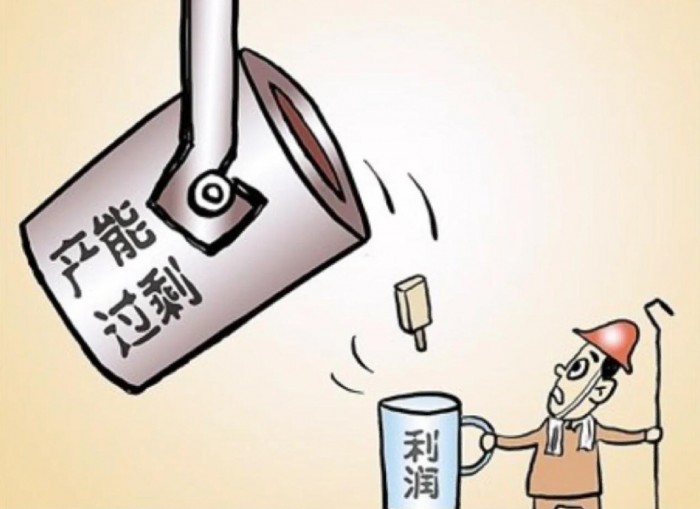 |
| An editorial cartoon illustrating overcapacity, a chronic ailment of the Chinese economy. It starkly depicts the reality where profits are meager or non-existent despite overproduction, posing an enormous burden on the economy. / Jingji Ribao (Economic Daily) |
Analysis suggests it is highly probable that the Chinese economy will post even worse performance next year than this year as negative factors such as deflation become chronic. Considering that this year could go down as the worst in several years, next year is poised to be an outright disastrous one.
Synthesizing recent reports from foreign media and Beijing sources well-versed in Greater China economic intelligence, it would hardly be an exaggeration to assert that the Chinese economy is currently in considerable distress. While the economic authorities are expected to manage to meet the 4.5% to 5% growth target proposed at the fourth plenary session of the 14th National People's Congress (NPC) in March, the reality remains quite bleak when examining various granular indicators.
Numerous negative factors underpin this assessment. Above all, private consumption, an indispensable pillar for boosting domestic demand, shows little sign of recovery. Weak investment is also far from positive. Adding to this is the reality that the real estate sector—which once accounted for around a quarter of gross domestic product (GDP)—has shown zero sign of revival since collapsing following the bursting of its bubble, rendering expectations for next year's economy virtually hopeless.
At this point, there is little need to even mention the youth unemployment rate among those aged 16 to 24 (excluding students), which is nearing the 20% mark. Forecasts that the trade surplus will approach $1 trillion this year on the back of robust electric vehicle exports offer no real consolation. While anticipation for next year could theoretically grow, it would be wiser to abandon wishful thinking that will only inflict psychological distress if current conditions persist.
That conditions next year will remain daunting is clearly confirmed by forecasts indicating that chronic overcapacity, a quintessential ailment of the Chinese economy, will fail to improve for a considerable period ahead. With the electric vehicle sector—outwardly appearing as an export pillar—festering beneath the surface as brand-new vehicles dump directly onto the market at rock-bottom used prices, further explanation is hardly needed. A prolonged bout of deflation is virtually inevitable.
In fact, market outlooks are already circulating that four major product categories will entrench deflationary pressures next year. Vehicles reportedly head the list, followed by housing, home appliances, and daily necessities. Given the reality of China's domestic market—where self-deprecating remarks abound that apartments across the nation outside of select major metropolises are selling for the price of onions or cabbages—such predictions hit the nail on the head.
Nor does it stop there. If sluggish domestic demand is compounded by employment insecurity brought on by the full-fledged rollout of artificial intelligence (AI), there is every chance that the Chinese economy could cross into near-calamitous territory next year. An economic commentator and former journalist surnamed Gu, speaking on condition of anonymity, voiced legitimate concerns: "People may view the widespread adoption of AI technology that China seeks to lead as a godsend. Over the long run, however, the fallout is likely to manifest in earnest, with employment insecurity being a prime example. One cannot help but wonder if the Chinese economy is shooting itself in the foot."
China is making every effort to realize its ambition of overtaking the U.S. in aggregate economic size to become the world's leading economy by around 2035 at the latest. While not realistically impossible, if current conditions become entrenched, the country will likely have to brace for an uphill struggle over a prolonged period.
Hong Soon-do
Most Read
-
1
Alteogen secures European patent for Keytruda SC,..

-
2
Trump shares map on social media labeling Strait o..

-
3
Celltrion seeks rheumatoid arthritis indication ex..

-
4
Kia Sportage outperforms Mazda CX-5 in German auto..

-
5
Chinese e-commerce giants AliExpress, Temu and She..

-
6
China expels No. 2 military official Zhang Youxia..

-
7
Houthi rebels release video claiming downing of Sa..

PEOPLE







-
Address : In-Young Bldg., 34, Uisadang-daero 1-gil, Yeongdeungpo-gu, Seoul
Copyright by ASIATODAY CO., LTD. All rights resereved