



[Desk Column] China's dangerous nationalism and traitors
Oct 01, 2026, 09:36 am


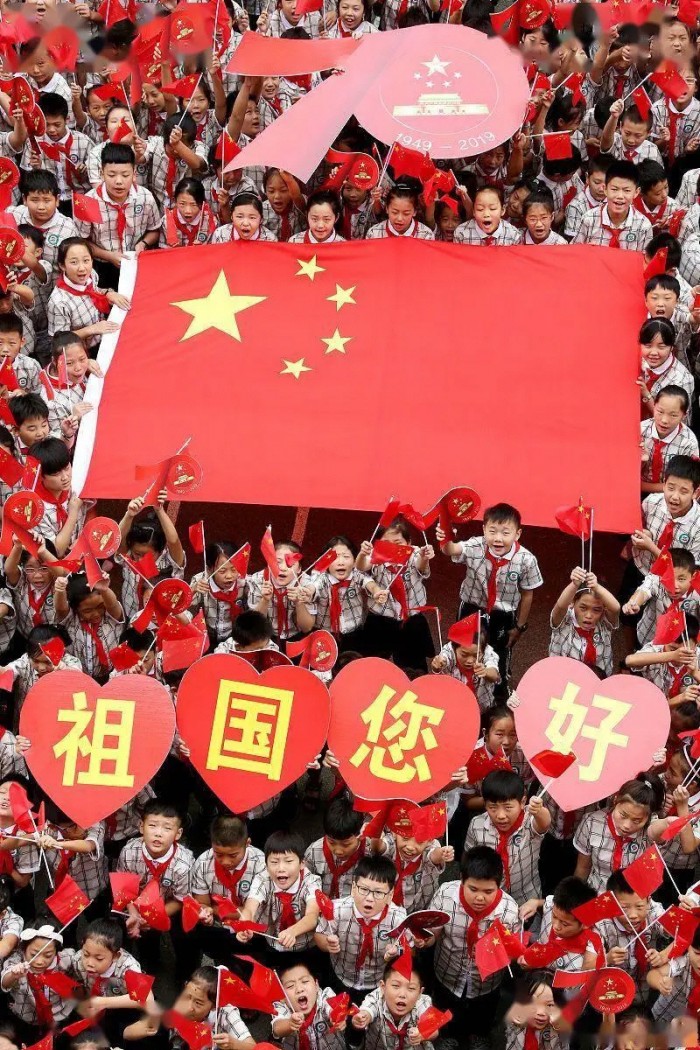 |
| An event clearly demonstrating the excessive nationalism in which China's MZ generation has recently been immersed. If taken too far, it could spiral into a dangerous situation. / The Beijing News (Xinjingbao) |
China's National Day on October 1 must be described as a holiday of considerable significance to the Chinese people. One can safely make this assertion given that the revolution—started modestly in 1921 by 13 communists, including former Chairman Mao Zedong—reached fruition on this day in 1949, after 28 years.
Naturally, during this period, the atmosphere of nationalism trending among today's younger MZ generation cannot help but surge. A prominent example is the frenzy for guochao (national tide, or patriotic consumption), which encourages using domestic products to stimulate domestic demand needed to revive the economy amid a considerably difficult phase. One need only look at tourism trends, which heated up days in advance as the holiday overlapped with the Mid-Autumn Festival. A prevailing sentiment favors domestic tourist destinations, touting their superior xingjiabi (price-to-performance ratio) over traveling abroad.
The reality where various Chinese digital products sell with immense popularity, sweeping global brands off the nationwide market like autumn leaves, also speaks to this guochao wave. The fact that South Korean brands such as Samsung and LG—which once boasted formidable presence to the point of being plagued by explosively proliferating counterfeits—are now utterly powerless is certainly no mere coincidence.
One can safely describe the nationalism of the MZ generation as blind. It remains far removed from rational thinking. It is bound to be dangerous. Looking at the sentiment on social media platforms labeling political exiles—who inevitably left China and wander abroad for political reasons—as traitors and turncoats on the occasion of National Day, one cannot help but see this reality.
Representative figures can be cited. Prominent among those branded as traitors and turncoats are Yan Jiaqi, Wang Dan, Wuerkaixi, and Chai Ling, leading figures in the Tiananmen democratization movement that occurred 37 years ago. Except for Yan, who is in his mid-80s, all have now entered middle age around 60, yet they continue to face relentless torrents of abuse.
Added to this list as scapegoats are prominent female author Yan Geling, who became an exile for various reasons in recent years, and Hao Haidong, a former football player who featured prominently in the 2002 Korea-Japan World Cup. Hao in particular has been unable to wash away the stigma of being labeled a family of traitors and turncoats alongside his wife Ye Zhaoying, a former badminton star, and their only son.
Yet these individuals, it can be stated with certainty, have never inflicted significant harm on their homeland or fellow citizens. They merely spend grueling years abroad, partly by choice and partly by force, due to differences in political views and outlooks on life. Unless China's political system changes, returning home remains impossible. They may end up ending their lives abroad without ever setting foot on their native soil again.
These figures are not the only prominent Chinese living abroad after fleeing China. Not a few business figures fled under the cover of night to evade responsibility for massive tax evasion and bankruptcy. Moreover, when fleeing, they siphoned colossal sums of money abroad, dealing a severe blow to the Chinese economy. A prime example is Pan Shiyi, founder of SOHO China, who was once regarded as an exceptional prodigy in the real estate industry. He is known to live a lavish lifestyle after fleeing to the U.S., neglecting his responsibility for driving the company into bankruptcy.
Nonetheless, these individuals who caused immense harm to China receive little criticism from the MZ generation. The Chinese government also does not classify them as figures who inflict grave damage on the nation. This seems to be because they remain politically quiet. Considering this from a human standpoint, they are far more pernicious, yet such is the reality.
It is difficult to assert that patriotism is inherently bad. However, once tainted by politics, it turns truly dangerous. At a national level, this goes without saying. One need only recall Germany under Adolf Hitler. For China to become a respected, model patriotic nation that contributes to the international community, the conclusion easily emerges that the MZ generation must first redefine what kind of people constitute true traitors.
Hong Soon-do
Most Read
-
1
Alteogen secures European patent for Keytruda SC,..

-
2
Trump shares map on social media labeling Strait o..

-
3
Celltrion seeks rheumatoid arthritis indication ex..

-
4
Kia Sportage outperforms Mazda CX-5 in German auto..

-
5
Chinese e-commerce giants AliExpress, Temu and She..

-
6
China expels No. 2 military official Zhang Youxia..

-
7
Houthi rebels release video claiming downing of Sa..

PEOPLE






-
Address : In-Young Bldg., 34, Uisadang-daero 1-gil, Yeongdeungpo-gu, Seoul
Copyright by ASIATODAY CO., LTD. All rights resereved