



High-protein food craze sweeps Malaysia
Sep 30, 2026, 10:23 am


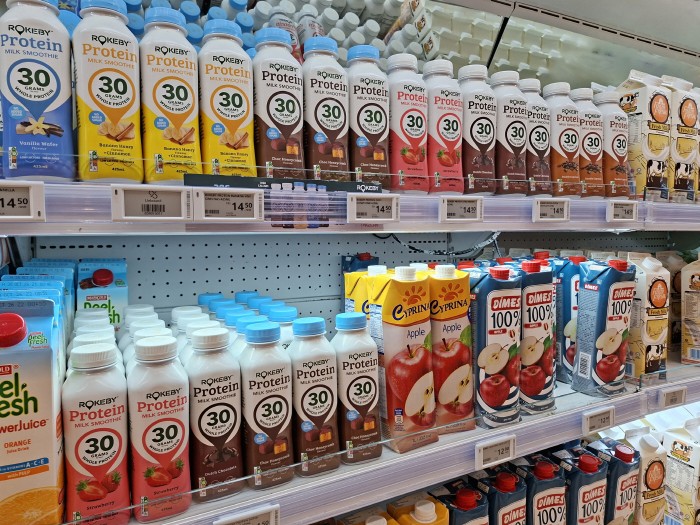 |
| High-protein beverages are displayed at a supermarket in Kuala Lumpur. / Correspondent Hong Seong-ah in Kuala Lumpur |
As products and marketing emphasizing "High Protein" spread across the Malaysian food industry recently, experts pointed out that the overall nutritional value of food should not be judged solely by its protein content.
According to The Sun Daily on the 28th (local time), "high protein" is being used as a key marketing phrase across a wide variety of foods, ranging from yogurt, cereal, bread, and beverages to ice cream, various snacks, and desserts.
However, experts warned that the "high protein" label can create a so-called "health halo effect," leading consumers to perceive the entire product as healthy.
Rozanna Rosly, a clinical dietitian at the UM Specialist Centre (University of Malaya Specialist Centre), pointed out that while protein has become a spotlighted nutrient in food marketing, the mere addition of protein does not elevate a product's overall nutritional quality.
In fact, a study examining breakfast cereals labeled with protein claims found that consumers perceived them as healthier and more nutritious than conventional cereals; however, comparisons based on equal serving sizes revealed instances where these products contained higher levels of sugar, sodium, and calories.
Dietitian Rozanna advised, "Choosing a product based solely on the high-protein label may inadvertently lead to higher sodium and sugar intake. Consumers should check the nutrition facts panel and ingredient list on the back rather than the advertising claims on the front."
This means that when choosing high-protein products, consumers need to comprehensively review not only protein content, but also serving size, actual protein per serving, sugars, saturated fat, sodium, dietary fiber, and calories. When comparing regular products with high-protein alternatives, it is crucial to examine the accompanying nutritional profile alongside protein numbers.
According to the Recommended Nutrient Intakes for Malaysia 2017 released by the Malaysian Ministry of Health, recommended protein intake varies across life stages depending on age and gender. For adults, Malaysian dietary guidelines suggest a protein intake standard of approximately 1.00g per kilogram of body weight to maintain health.
Accordingly, an adult weighing 60kg can aim for roughly 60g of protein, which can be obtained through everyday whole foods such as eggs, fish, chicken, milk, yogurt, tofu, and legumes.
Experts particularly stressed that rather than blindly increasing protein intake, adopting a "food-first approach" is also essential—evaluating whether one is meeting adequate protein needs tailored to individual physical conditions and dietary habits, as well as examining the actual food sources providing that protein.
Hong Seong-a
Most Read
-
1
Alteogen secures European patent for Keytruda SC,..

-
2
Trump shares map on social media labeling Strait o..

-
3
Celltrion seeks rheumatoid arthritis indication ex..

-
4
Kia Sportage outperforms Mazda CX-5 in German auto..

-
5
Chinese e-commerce giants AliExpress, Temu and She..

-
6
China expels No. 2 military official Zhang Youxia..

-
7
Houthi rebels release video claiming downing of Sa..

PEOPLE







-
Address : In-Young Bldg., 34, Uisadang-daero 1-gil, Yeongdeungpo-gu, Seoul
Copyright by ASIATODAY CO., LTD. All rights resereved