



U.S. sanctions 13 individuals and entities aiding Iran's arms procurement
Sep 30, 2026, 10:05 am


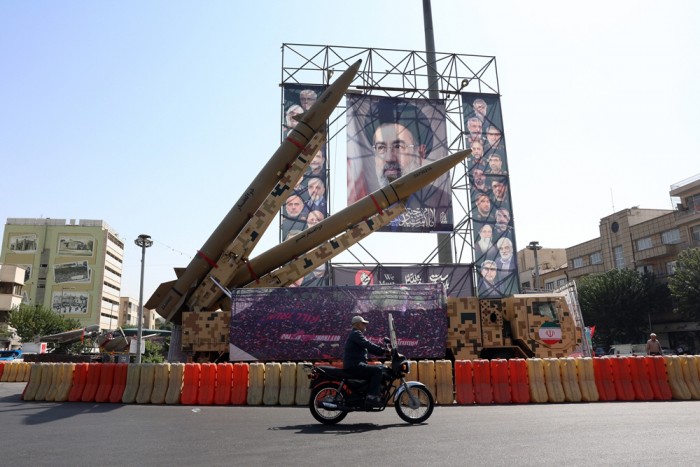 |
| A man walks past an Iranian-made Zolfaghar missile displayed in front of a billboard showing a photo of Iran's Supreme Leader Ayatollah Mojtaba at Baharestan Square in Tehran, Iran, on the 28th (local time). / EPA Yonhap |
The U.S. administration announced additional sanctions on the 29th (local time) targeting foreign individuals and entities that assisted Iran's weapons procurement.
The targets include individuals and businesses based in Russia, China, Hong Kong, and Pakistan.
The U.S. Department of the Treasury, alongside the Department of State, announced that it added 13 entities and individuals based in Russia, China, Hong Kong, and Pakistan to its new sanctions list, stating, "They supported Iran's procurement of weapons and components."
The department also explained that the sanctions aim to degrade Iran's ability to rebuild its weapons programs while raising the costs borne by those who support its arms procurement.
These sanctions are part of the Donald Trump administration's strategy to economically isolate Iran and pressure it into negotiations to end the Middle East conflict that began in February of this year.
The newly designated targets include Seyed Asghar Alizadeh Tabatabaei, the Beijing-based representative of Iran's Ministry of Defense and Armed Forces Logistics.
The Treasury Department stated that he coordinated the procurement of finished weapons systems and dual-use components from China on behalf of Iran.
Another sanctioned entity is the Iranian firm Kavoshcom Asia R&D Group. The company reportedly procured electronic products, including connectors, for the Iran Aircraft Manufacturing Industries Corporation (IAMI).
The Treasury Department explained that Hong Kong-based EC Mojo Technology provided electronic components to support Kavoshcom's procurement efforts, and Li Peng, head of EC Mojo's China branch, was involved in the process.
U.S. Treasury Secretary Scott Bessent said, "The Treasury Department will not tolerate any actions that support the Iranian regime," adding, "We will continue to identify, expose, and isolate forces that support Iran."
The Treasury Department also placed individuals and entities that aided Iran's weapons production under sanctions in May and June.
Brett Erickson, head of the risk consulting firm Obsidian Risk Advisors, analyzed that recent U.S. sanctions are unlikely to be effective in degrading Iran's capability to launch missiles and drones in the Strait of Hormuz.
Erickson said, "This measure is merely performative management for the Trump administration to claim, 'We are applying strong pressure on them,' but in reality, it amounts to nothing more than poking with a toothpick."
Kim Hyun-min
Most Read
-
1
Alteogen secures European patent for Keytruda SC,..

-
2
Trump shares map on social media labeling Strait o..

-
3
Celltrion seeks rheumatoid arthritis indication ex..

-
4
Kia Sportage outperforms Mazda CX-5 in German auto..

-
5
Chinese e-commerce giants AliExpress, Temu and She..

-
6
China expels No. 2 military official Zhang Youxia..

-
7
Houthi rebels release video claiming downing of Sa..

PEOPLE







-
Address : In-Young Bldg., 34, Uisadang-daero 1-gil, Yeongdeungpo-gu, Seoul
Copyright by ASIATODAY CO., LTD. All rights resereved