



Will Trump ease sanctions, unfreeze assets for Iran nuclear steps?
Sep 29, 2026, 10:37 am


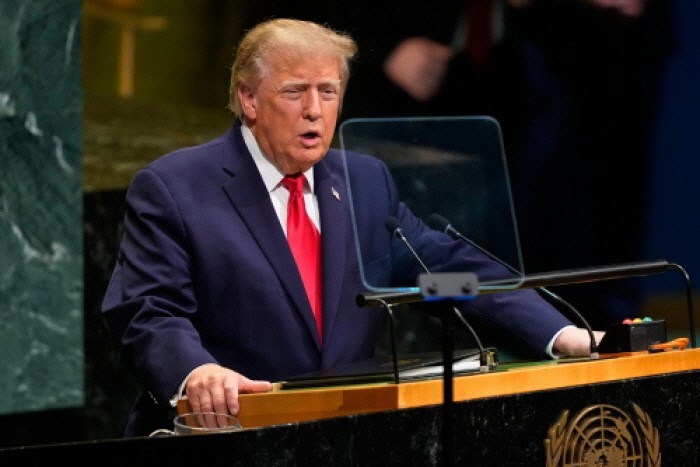 |
| U.S. President Donald Trump delivers an address during the 81st session of the United Nations General Assembly at UN Headquarters in New York on the 22nd local time. / AP, Yonhap |
U.S. President Donald Trump is willing to move forward with sanctions relief and the unfreezing of assets conditional on concrete steps regarding Iran's nuclear program, U.S. online outlet Axios reported on the 28th local time, citing multiple U.S. officials.
However, President Trump pushed back in a post on the social media platform Truth Social, saying, "Not true. I haven't offered anything." Bloomberg reported that Iranian officials are pessimistic about reaching an agreement before the U.S. midterm elections on November 3.
Axios reports Trump willing to ease sanctions for nuclear concessions, while Trump denies it flatly as a lie
Citing U.S. officials, Axios reported that President Trump is willing to ease sanctions and release frozen Iranian funds in exchange for specific actions concerning Iran's nuclear program. Bloomberg also reported along the same lines, citing a U.S. official.
While Iran seeks to center the negotiations on the Strait of Hormuz and the U.S. Navy's blockade, the Trump administration is demanding nuclear concessions from Iran. Axios assessed that this proposal, coming after President Trump rejected a recent Iranian offer, offers a glimmer of hope for a diplomatic breakthrough.
However, President Trump criticized the report, stating, "The Axios story is a lie. This fake story must be retracted immediately." Trump also said from the Oval Office that day, "We're going to win. From my standpoint, it will be concluded one way or another, and it will happen pretty quickly," Bloomberg reported.
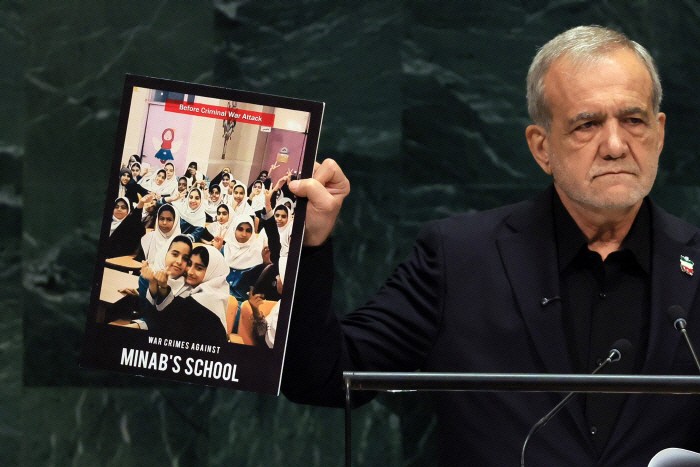 |
| Iranian President Masoud Pezeshkian holds up a photograph of a school bombed in Israeli and U.S. air strikes as he addresses the 81st session of the United Nations General Assembly at UN Headquarters in New York on the 23rd local time. / AFP, Yonhap |
U.S. says no deal without resolving nuclear issue, citing gaps over sequencing and distrust in Iranian promises
A U.S. official familiar with indirect talks conducted through intermediaries told Axios that negotiations were "positive and constructive" and that Iran "indicated a willingness to show flexibility on the nuclear issue." However, the official emphasized, "The two sides are still far apart on the timing of implementation and who takes action first," adding, "There is no deal unless the nuclear issue is addressed."
The official stressed, "Traffic through the Strait of Hormuz continues to increase, and the blockade and sanctions continue to weaken Iran's standing," adding, "The U.S. position grows stronger by the day." The White House remains skeptical of Iranian pledges, the official pointed out, noting that Iran breached a previous memorandum of understanding (MOU) in July by firing on commercial vessels in the Strait of Hormuz. He remarked, "This time, the U.S. needs to be convinced that Iran is serious and not just trying to buy a way out of a difficult spot."
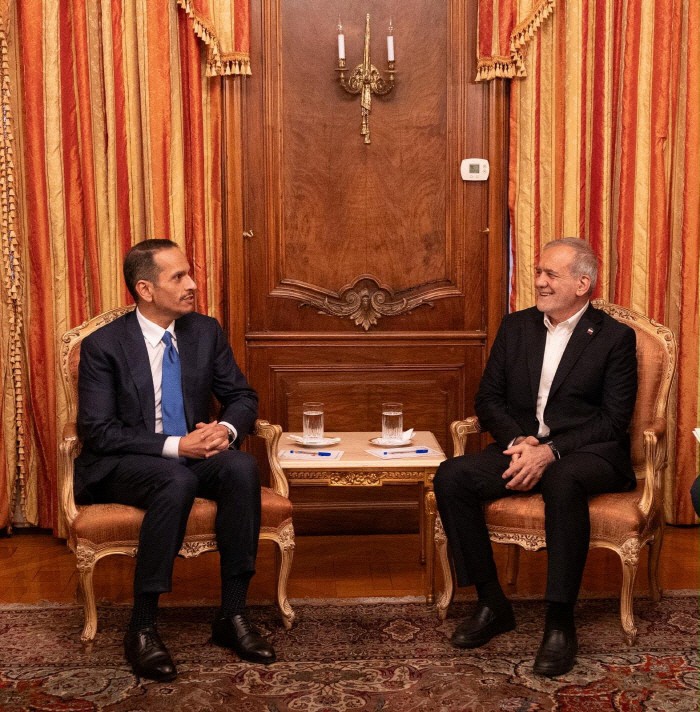 |
| Qatari Prime Minister and Minister of Foreign Affairs Sheikh Mohammed bin Abdulrahman bin Jassim Al-Thani (left) holds talks with Iranian President Masoud Pezeshkian on the sidelines of the 81st session of the United Nations General Assembly (UNGA) in New York on the 25th local time. / Courtesy of Qatari Ministry of Foreign Affairs, Reuters, Yonhap |
Mediators consult Araghchi on Qatari proposal while Iran awaits U.S. final stance
According to Axios, mediators are meeting with Iranian Foreign Minister Abbas Araghchi in New York to discuss a Qatari proposal debated over the past several days. Axios reported that the Qatari mediation team is expected to meet with Trump administration officials later today or on the 29th in an effort to reach a breakthrough.
President Trump said on the 26th that he had rejected Iran's proposal, but Reuters reported that Araghchi said on the 27th that Iran had not officially received the U.S. rejection from mediators and was awaiting the Trump administration's final position. "Our conditions are clear, and any move toward reopening the Strait of Hormuz depends on meeting those conditions," Araghchi emphasized. Iran's state-run IRNA news agency reported Araghchi as saying, "If the U.S. claims to seek an agreement or a peaceful solution, we have already presented that solution."
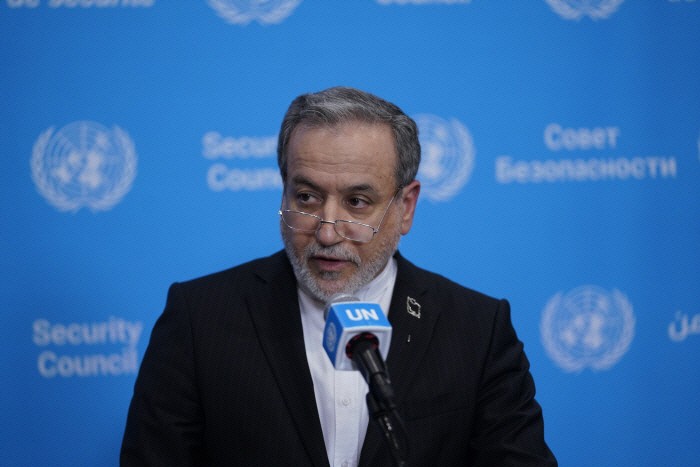 |
| Iranian Foreign Minister Abbas Araghchi speaks to reporters at UN Headquarters in New York on the 25th local time. Araghchi stated that Iran delivered a concrete seven-day plan to the U.S. through Qatar, adding that the Strait of Hormuz could be reopened within seven days if necessary conditions are met. / Xinhua, Yonhap |
U.S. and Iran negotiate revised seven-day plan, with Hormuz reopening and nuclear issue at center
Reuters reported, citing U.S. and Iranian officials, that both countries held separate talks with mediators that day to resume efforts to end the seven-month war. An official familiar with the negotiations expected follow-up talks to focus on a revised version of the seven-day plan proposed by Iran on the sidelines of the UN General Assembly in New York last week, Reuters reported.
The seven-day plan calls for an end to all hostilities in Iran and Lebanon, the unfreezing of Iranian assets, the termination of sanctions on Iranian crude oil, and the lifting of the U.S. blockade on Iranian ports. Under this framework, Iran would then allow the reopening of the Strait of Hormuz, and both sides would resume negotiations on the nuclear program. These negotiations include President Trump's resolve to seize or remove Iran's highly enriched uranium.
Bloomberg reports Iran pessimistic about pre-midterm deal, fearing expanded conflict after elections
Citing people familiar with the matter, Bloomberg reported that Iranian officials privately expressed pessimism over reaching an agreement to end hostilities and reopen the Strait of Hormuz ahead of the November 3 midterm elections. According to these sources, the U.S. and Iran made little progress in New York talks held on the sidelines of the UN General Assembly last week. Iran sees a high likelihood that conflict could escalate following the November 3 vote.
The MOU signed in mid-June led to a ceasefire and increased traffic through Hormuz, but collapsed after about two weeks and drew criticism from U.S. political circles for offering excessive economic concessions to Iran, such as sanctions relief, Bloomberg reported. Bloomberg also noted that The Wall Street Journal earlier reported negotiators were pressuring Iran for concessions on its nuclear program. International oil prices rose as expectations for an agreement on Hormuz weakened, with Brent crude gaining 2% to trade around 106.20 dollars (144,220 won) per barrel.
Ha Man-ju
Most Read
-
1
Trump shares map on social media labeling Strait o..

-
2
Trump demands rates fall below 1% as Fed hikes for..

-
3
Celltrion seeks rheumatoid arthritis indication ex..

-
4
Chinese e-commerce giants AliExpress, Temu and She..

-
5
Trump warns countries not helping U.S. must pay re..

-
6
China expels No. 2 military official Zhang Youxia..

-
7
Houthi rebels release video claiming downing of Sa..

PEOPLE






HEADLINE NEWS
- N. Korea declares nuclear status irreversible and condemns S. Korea, U.S., Japan at UN
- Japan tracks Ukraine fiber-optic drones, bolsters SDF electronic warfare
- Wave of undocumented Chinese caught in Argentina after Brazil's visa-free m..
- France's far-right National Rally forms first-ever parliamentary group in S..

-
Address : In-Young Bldg., 34, Uisadang-daero 1-gil, Yeongdeungpo-gu, Seoul
Copyright by ASIATODAY CO., LTD. All rights resereved