



Debate on mandatory food nutrition labeling reignites in France
Sep 28, 2026, 10:40 am


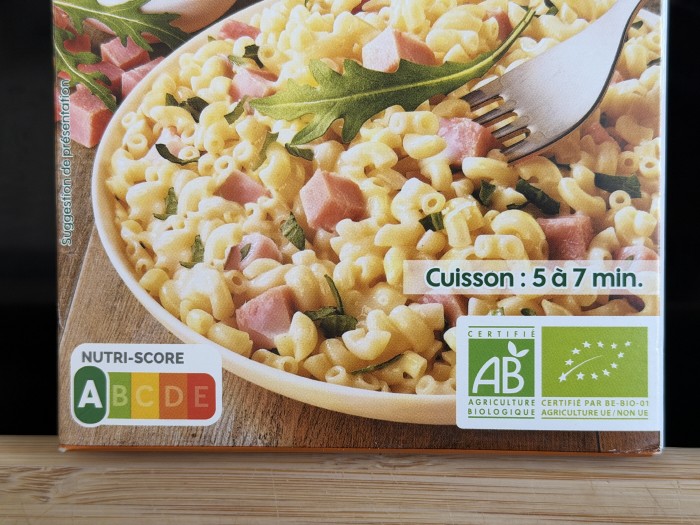 |
| The Nutri-Score (nutrition label) is displayed on the front of a pasta package. / Paris Correspondent Lim Yu-jung |
Discussions surrounding mandatory Nutri-Score labeling are regaining momentum in France as more than 100,000 people signed a citizen petition calling for the food nutrition rating system to be made compulsory.
According to France's BFM TV on the 26th local time, Nutri-Score is a system that displays nutritional grades from A to E alongside colors on the front packaging of food products sold in France. Nutri-Score currently remains voluntary for companies. Consequently, firms with a heavy portfolio of processed foods high in sugar and fat have refused to display the nutritional grades.
Companies that do not participate in Nutri-Score include major food corporations such as the world's largest dairy firm Lactalis, beverage maker Coca-Cola, U.S. confectionery conglomerate Mars, Italian confectionery firm Ferrero, and U.S. confectioner Mondelez.
The problem is that several companies previously participating in Nutri-Score withdrew the labels following the implementation of revised standards. French dairy producer Danone, French organic food company Bjorg, and France's top-selling bottled water brand Cristaline halted displaying the grades following the rollout in March last year of revisions drawn up by scientists. The updated rules feature stricter Nutri-Score criteria applied to products with added sugar and beverages containing artificial sweeteners.
Calls to make Nutri-Score mandatory have surfaced continuously. In November last year, during the first reading of the Social Security Financing Bill, lawmakers in the National Assembly adopted an amendment by a show of hands to make the Nutri-Score system mandatory. The amendment included imposing a fine of 5% of revenue on companies failing to display the nutritional rating, with proceeds allocated to the national health insurance fund.
However, Minister of Health Stéphanie Rist opposed the measure, stating, "While I share the interest in Nutri-Score, the amendment runs counter to European Union law and carries the risk of sanctions." Minister Rist, along with the French Senate, opposed the amendment, which was ultimately rejected in a vote in the National Assembly in December last year by a narrow margin of 117 in favor to 120 against.
Undaunted by opposition across parliament, four figures, including nutrition expert Serge Hercberg, who helped create Nutri-Score, launched a petition on November 20 last year to mandate Nutri-Score, gathering more than 100,000 citizen signatures in about a year.
Hercberg urged further civic participation on X (formerly Twitter) on the 25th, writing, "We must keep pushing to collect 150,000, 200,000, or even more signatures."
In France, once a citizen petition surpasses 100,000 signatures, it is posted on the National Assembly's official website for wider visibility. If it secures more than 500,000 signatures from at least 30 departments and overseas territories, the petition is formally placed on the National Assembly plenary agenda.
Lim Yu-jung
Most Read
-
1
Trump demands rates fall below 1% as Fed hikes for..

-
2
Celltrion seeks rheumatoid arthritis indication ex..

-
3
Chinese e-commerce giants AliExpress, Temu and She..

-
4
Trump warns countries not helping U.S. must pay re..

-
5
China expels No. 2 military official Zhang Youxia..

-
6
Houthi rebels release video claiming downing of Sa..

-
7
U.S. allows Iranian delegation to attend UN Genera..

PEOPLE







-
Address : In-Young Bldg., 34, Uisadang-daero 1-gil, Yeongdeungpo-gu, Seoul
Copyright by ASIATODAY CO., LTD. All rights resereved