



U.S., Japan strengthen cooperation on AI, semiconductors and critical minerals
Sep 23, 2026, 01:25 pm


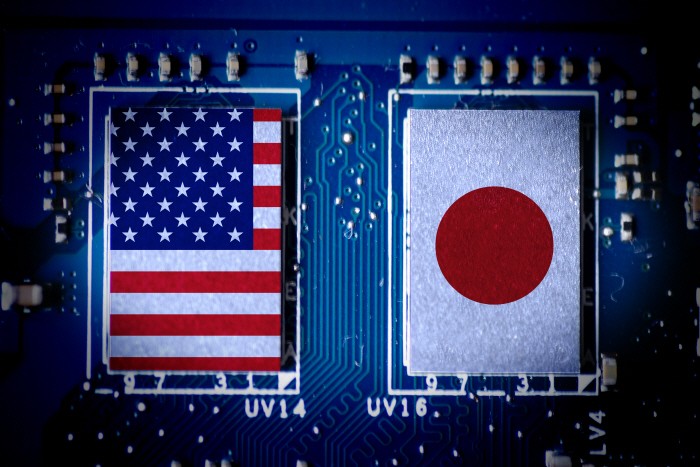 |
| The national flags of the U.S. and Japan are depicted on a semiconductor circuit board. Leaders of the U.S. and Japan agreed at their summit in New York to strengthen cooperation in economic security areas, including AI, semiconductors, and critical minerals. / Getty Images Bank |
The U.S. and Japan are strengthening economic security cooperation centered on artificial intelligence (AI), semiconductors, and critical minerals. As supply chain restructuring aimed at curbing reliance on China for key raw materials and advanced technologies expands beyond bilateral ties into trilateral cooperation with South Korea, it is expected to directly affect core South Korean industries, including semiconductors and batteries.
Japanese Prime Minister Sanae Takaichi brought up economic security cooperation across AI, semiconductors, and critical minerals during her summit with U.S. President Donald Trump in New York on the 22nd local time. The two nations also agreed to coordinate closely on economic security issues involving China.
Japan is paying particular attention to critical minerals. Given high dependence on China for the production and refining of core raw materials such as rare earths, Tokyo views export restrictions by a specific country as capable of disrupting the entire manufacturing supply chain. The U.S. and Japan established a dedicated cooperation framework last year to ensure a stable supply across the mining and processing stages of critical minerals and rare earths, while also expanding cooperation in advanced technologies like AI.
Prime Minister Takaichi similarly outlined enhancing the supply chain resilience of energy and critical resources as a major pillar of Japan's economic security policy during her address to the UN General Assembly on the 22nd. Noting that geopolitical tensions are undermining free trade and stable supplies of energy and goods, she emphasized the need to diversify supply chains and ensure resilience against disruptions.
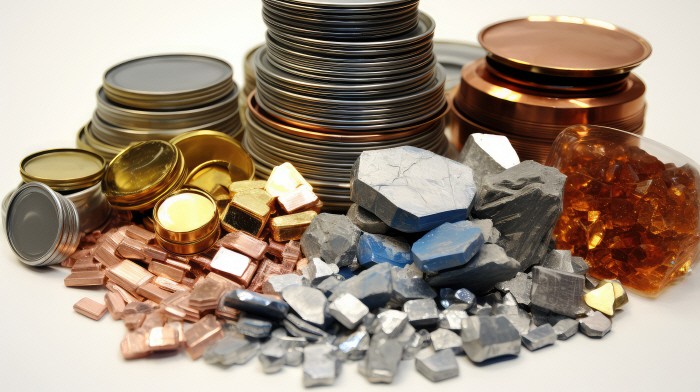 |
| Image of rare earth metals, including gadolinium, and related materials. The U.S. and Japan are strengthening cooperation on critical mineral supply chains, including rare earths, to reduce dependence on China. / Getty Images Bank |
South Korea is not a bystander in this process. At the trilateral foreign ministers' meeting held a day before the U.S.-Japan summit, South Korea, the U.S., and Japan agreed to enhance substantive cooperation in critical and emerging technologies, including semiconductors, AI, quantum computing, digital infrastructure, and biotechnology. They also set the protection of advanced technologies, the diversification and resilience of supply chains, and countermeasures against economic coercion as shared priorities.
The three nations are also stepping up cooperation to share early warning signs of supply chain disruptions. The meeting confirmed the launch of a new trilateral consultative body on economic security and the strengthening of the supply chain early warning system. The goal is to broaden information sharing and joint responses rather than having each nation respond individually when a specific country imposes arbitrary export restrictions or non-market measures.
These developments bear directly on South Korea's semiconductor and battery industries. Advanced semiconductors are heavily influenced by U.S. technology and equipment policies, while supply chains for critical minerals determine battery competitiveness. Any shifts in U.S.-China regulations on AI and semiconductors or critical mineral policies inevitably impact South Korean firms' sourcing, production bases, and business strategies toward both the U.S. and China.
AI, trade, and supply chains are cited as key agenda items ahead of the U.S.-China summit on the 24th. With Washington and Tokyo affirming economic security alignment before their summit, and South Korea, the U.S., and Japan reinforcing their trilateral framework for supply chain cooperation, the extent of agreements reached between Washington and Beijing on advanced technologies and critical minerals is expected to be a major factor for South Korean industry.
Choi Young-jae
Most Read
-
1
Celltrion’s Omlyclo gains ground in major European..

-
2
Trump demands rates fall below 1% as Fed hikes for..

-
3
Trump makes $1 trillion bet ahead of midterm elect..

-
4
Iran resumes ballistic missile production, assembl..

-
5
Trump warns countries not helping U.S. must pay re..

-
6
Apple launches first foldable, 1 million won prici..

-
7
Turkish Airlines named main club partner of Liverp..

PEOPLE






-
Address : In-Young Bldg., 34, Uisadang-daero 1-gil, Yeongdeungpo-gu, Seoul
Copyright by ASIATODAY CO., LTD. All rights resereved