



Thai PM says foreigners have ‘crossed the line,’ cutting visa-free stay from 60 to 30 days
Sep 21, 2026, 02:43 pm


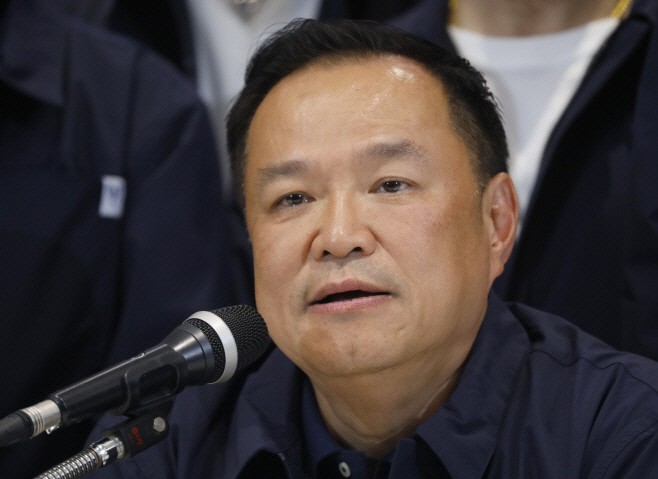 |
| Thai Prime Minister Anutin Charnvirakul. / EPA-Yonhap |
Thailand has launched a sweeping crackdown on illegal businesses and nominee property purchases by foreigners. As crimes and violations involving foreign nationals continue to emerge, the government is tightening restrictions again by halving the visa-free stay period and pushing for the first revision of its nationality law in 50 years.
According to Channel NewsAsia and other reports on Sept. 21, Thai Prime Minister Anutin Charnvirakul recently chaired a meeting of relevant government agencies and ordered a tough response, saying that “illegal acts by foreigners have gone beyond acceptable limits.”
“Since we have provided generous entry privileges, foreigners must also abide by the law,” Anutin said. “We will never tolerate those who seek to exploit Thailand.”
The government’s sharp shift toward a tougher stance comes amid a series of major cases involving illegal activities by foreigners.
Some Israeli nationals who entered Thailand after the outbreak of the Israel-Gaza war allegedly established numerous businesses using Thai nominees in major southern resort areas and illegally set up a Jewish cemetery in the eastern province of Chachoengsao.
Anutin said authorities would not object to the use of existing public facilities but added that purchasing Thai land and operating unauthorized burial facilities constituted a violation of the country’s laws.
Illegal financial crimes involving foreign capital have also been uncovered in succession.
On Sept. 16, a wanted Chinese fugitive was caught after allegedly using an illegally obtained identification card to establish a front company in the name of his child and attempt to launder tens of millions of dollars. The ID card was found to have been sold on the black market for just 500 baht, or about 20,000 won.
Thailand’s Cabinet has decided to immediately revise the country’s 50-year-old nationality law to close legal loopholes that allow foreign “gray capital” to acquire land through nationality fraud and nominee networks.
Administrative measures have also been implemented immediately. Since Sept. 15, Thailand has cut the permitted visa-free stay from 60 days to 30 days and sharply reduced the number of eligible countries from 93 to 60.
South Koreans will continue to be allowed to stay for up to 90 days under a separate bilateral visa-waiver agreement.
Authorities are also conducting special joint crackdowns on shell companies using Thai nationals as nominees, with Chinese, French, Indian and Russian nationals among those under particular scrutiny.
The government also plans to significantly tighten citizenship screening requirements to prevent foreigners from acquiring property through naturalization as a workaround.
The latest backlash is widely seen as an unintended consequence of Thailand’s expanded 60-day visa-free entry policy, introduced in July 2024 to revive tourism after the pandemic.
Taking advantage of relaxed immigration controls, members of transnational cybercrime organizations operating around Myanmar and Cambodia reportedly entered Thailand in large numbers and used the country as a hub to launder criminal proceeds through local resorts and real estate.
Anti-foreigner sentiment has also been growing, with protests spreading among local residents angered by illegal foreign businesses and alleged collusion with public officials.
The issue poses a difficult dilemma for Thailand, where tourism accounts for roughly 20% of gross domestic product. The government is under pressure to strike a balance between attracting foreign visitors and investment on the one hand and maintaining public security and protecting national sovereignty on the other.
“Entry and stay by foreigners will be permitted only within a legal framework that provides tangible benefits to both Thailand and its visitors,” Anutin said.
Jeong Ri-na
Most Read
-
1
Celltrion’s Omlyclo gains ground in major European..

-
2
Trump demands rates fall below 1% as Fed hikes for..

-
3
Trump makes $1 trillion bet ahead of midterm elect..

-
4
Iran resumes ballistic missile production, assembl..

-
5
Samsung Electronics, Mistral AI to jointly develop..

-
6
Trump warns countries not helping U.S. must pay re..

-
7
Seoul faces triple squeeze over troop deployment t..

PEOPLE






-
Address : In-Young Bldg., 34, Uisadang-daero 1-gil, Yeongdeungpo-gu, Seoul
Copyright by ASIATODAY CO., LTD. All rights resereved