



Bank of Japan raises rate to 1.25%, hitting 31-year high in second hike in three months
Sep 18, 2026, 01:15 pm


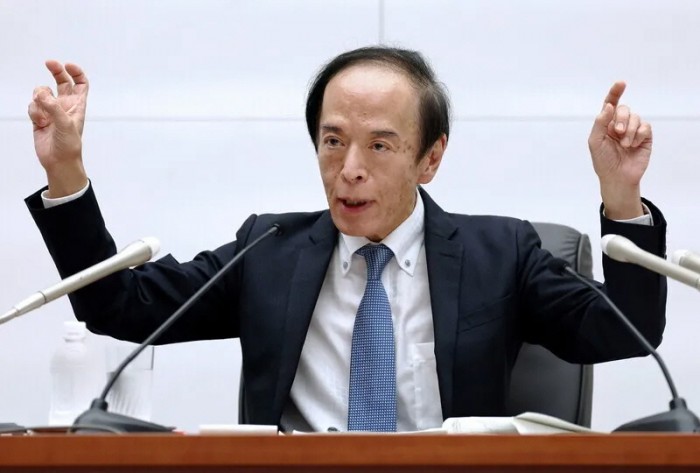 |
| Kazuo Ueda, Governor of the Bank of Japan. / Yonhap News |
The Bank of Japan raised its policy rate by 0.25 percentage points from 1.0% to 1.25% on the 18th, reaching its highest level in 31 years since 1995. Coming just three months after a rate increase in June, this marks the shortest interval between hikes since the central bank ended its massive monetary easing program, including negative interest rates, in March 2024.
Following a two-day monetary policy meeting, the BOJ approved the rate hike in a 7-2 vote among its nine policy board members, with two members dissenting in favor of holding rates steady. The decision is interpreted as a preemptive move against the risk of inflation rebounding above the 2% target, as rising crude oil prices and a weaker yen drive up import costs. While Japan's August core consumer price index, excluding fresh food, rose 1.7% from a year earlier, inflationary pressures excluding energy remain persistent.
The depreciation of the yen also weighed heavily on the decision. In July, the Japanese currency weakened to near 164 yen per dollar, touching its lowest level in about 40 years. Between July 30 and August 26, the Japanese government deployed a record 15.4 trillion yen to prop up the currency, with the U.S. taking the unusual step of conducting joint market intervention. At the time, the Bank of Korea also synchronized its own won-buying operations, effectively resulting in simultaneous currency defense efforts by monetary authorities across South Korea, the U.S., and Japan.
Pressure from Washington continued as well. Citing multiple officials, Reuters reported on the 17th that U.S. Treasury Secretary Scott Bessent had conveyed to Japanese government officials for months that Tokyo should rein in fiscal spending and that the BOJ needs to raise interest rates further. Secretary Bessent also repeatedly emphasized Japan's rate normalization and fiscal soundness during the G20 finance ministers' meeting late last month. However, the U.S. Treasury officially maintained that "monetary policy decisions are a matter for Japanese authorities" and that it is not demanding any specific interest rate level.
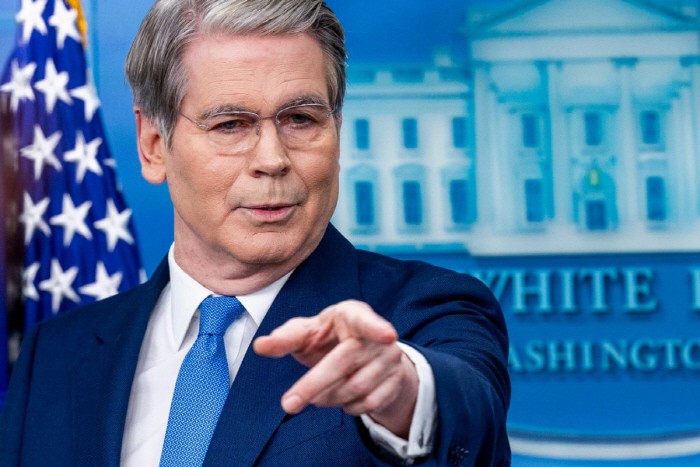 |
| Reuters reported on the 17th, citing multiple officials, that U.S. Treasury Secretary Scott Bessent had conveyed to Japanese government officials for months that Tokyo should rein in fiscal spending and that the Bank of Japan needs to raise interest rates further. / Yonhap News |
Takaichi's proactive fiscal policy and the Bank of Japan's monetary tightening coexist
This rate hike is expected to weigh on the economic policies of the Sanae Takaichi administration. Even following a cabinet reshuffle on the 17th, Prime Minister Takaichi reiterated her commitment to swiftly pursuing "responsible proactive fiscal policy" by expanding investments in growth sectors. She is also pushing for a consumption tax cut on food products to ease the burden of inflation. In contrast, the Bank of Japan is moving to curb demand and inflationary pressures by raising interest rates.
This creates a policy mix where fiscal policy supports economic growth while monetary policy acts to restrain inflation. Should fiscal expansion push up inflation and government bond yields further, it could heighten pressure on the Bank of Japan to deliver additional rate hikes. Indeed, Japan's 10-year government bond yield recently climbed to its highest level in 30 years. At the same time, higher interest rates raise the Japanese government's interest burden on national debt, narrowing the room for the Takaichi administration to maneuver its proactive fiscal agenda.
Repercussions are also anticipated for the South Korean economy. If the BOJ rate hike leads to a stronger yen over the medium to long term, it could work to the relative advantage of South Korean firms competing with Japanese rivals in global markets in terms of price competitiveness. Conversely, for South Korean companies importing Japanese machinery, parts, and materials, costs converted into Korean won could rise. A stronger yen would also increase travel expenses for South Koreans visiting Japan.
However, it is difficult to conclude that the rate hike will immediately lead to a stronger yen. The U.S. Federal Reserve also raised interest rates by 0.25 percentage points on the 16th, leaving the U.S.-Japan interest rate differential wide, and market participants had largely anticipated this latest hike by the Bank of Japan. Market attention is now focused on what signals Governor Kazuo Ueda will send regarding the timing and pace of further rate increases at 3:30 p.m. today.
Choi Young-jae
Most Read
-
1
Celltrion’s Omlyclo gains ground in major European..

-
2
Trump demands rates fall below 1% as Fed hikes for..

-
3
Hyundai Motor Group breaks ground on integrated st..

-
4
U.S. strikes 3 Iranian oil tankers, Iran vows reta..

-
5
Trump makes $1 trillion bet ahead of midterm elect..

-
6
Iran resumes ballistic missile production, assembl..

-
7
Samsung Electronics, Mistral AI to jointly develop..

PEOPLE







-
Address : In-Young Bldg., 34, Uisadang-daero 1-gil, Yeongdeungpo-gu, Seoul
Copyright by ASIATODAY CO., LTD. All rights resereved