



Japan’s centenarian population tops 100,000 for first time, five times Korea’s per capita
Sep 15, 2026, 03:22 pm


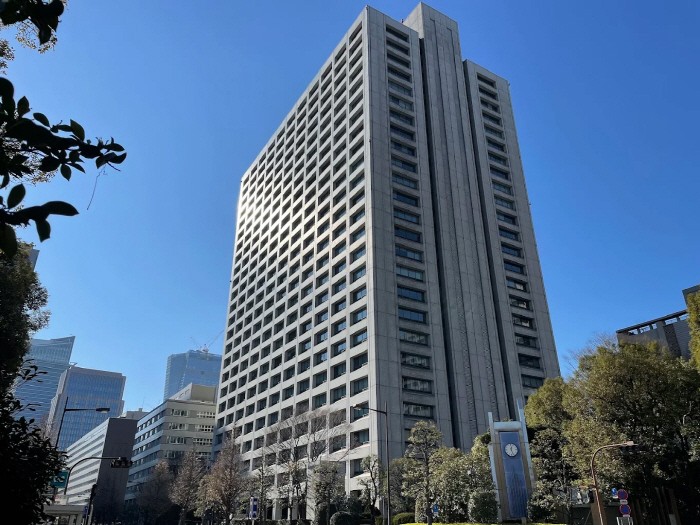 |
| Screenshot from the website of Japan’s Ministry of Health, Labour and Welfare. |
Japan’s population aged 100 or older has surpassed 100,000 for the first time, 63 years after the country began compiling related statistics in 1963. On a per capita basis, Japan has about five times as many centenarians as South Korea. In both countries, the share of people aged 100 or older is notably higher in rural areas, where aging and population decline are progressing faster than in major cities.
According to data released by Japan’s Ministry of Health, Labour and Welfare on Sept. 15, the number of people aged 100 or older stood at 107,677 as of Sept. 1, up 7,914 from a year earlier. The figure marked a record high for the 56th consecutive year.
Women accounted for 94,298, or 87.6% of the total, while men numbered 13,379. Japan had only 153 centenarians when the statistics began in 1963. The number surpassed 50,000 in 2012 before crossing the 100,000 mark for the first time this year.
Advances in medical technology, improved living conditions and growing interest in health are cited as major factors behind the increase. Japan’s oldest person is 114-year-old Fuyo Kishimoto of Kyoto, while the oldest man is 112-year-old Mitsuru Kato of Kumamoto.
There were also significant regional differences. The national average was 87.51 centenarians per 100,000 people. Shimane Prefecture ranked first for the 14th consecutive year with 186.65 per 100,000, followed by Kochi at 169.52 and Tottori at 152.48.
By contrast, Saitama Prefecture had the lowest figure for the 37th consecutive year at 51.27 per 100,000. Major metropolitan areas also posted relatively low levels, with Aichi at 57.79 and Osaka at 60.06.
In other words, the share of centenarians tends to be higher in regions where population decline and aging are advancing more rapidly.
South Korea shows a similar regional pattern. According to the Statistics Korea survey on centenarians from the 2025 Population and Housing Census, there were 8,604 people aged 100 or older as of Nov. 1 last year.
That was 2.7 times the 3,159 recorded in 2015. On a per capita basis, South Korea had 17.3 centenarians per 100,000 people.
By the same measure, Japan’s 87.51 was about 5.1 times South Korea’s level. Although direct comparisons are limited because the two countries use different survey dates and compilation methods, the figures show that Japan has moved much further into what could be described as the mainstreaming of a centenarian population.
In South Korea, centenarians were also relatively concentrated in rural areas. South Jeolla Province had the highest number per 100,000 people at 31.8, followed by Jeju at 30.4 and Gangwon Province at 28.6.
Among cities, counties and districts, Goheung County in South Jeolla Province ranked highest at 91.8 centenarians per 100,000 people.
Regions experiencing rapid aging and population decline, such as Shimane, Kochi and Tottori in Japan and South Jeolla and Gangwon in South Korea, also rank high in their shares of centenarians.
As younger populations shrink because of low birth rates while the oldest age groups continue to expand rapidly, both countries face a growing need to reshape local communities around the realities of a “100-year life,” including medical care, long-term care, transportation and housing.
Choi Young-jae
Most Read
-
1
U.S. Treasury Secretary Bessent publicly warns ove..

-
2
Celltrion’s Omlyclo gains ground in major European..

-
3
Hyundai Motor Group breaks ground on integrated st..

-
4
Russia faces warning signs over prolonged war econ..

-
5
Anti-Western solidarity strengthens amid Trump's e..

-
6
U.S. strikes 3 Iranian oil tankers, Iran vows reta..

-
7
S. Korea seeks redemption from World Cup setback w..

PEOPLE





-
Address : In-Young Bldg., 34, Uisadang-daero 1-gil, Yeongdeungpo-gu, Seoul
Copyright by ASIATODAY CO., LTD. All rights resereved