



Major China leadership reshuffle expected at October plenum
Sep 09, 2026, 02:48 pm


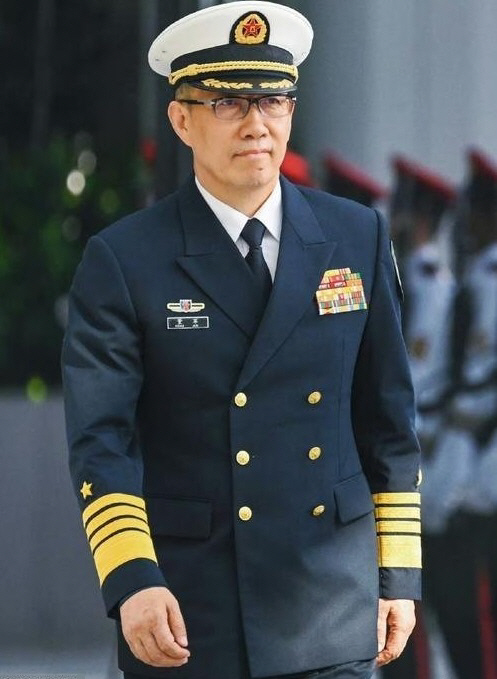 |
| Dong Jun, China’s defense minister, is widely seen as a leading candidate for vice chairman of the Central Military Commission. A former navy officer, he is expected to make an unusually high-profile promotion for someone from the naval ranks. / PLA Daily |
China is expected to carry out a sweeping reshuffle of senior Party, government and military officials at the fifth plenary session of the 20th Central Committee, or the fifth plenum, scheduled for October. If those expectations prove largely correct, relatively younger officials — the so-called “young blood” — are likely to make gains at the expense of many incumbents.
According to Beijing sources familiar with Chinese political affairs on Sept. 9, the atmosphere within China’s Party, government and military leadership is currently highly unsettled. A large number of senior officials have fallen from power in recent years amid an exceptionally harsh anti-corruption campaign that President Xi Jinping, also general secretary of the Communist Party of China, began pursuing in earnest several years ago.
The military, in particular, has been left in disarray to such an extent that it would hardly be an exaggeration to say it has been devastated. Five of the seven members of the Central Military Commission, the country’s top military leadership body, have fallen from their posts. It is therefore reasonable to say that a major personnel reshuffle is needed both to fill the vacancies and to refresh the atmosphere within the Party, government and military.
Another factor pointing to a sweeping reshuffle is the 21st National Congress of the Communist Party of China, the party congress held every five years, which is scheduled for October next year and is expected to confirm Xi’s fourth term in power. Names of potential new faces expected to enter the top Party, government and military leadership are already being frequently discussed.
In the military, rumors are widespread that Defense Minister Dong Jun, 67, is a leading candidate for the long-vacant post of vice chairman of the Central Military Commission, even though CMC member Zhang Shengmin, 68, was recently promoted in haste. While the prevailing assessment is that Dong still lacks sufficient experience, the personnel pool has become so depleted by the unprecedented anti-corruption purge that his promotion is widely seen as a strong possibility.
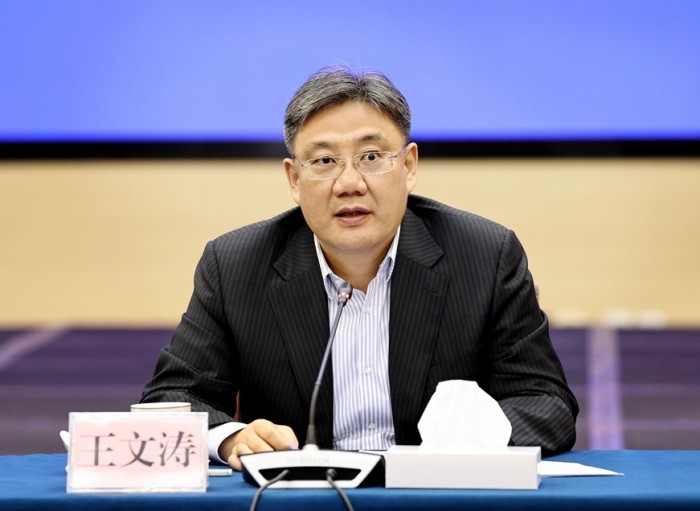 |
| Wang Wentao, China’s commerce minister, is seen as a leading candidate for one of the three vacant seats on the Communist Party’s Politburo. / The Beijing News |
For the Communist Party’s 24-member Politburo, which currently has three vacancies, Commerce Minister Wang Wentao, 64; Li Xiaopeng, 67, deputy head of the Economic Committee of the Chinese People’s Political Consultative Conference and former transport minister; and Lu Hao, 61, head of the State Council’s Development Research Center, are seen as leading candidates. If Wang joins the Politburo as expected, Vice Commerce Minister Li Chenggang, 59, who has also served as China’s WTO trade representative, is considered highly likely to succeed him as commerce minister.
The 205-member Central Committee, where nearly 50 officials have fallen from their posts, could also see the entry of Zhu Zhongming, 54, acting mayor of Shanghai, who recently took charge of China’s economic capital while still in his mid-50s. Hu Haifeng, 54, vice minister of civil affairs and the son of former Communist Party general secretary and vice president Hu Jintao, 82, is also being mentioned as a possible new member alongside Zhu. If events unfold as expected, Hu is likely to first move into a minister-level post.
China’s current Party, government and military leadership has become considerably older. In the past, officials in their mid-50s — members of the so-called post-1970 generation — would typically have reached ministerial rank, but most are still serving as vice ministers. If the reshuffle proceeds as expected, however, this aging trend could be eased substantially. It could also bring China’s top Party and government leadership closer to what it regards as the ideal “combination of old, middle-aged and young” officials, while paving the way for a more pronounced rise of younger figures.
Hong Soon-do
Most Read
-
1
Celltrion nears additional contract with major U.S..

-
2
Putin proposes trilateral U.S.-China-Russia summit..

-
3
U.S. weighs dropping MOAB, world's most powerful n..

-
4
"Aren't those foreigners on welfare?": M..

-
5
Attention centers on APEC for possible Trump-Xi-Pu..

-
6
U.S., Israel plan to resume strikes on Iran after..

-
7
Saudi Arabia, Iran hold first diplomatic talks to..

PEOPLE






-
Address : In-Young Bldg., 34, Uisadang-daero 1-gil, Yeongdeungpo-gu, Seoul
Copyright by ASIATODAY CO., LTD. All rights resereved