



China delivers third batch of relief supplies to flood-ravaged Nepal
Sep 04, 2026, 10:07 am


China announced that it has not only delivered a third batch of emergency relief supplies, including tents and blankets, to aid flood victims in Nepal, but is also expanding assistance by sharing meteorological data.
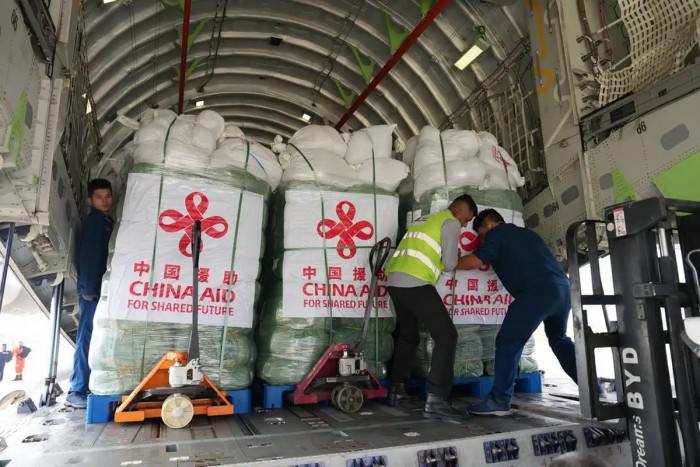 |
| Chinese relief supplies arrive in Nepal. A third batch of emergency relief supplies also departed for Nepal on the 3rd. / People's Daily |
Guo Jiakun, spokesperson for China's Ministry of Foreign Affairs, stated at a regular press briefing on the 3rd, "This morning, China's third batch of emergency relief supplies departed for Nepal. The relief supplies include tents, blankets, medical protective suits, and satellite communications equipment."
Guo added that a second team of DNA identification experts was dispatched to Nepal on the same flight to support victim identification efforts. He also explained that besides the emergency provision of two prefabricated temporary bridges, organizations such as the Red Cross Society of China have delivered relief supplies as well.
Spokesperson Guo highlighted that China has also strengthened information sharing with Nepal in meteorological and water resources fields since the disaster struck. Emphasizing that "the China Meteorological Administration contacted Nepal's meteorological authorities to conduct video weather consultations and share relevant data in real time," he noted, "We urgently developed and provided Nepal with a dedicated cloud-based version of the meteorological information service system to support weather data needed for rescue and recovery operations."
He added, "Nepal expressed gratitude, noting that joint disaster response between China and Nepal is providing tremendous help for disaster relief. China will continue emergency aid and international rescue cooperation according to Nepal's needs and deepen cooperation in related sectors."
Earlier, concerns emerged in Nepal that while Katmandu had requested China to share data on weather, rainfall, and river water levels and to strengthen early warning systems, it did not receive sufficient information.
China pushed back against such criticisms, asserting that it has consistently provided meteorological and hydrological data as well as early warnings to Nepal since the disaster occurred, and dismissing claims of inadequate information sharing as contrary to facts. Given China's active measures, Nepal's criticism could indeed be seen as an overly harsh complaint stemming from the defenseless toll of the disaster.
Hong Soon-do
Most Read
-
1
Celltrion nears additional contract with major U.S..

-
2
Putin proposes trilateral U.S.-China-Russia summit..

-
3
U.S. weighs dropping MOAB, world's most powerful n..

-
4
"Aren't those foreigners on welfare?": M..

-
5
Attention centers on APEC for possible Trump-Xi-Pu..

-
6
Saudi Arabia, Iran hold first diplomatic talks to..

-
7
Saudi airport in Riyadh struck again, leaving at l..

PEOPLE







-
Address : In-Young Bldg., 34, Uisadang-daero 1-gil, Yeongdeungpo-gu, Seoul
Copyright by ASIATODAY CO., LTD. All rights resereved