



Zhu Rongji, "economic czar" of China, dies, but official reaction oddly muted
Aug 13, 2026, 05:03 pm


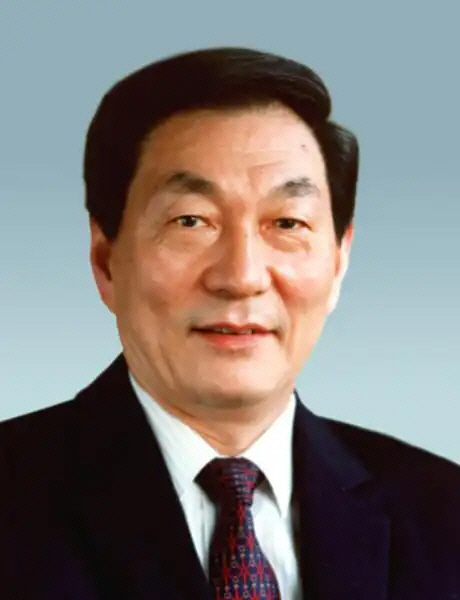 |
| Former Chinese Premier Zhu Rongji, who passed away on the 12th, ended his life at age 98. / Xinjing Bao |
Zhu Rongji, former Chinese premier nicknamed the "economic czar" for leading China's economic reforms and securing its accession to the World Trade Organization (WTO), passed away on the 12th. Having lived to 98, he can be said to have enjoyed a long life.
According to reports on the 13th from outlets including Xinjing Bao, Zhu was born in 1928 in Changsha, Hunan Province, and graduated from Tsinghua University's Department of Electrical Engineering. He went on to work primarily as an economic official in Shanghai. From 1998 to 2003, in recognition of his achievements there, he was tapped as State Council premier, taking charge of China's overall economic policy.
His achievements were numerous. Chief among them was China's WTO accession, finalized in 2001, which gave China broad access to the global trading system — and China's foreign trade naturally grew explosively in the years that followed. He also focused heavily on reforming state-owned enterprises, consolidating and restructuring large state firms to boost their competitiveness, achieving considerable success in transforming the country's economic structure.
He is also well known as the driving force behind development of Shanghai's Pudong district, now regarded as a symbol of dramatic transformation. Immediately after becoming Shanghai mayor in 1988, he aggressively pushed forward development of Pudong — then an undeveloped area east of the Huangpu River — writing a success story that later turned the district into a globally renowned financial and business hub.
He was also known for his blunt speaking style, strong personality, and charisma. At a press conference right after becoming premier in 1998, he famously declared that whether what lay ahead was a minefield or a cliff, he would move forward without hesitation — a remark that captures his character well. His determination to fight corruption is also well illustrated by his comment that he would prepare 100 coffins, 99 for corrupt officials and one for himself. Still, given that official corruption in China remains a significant problem today, that resolve ultimately did not bear the fruit he had hoped for.
He also raised his children well, by most accounts. His eldest son, Levin Zhu (69), served for many years as chairman of China International Capital Corporation, a state-affiliated financial institution — enough said. The younger Zhu became known for a striking claim that China's combined government, corporate, and household debt approaches 600% of GDP, a statement that sent shockwaves at the time. Like father, like son, one might say.
Yet news of his death has curiously not received wide attention. Even state media have simply reported the bare facts quietly. This is likely because General Secretary and President Xi Jinping's push for long-term rule has been quietly erasing the various activities and legacies of former top party and government leaders.
Hong Soon-do
Most Read
-
1
Celltrion nears additional contract with major U.S..

-
2
Putin proposes trilateral U.S.-China-Russia summit..

-
3
U.S. weighs dropping MOAB, world's most powerful n..

-
4
"Aren't those foreigners on welfare?": M..

-
5
Attention centers on APEC for possible Trump-Xi-Pu..

-
6
Saudi Arabia, Iran hold first diplomatic talks to..

-
7
Saudi airport in Riyadh struck again, leaving at l..

PEOPLE






-
Address : In-Young Bldg., 34, Uisadang-daero 1-gil, Yeongdeungpo-gu, Seoul
Copyright by ASIATODAY CO., LTD. All rights resereved