



China's AI talent war rages far fiercer than its job market woes suggest
Aug 11, 2026, 02:57 pm


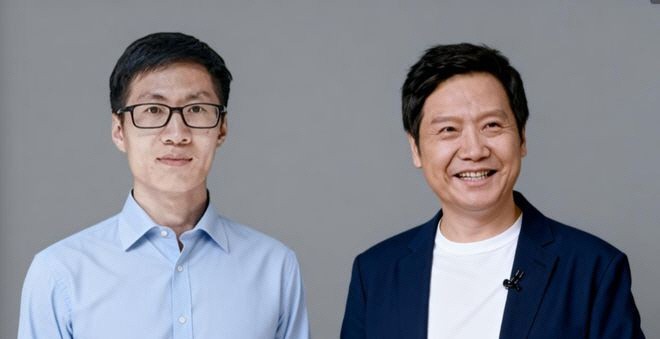 |
| Dr. Kung Tao, an S-tier talent at Xiaomi as the company aims to become China's top AI firm, alongside Xiaomi Chairman Lei Jun. The two figures symbolize the intense talent war underway in China's AI industry. / Xinjing Bao |
China's AI industry is in the grip of a talent war so fierce it stands in stark contrast to the country's brutal job market — and it's escalating to almost unimaginable extremes. For top-tier "S-grade" talent, it's become something of an unwritten rule that companies will pay whatever it takes. Since China's pool of AI talent still falls far short of industry demand, this dynamic looks set to continue for some time.
It's fair to say China's AI industry now rivals that of the U.S. in terms of overall level. Naturally, internal competition within the industry has grown fierce as well — falling behind in this race is widely seen within the industry as game over, so intense competition is only to be expected. And in this environment, what companies need most desperately is talent.
According to recent reports from Xinjing Bao and other outlets, however, the reality is chronic talent shortage. As of the end of 2025, the available workforce is estimated at only around 2.5 million — just 60-70% of the minimum level the industry needs. It's practically a given that such talent becomes highly sought after.
Indeed, these workers — targeted indiscriminately for recruitment by AI companies across the country — are treated with a level of value that's hard to imagine. In Hangzhou, Zhejiang Province, considered the heartland of China's AI industry, fresh college graduates reportedly earn a monthly salary ranging from a minimum of 30,000 yuan (about 6.3 million won) to as much as 50,000 yuan — a level utterly out of reach for ordinary young people who would be grateful just to land a job paying 5,000 yuan a month.
For those who earn a doctorate in a related field from Tsinghua University, China's top academic institution, the numbers become almost unimaginable. It's reportedly become standard practice for annual salaries to start at 6 million yuan. Real-world cases make this clear. A prime example is Luo Fuli (31), a female researcher who became famous last year as a young genius at DeepSeek, the AI company that took the world by storm. At the end of last year, she was recruited by major ICT company Xiaomi with an annual salary of 10 million yuan.
Dr. Kong Tao (34), who led the humanoid robotics team at ByteDance — one of China's most prominent AI companies — is another notable case. A Tsinghua-trained talent, he was recruited by Xiaomi last summer and now heads the company's robotics foundation model team, reportedly earning around 15 million yuan a year.
Considering that many of the colleagues who moved to Xiaomi alongside him also earn upward of 6 million yuan annually, it's hardly an exaggeration to call China's AI talent war truly unimaginable. Beijing-based ICT commentator Chen Yuehai captured the reality well, saying AI talent in China has become something of a golden goose that companies can only land if the CEO personally makes the recruitment pitch, adding that compared to the plight of young people who can't find jobs at all, these AI workers are practically living in paradise.
Hong Soon-do
Most Read
-
1
Celltrion nears additional contract with major U.S..

-
2
Putin proposes trilateral U.S.-China-Russia summit..

-
3
U.S. weighs dropping MOAB, world's most powerful n..

-
4
"Aren't those foreigners on welfare?": M..

-
5
Attention centers on APEC for possible Trump-Xi-Pu..

-
6
Saudi Arabia, Iran hold first diplomatic talks to..

-
7
Saudi airport in Riyadh struck again, leaving at l..

PEOPLE





-
Address : In-Young Bldg., 34, Uisadang-daero 1-gil, Yeongdeungpo-gu, Seoul
Copyright by ASIATODAY CO., LTD. All rights resereved