



WFP warns of strong El Niño, projects hunger to rise by 49 million
Aug 06, 2026, 02:16 pm


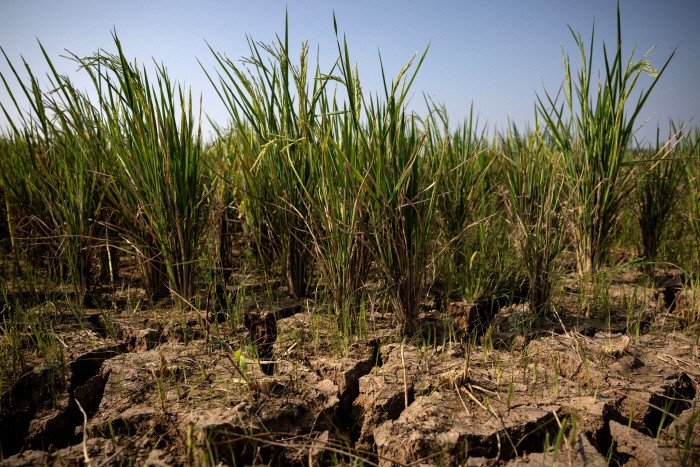 |
| Cracked rice paddy soil in a drought-affected area of Rido Galuh village, Bekasi Regency, Indonesia, on July 16 (local time), amid forecasts that El Niño will bring drier-than-usual weather. / Reuters-Yonhap |
A forecast has emerged suggesting that a strong El Niño could deepen food crises in vulnerable regions worldwide.
According to Reuters, the UN World Food Programme (WFP) said in a report on the 5th (local time) that it estimates an 81% probability of a very strong El Niño occurring by 2027, which could push an additional 49 million people into severe food insecurity. This represents about a 22% increase over the current food-insecure population, bringing the total expected to face food crises to 274 million.
El Niño, a periodic rise in Pacific Ocean surface temperatures, affects climate patterns worldwide, causing droughts in southern Africa, delayed monsoon seasons in Asia, and erratic rainfall in Central America. The WFP's report noted that sea surface temperatures this year are at their highest level since 1982, raising the possibility that this could become the strongest El Niño event since 1950.
By region, Central America and southern Africa are expected to be hit hardest. The WFP projected the food-insecure population would surge by about 83% in Central America and 75% in southern Africa, adding that South America and the Caribbean could each see more than 12 million additional people facing food crises.
Jean-Martin Bauer, the WFP's director of food security and nutrition analysis, explained that while strong harvests of major grains in 2025 have kept global food markets relatively stable, military conflict in the Middle East and reduced harvests from worsening weather could push food prices higher. He added that while past El Niño events haven't always been accompanied by global food price spikes, they can still reduce food access for vulnerable populations.
The report also raised concerns about monitoring gaps caused by funding cuts from major donor countries. With reduced support from the U.S. and Europe, the number of household surveys conducted by the WFP fell from 1.1 million in 2024 to 800,000 in 2025, and has shrunk further this year, the report noted. Observers say the resulting lack of data could make it harder to deliver aid efficiently, potentially fueling a vicious cycle that worsens hunger.
Lee Jeong-eun
Most Read
-
1
Celltrion’s Omlyclo gains ground in major European..

-
2
Trump demands rates fall below 1% as Fed hikes for..

-
3
Trump makes $1 trillion bet ahead of midterm elect..

-
4
Iran resumes ballistic missile production, assembl..

-
5
Samsung Electronics, Mistral AI to jointly develop..

-
6
Trump warns countries not helping U.S. must pay re..

-
7
Apple launches first foldable, 1 million won prici..

PEOPLE






HEADLINE NEWS
- Trump to roll out ‘unprecedented welcome’ for Xi with B-2 bombers, F-22 fighters
- S. Korea, U.S., and Japan form united front on Taiwan and economic coercion..
- Trump administration moves to impose sweeping sanctions on International Cr..
- Xi to make state visit to U.S. Sept. 23-25, dispelling rumors over his heal..

-
Address : In-Young Bldg., 34, Uisadang-daero 1-gil, Yeongdeungpo-gu, Seoul
Copyright by ASIATODAY CO., LTD. All rights resereved