



Takaichi affirms three non-nuclear principles in Hiroshima, stops short of vowing to uphold them
Aug 06, 2026, 10:40 am


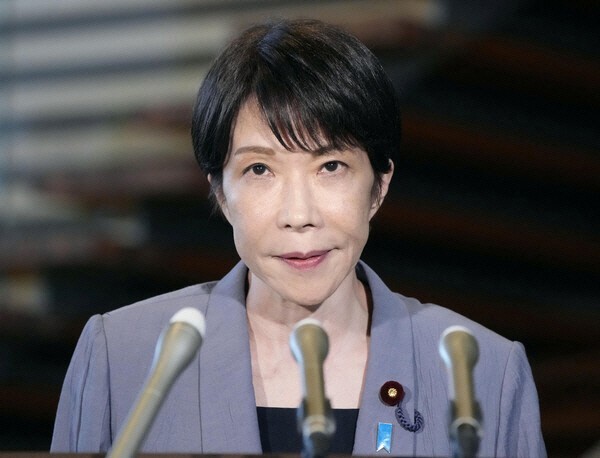 |
| Japan's Prime Minister Takaichi Sanae. / Yonhap |
Japanese Prime Minister Takaichi Sanae said on the 6th in Hiroshima, "We are upholding the three non-nuclear principles," but stopped short of pledging to continue doing so going forward. Unlike previous prime ministers, who have explicitly stated at the Hiroshima Peace Memorial Ceremony that they would "continue to uphold the three non-nuclear principles," Takaichi chose wording that only describes the current state of policy — prompting speculation that this could leave room for a review of the principles when the government revises its security policy later this year.
Takaichi attended the memorial ceremony for atomic bomb victims and the Peace Memorial Ceremony at Hiroshima Peace Memorial Park that morning, her first time doing so since taking office. She said, "Japan is upholding the three non-nuclear principles, and as the only nation to have suffered atomic bombings in war, we bear the mission of continuing our efforts to realize a world free of nuclear weapons."
The three non-nuclear principles state that Japan will not possess, manufacture, or permit the introduction of nuclear weapons onto its territory. Takaichi stressed that the tragedies of Hiroshima and Nagasaki must never be repeated, saying, "The global security environment is growing increasingly severe, but we will not stop our steps toward a world without nuclear weapons."
However, her wording on the three non-nuclear principles differed subtly from that of past prime ministers. Since 1994, most prime ministers who attended the peace memorial ceremony have expressed an intention to continue maintaining the three non-nuclear principles going forward. Prime ministers under Democratic Party governments even went as far as saying they "vow to continue upholding the three non-nuclear principles."
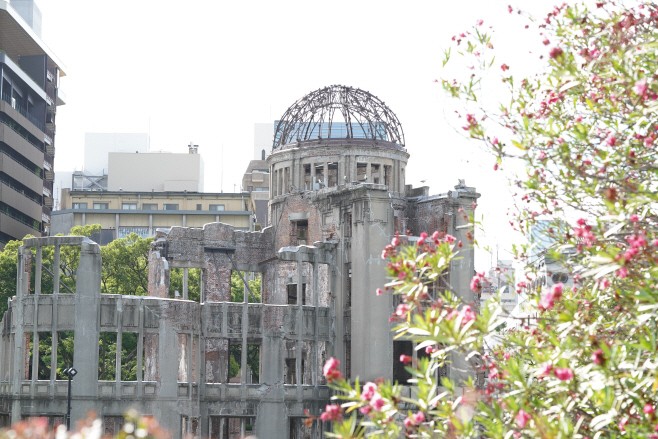 |
| Hiroshima Peace Memorial Park. Japan's Prime Minister Takaichi Sanae said on the 6th in Hiroshima that Japan is upholding the three non-nuclear principles, but stopped short of pledging to continue doing so going forward. / Getty Images Bank |
Former Prime Minister Abe Shinzo did not mention the three non-nuclear principles in his 2015 Hiroshima speech, which people close to him at the time explained as a staff error. Abe soon after affirmed his commitment to the three non-nuclear principles both in a subsequent meeting with representatives of atomic bomb survivors and at the Nagasaki Peace Memorial Ceremony three days later.
Takaichi, by contrast, said only that Japan "is upholding" the principles that day, without clearly stating a policy of maintaining them going forward. The Mainichi Shimbun assessed that Takaichi described only the present state of affairs without making any promise about the future, suggesting this may leave room to revisit the three non-nuclear principles in the three security-related documents, including the National Security Strategy, that the government is working to revise by year-end.
As a path toward nuclear disarmament, Takaichi called for maintaining and strengthening the Nuclear Non-Proliferation Treaty (NPT) regime. She pledged to pursue realistic and practical nuclear disarmament in line with Japan's proposed "Hiroshima Action Plan," and to swiftly provide health, medical, and welfare support to aging atomic bomb survivors and expedite the review process for recognizing atomic bomb-related illnesses.
At the ceremony, attendees observed a minute of silence at 8:15 a.m., the exact time the atomic bomb was dropped. A record number of participants attended, representing 123 countries and regions along with a delegation from the European Union. Hiroshima Mayor Matsui Kazumi, in the Peace Declaration, cited the failure of the NPT Review Conference to adopt a final agreement three times in a row, warning that treating the inhumanity of nuclear weapons lightly "could create a third Hiroshima and Nagasaki."
The day before the ceremony, on the 5th, a memorial service was held in front of the monument for Korean atomic bomb victims within the Peace Memorial Park. With about 280 Korean and Japanese officials in attendance, a registry listing 2,826 Korean Peninsula-born atomic bomb victims — including two newly confirmed victims — was formally dedicated.
Choi Young-jae
Most Read
-
1
Celltrion’s Omlyclo gains ground in major European..

-
2
Trump demands rates fall below 1% as Fed hikes for..

-
3
Trump makes $1 trillion bet ahead of midterm elect..

-
4
Iran resumes ballistic missile production, assembl..

-
5
Samsung Electronics, Mistral AI to jointly develop..

-
6
Trump warns countries not helping U.S. must pay re..

-
7
Apple launches first foldable, 1 million won prici..

PEOPLE




HEADLINE NEWS
- Trump to roll out ‘unprecedented welcome’ for Xi with B-2 bombers, F-22 fighters
- S. Korea, U.S., and Japan form united front on Taiwan and economic coercion..
- Trump administration moves to impose sweeping sanctions on International Cr..
- Xi to make state visit to U.S. Sept. 23-25, dispelling rumors over his heal..

-
Address : In-Young Bldg., 34, Uisadang-daero 1-gil, Yeongdeungpo-gu, Seoul
Copyright by ASIATODAY CO., LTD. All rights resereved