



Trump says "Hamas agrees to disarm," but foreign media reports differ
Jul 31, 2026, 05:25 pm


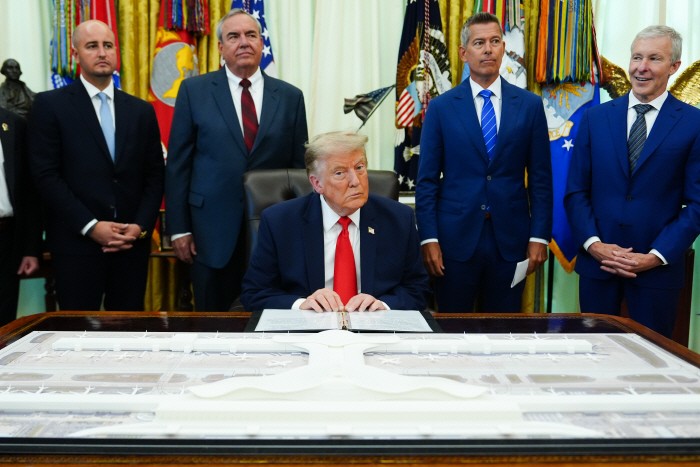 |
| U.S. President Donald Trump (center) speaks about the modernization of Dulles International Airport at the White House in Washington, D.C. on the 29th (local time). / AP-Yonhap |
U.S. President Donald Trump has announced that a full disarmament agreement has been reached with Hamas and other armed groups in the Gaza Strip. However, Hamas has responded that the agreement is conditional, and foreign media reports on the matter differ, prompting calls for caution in interpreting the news.
On the 30th (local time), Trump posted on his social media platform Truth Social that the "Board of Peace" had reached "a historic agreement," calling it "a major step toward lasting peace and security."
He explained that the agreement would be implemented in stages, and that once armed groups laid down their weapons, Israeli forces would withdraw and an international stabilization force along with a new Palestinian police force would take over security in Gaza.
However, CNN reported that Hamas has not yet confirmed the agreement, and that Palestinian Islamic Jihad (PIJ) pushed back, calling the reports "inaccurate." CNN also noted that Israel appears skeptical about whether Hamas will actually follow through with disarmament.
Reuters similarly reported that while Trump called it a "historic agreement," Hamas described it as merely "a draft." Citing a U.S. official, Reuters added that "Israel is very skeptical that Hamas will actually disarm."
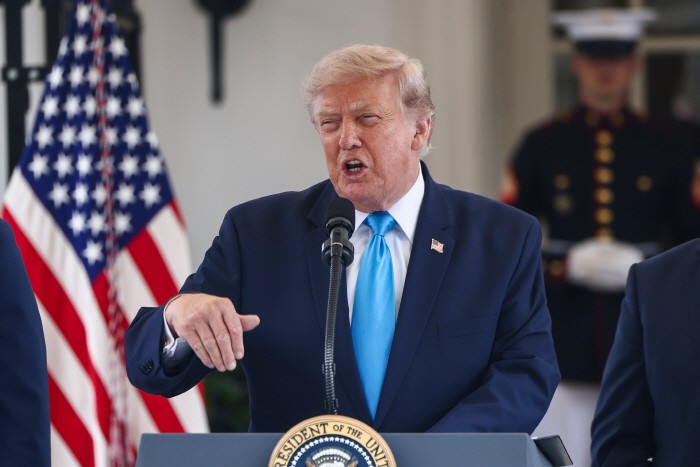 |
| U.S. President Donald Trump speaks at the White House in Washington, D.C. on the 30th (local time). / EPA-Yonhap |
Al Jazeera reported that it had obtained a copy of the agreement document, highlighting that it involves "conditional implementation," citing a Hamas negotiator who said the agreement would not be carried out unless Israeli troop withdrawal and reconstruction happened first.
AFP, on the other hand, cited a senior Hamas official offering a different perspective. The official said the Board of Peace-established National Community Administration for Gaza (NCAG) would manage and enforce the weapons inventory and storage process according to an agreed timeline, and that NCAG would become the sole body authorized to possess, store, and control weapons within Gaza.
AFP also reported that senior Hamas officials said an agreement had been reached on the weapons issue and the phased withdrawal of Israeli forces, and that they expect mediating countries and the Board of Peace to ensure Israel's compliance with the peace plan.
Experts attributed the conflicting foreign media reports to internal power divisions within Hamas and a strategic dual-messaging approach.
An international relations expert from the Foreign Affairs Forum, an organization specializing in international issues, assessed that the conflicting reports stem from Hamas's fractured internal power structure, with different factions putting out different messages.
A Middle East negotiation expert interviewed by Al Jazeera explained that Hamas is employing a dual-messaging strategy — publicly denying the agreement while internally acknowledging it — describing this as a typical Middle East negotiating tactic that maintains a hardline message for its internal base while showing flexibility in external negotiations.
Park Jin-sook
Most Read
-
1
Celltrion’s Omlyclo gains ground in major European..

-
2
Trump demands rates fall below 1% as Fed hikes for..

-
3
Trump makes $1 trillion bet ahead of midterm elect..

-
4
Iran resumes ballistic missile production, assembl..

-
5
Samsung Electronics, Mistral AI to jointly develop..

-
6
Trump warns countries not helping U.S. must pay re..

-
7
Apple launches first foldable, 1 million won prici..

PEOPLE






HEADLINE NEWS
- Trump to roll out ‘unprecedented welcome’ for Xi with B-2 bombers, F-22 fighters
- S. Korea, U.S., and Japan form united front on Taiwan and economic coercion..
- Trump administration moves to impose sweeping sanctions on International Cr..
- Xi to make state visit to U.S. Sept. 23-25, dispelling rumors over his heal..

-
Address : In-Young Bldg., 34, Uisadang-daero 1-gil, Yeongdeungpo-gu, Seoul
Copyright by ASIATODAY CO., LTD. All rights resereved