



Zuckerberg says blocking Chinese AI models "not an effective solution"
Jul 31, 2026, 10:31 am


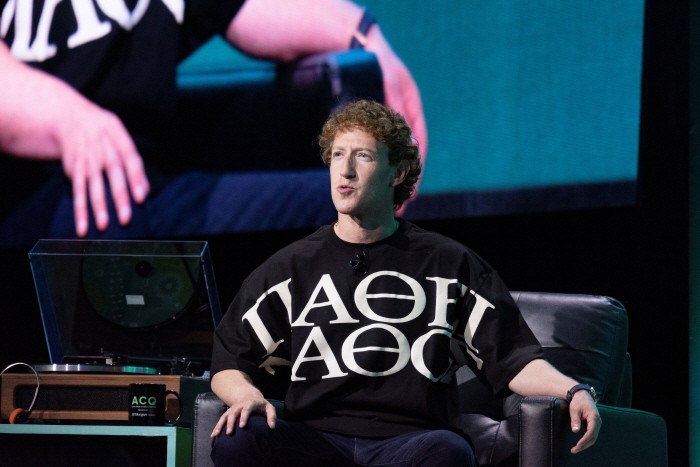 |
| Meta CEO Mark Zuckerberg / Reuters-Yonhap |
Meta CEO Mark Zuckerberg warned that the U.S. government should not block Chinese artificial intelligence (AI) in order to gain an edge in the race to develop groundbreaking technology, CNN reported on the 29th (local time), citing an interview with the Financial Times (FT).
In the interview with FT the day before, Zuckerberg said a U.S. ban on Chinese AI models is "not an effective solution," stressing that instead of banning them, American companies need to systematically identify and address bottlenecks and obstacles in order to compete with Chinese AI firms.
Simply banning Chinese AI models in the U.S. does not automatically give American companies an edge, he argued; rather, it is more effective for U.S. companies to analyze what the biggest constraints are in their own AI development process and find ways to resolve them, in order to compete with China.
He also warned of the risk of "regulatory capture," in which some leading U.S. AI companies could exert excessive influence over government regulation, saying that if certain companies shape regulation in their own favor, it could block innovation by emerging companies.
Zuckerberg's remarks came just after the U.S. government announced on the 28th a measure restricting imports of new humanoid and quadruped robots from foreign manufacturers.
On the 20th of the same month, it was reported that the U.S. government is reviewing sanctions against Chinese AI research labs over allegations of intellectual property (IP) theft.
U.S. Treasury Secretary Scott Bessent has warned that if Chinese AI companies systematically steal U.S. intellectual property, the U.S. could consider sanctions and adding them to export control lists.
In March, the U.S. government released its "National AI Policy Framework," focusing on specific regulatory areas such as child protection, IP security, and strengthened cyber defense, while emphasizing a balanced approach that does not stifle innovation.
Last month, through the "Executive Order on Advancing AI Innovation and Security," the U.S. strengthened the defense of national security-related information systems and the cybersecurity of private and government systems, and worked with AI companies to block IP theft and counter AI-based threats.
Park Jin-sook
Most Read
-
1
Celltrion’s Omlyclo gains ground in major European..

-
2
Trump demands rates fall below 1% as Fed hikes for..

-
3
Trump makes $1 trillion bet ahead of midterm elect..

-
4
Iran resumes ballistic missile production, assembl..

-
5
Samsung Electronics, Mistral AI to jointly develop..

-
6
Trump warns countries not helping U.S. must pay re..

-
7
Apple launches first foldable, 1 million won prici..

PEOPLE






HEADLINE NEWS
- Trump to roll out ‘unprecedented welcome’ for Xi with B-2 bombers, F-22 fighters
- S. Korea, U.S., and Japan form united front on Taiwan and economic coercion..
- Trump administration moves to impose sweeping sanctions on International Cr..
- Xi to make state visit to U.S. Sept. 23-25, dispelling rumors over his heal..

-
Address : In-Young Bldg., 34, Uisadang-daero 1-gil, Yeongdeungpo-gu, Seoul
Copyright by ASIATODAY CO., LTD. All rights resereved