



Trump administration asks Supreme Court to allow limits on mail-in voting
Jul 29, 2026, 10:22 am


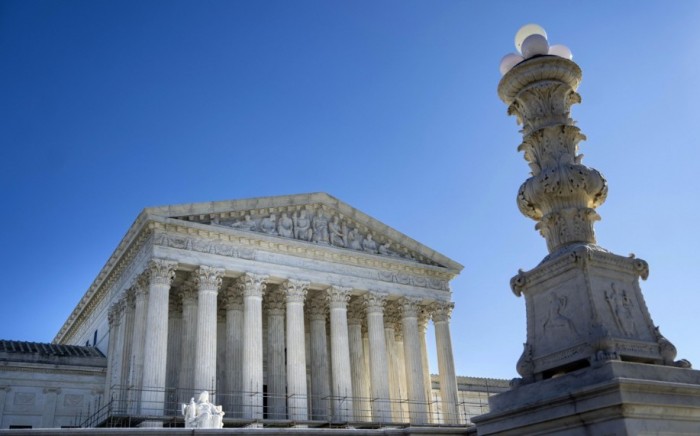 |
| The U.S. Supreme Court in Washington, D.C. / UPI Yonhap |
The U.S. administration under Donald Trump has filed an emergency request with the Supreme Court, asking to allow the enforcement of an executive order restricting mail-in voting ahead of the upcoming midterm elections in November.
According to the Associated Press on July 27 (local time), the U.S. Department of Justice submitted a petition to the Supreme Court on that day, requesting a stay on lower court injunctions so that the executive order on mail-in voting signed by President Trump in March could take effect.
The Supreme Court ordered the plaintiffs—23 states and Washington, D.C.—to submit their response by August 3.
On March 31, President Trump signed an executive order instructing the Department of Homeland Security (DHS) and the Social Security Administration (SSA) to collaborate in creating and providing a list of U.S. citizens for each state, while directing the U.S. Postal Service (USPS) to send mail-in ballots only to voters included on that list. It also mandated that voting envelopes feature individually traceable barcodes.
In response, 23 Democratic-led states and Washington, D.C., filed a lawsuit seeking to halt its enforcement, arguing that under the Constitution, the authority to set election rules belongs to state governments and Congress, not the president.
The plaintiffs pointed to several issues if the executive order were enforced: the risk of eligible voters being omitted during the list compilation process, confusion and increased costs for state election management authorities, and potential voter disenfranchisement.
In June, a federal district court in Massachusetts barred the enforcement of the order, and on July 25, the U.S. Court of Appeals for the First Circuit upheld the stay. Judges noted that if enforced, the executive order "could cause confusion and threaten to disenfranchise eligible voters."
The Trump administration argued that the executive order on mail-in voting restrictions is merely policy guidance, asserting that it was improper for lower courts to halt its effect when it had not yet been specifically implemented.
However, lower courts determined that state election authorities had already incurred burdens by allocating staff and budget.
While President Trump has consistently emphasized that mail-in voting is vulnerable to fraud, major media outlets and studies have found no evidence of widespread fraud that could alter election outcomes.
If the Supreme Court grants the administration's request, overhauls to mail-in voting procedures could proceed rapidly before the midterm elections; if rejected, enforcement will remain restricted while the main lawsuit proceeds.
Park Jin-sook
Most Read
-
1
Celltrion’s Omlyclo gains ground in major European..

-
2
Trump demands rates fall below 1% as Fed hikes for..

-
3
Trump makes $1 trillion bet ahead of midterm elect..

-
4
Iran resumes ballistic missile production, assembl..

-
5
Samsung Electronics, Mistral AI to jointly develop..

-
6
Trump warns countries not helping U.S. must pay re..

-
7
Apple launches first foldable, 1 million won prici..

PEOPLE






HEADLINE NEWS
- Trump to roll out ‘unprecedented welcome’ for Xi with B-2 bombers, F-22 fighters
- S. Korea, U.S., and Japan form united front on Taiwan and economic coercion..
- Trump administration moves to impose sweeping sanctions on International Cr..
- Xi to make state visit to U.S. Sept. 23-25, dispelling rumors over his heal..

-
Address : In-Young Bldg., 34, Uisadang-daero 1-gil, Yeongdeungpo-gu, Seoul
Copyright by ASIATODAY CO., LTD. All rights resereved