



Schools are disappearing: China's primary education faces major crisis
Jul 29, 2026, 10:29 am


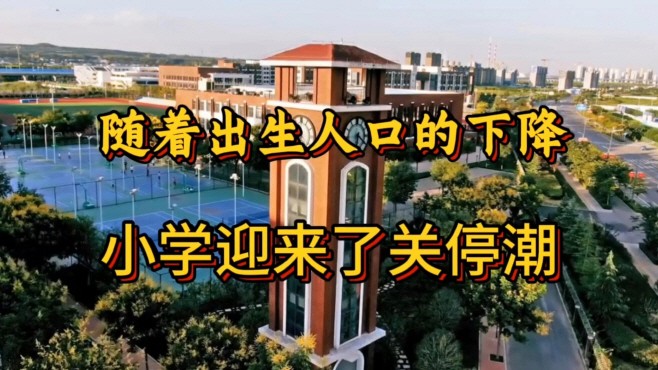 |
A report by a news outlet delivering the news that China's primary education is in crisis due to an extreme decline in birth rates. / Beijing News
China's primary education is facing a major crisis as kindergartens and elementary schools rapidly diminish due to an extreme decline in birth rates. If this trend continues, a weakening of national competitiveness over time appears inevitable. Prospects of achieving the grand ambition to surpass the U.S. in both quantity and quality by 2035 and 2049, respectively, to become a super G1 nation also seem increasingly difficult.
A close look at the severe drop in birth rates reveals that this assessment is by no means an exaggeration. According to recent reports from news outlets including the Beijing News, China's resident birth rate (the proportion of births relative to the total population) was estimated at a relatively satisfactory 13.57 per thousand as recently as 2016.
However, a decade later in 2025, the figure contracted sharply to 5.63 per thousand, a level difficult to describe as anything short of alarming. Compared to the nearly 20 per thousand recorded in the late 1970s when the one-child policy was officially introduced, the drop is staggering. The fact that the nation of 1.4 billion recorded just 7.92 million births last year is telling—a figure barely over half of this year's 12.7 million college graduates.
Under these circumstances, maintaining the status quo across various school levels is near miraculous. As reflected in the rapidly declining birth rate, this is especially true for kindergartens and elementary schools. Statistics suggest a disastrous situation has already arrived. Last year alone, an estimated 21,400 kindergartens and 8,000 elementary schools nationwide were closed.
Cumulative figures underscore a far more severe reality. Over the past three years, 60,000 kindergartens have closed their doors. Elementary schools fare only slightly better, with 34,000 facing closure over the past five years. Teachers and staff have been hit equally hard. Cui Lan, a former kindergarten teacher in Beijing, sighed as she explained, "Working as a kindergarten or elementary school teacher now means struggling in a red ocean. Knowing this, I changed careers three years ago, partly by choice and partly out of necessity."
The core issue lies in the likelihood of further deterioration unless birth rates rise dramatically. Under such conditions, middle schools, high schools, and universities are unlikely to remain unaffected, facing existential challenges and cascading setbacks. Naturally, one may conclude that Chinese education as a whole risks being engulfed in turbulence and withering away.
Despite this, the Chinese central government and local education authorities have yet to present effective countermeasures. This likely stems from the fundamental cause being a persistent and extreme decline in birth rates, a problem far from easy to solve. It would not be an overstatement to say that primary education in China, and indeed the entire educational system, stands at a true crossroads of survival.
Hong Soon-do |
Most Read
-
1
Celltrion’s Omlyclo gains ground in major European..

-
2
Trump demands rates fall below 1% as Fed hikes for..

-
3
Trump makes $1 trillion bet ahead of midterm elect..

-
4
Iran resumes ballistic missile production, assembl..

-
5
Samsung Electronics, Mistral AI to jointly develop..

-
6
Trump warns countries not helping U.S. must pay re..

-
7
Seoul faces triple squeeze over troop deployment t..

PEOPLE







-
Address : In-Young Bldg., 34, Uisadang-daero 1-gil, Yeongdeungpo-gu, Seoul
Copyright by ASIATODAY CO., LTD. All rights resereved